Worker bees help choose the next queen in bumble bee colonies
Worker bees can steer larval fate, feeding a hormone that helps decide which bumble bees grow up to be queens.

 Edited By: Joseph Shavit

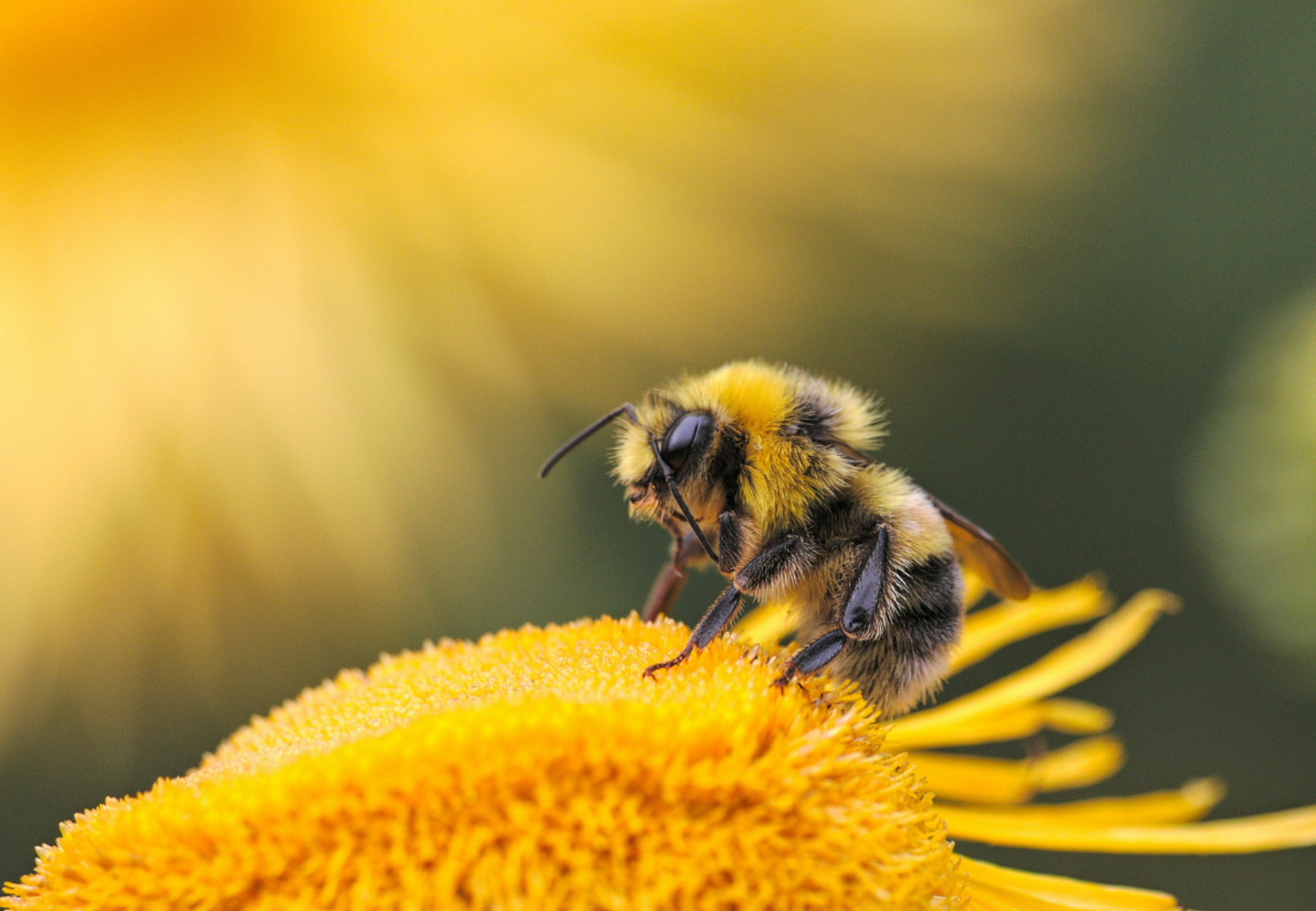
Penn State study finds worker bees help turn larvae into future queens by passing juvenile hormone in food. (CREDIT: Dmitry Grigoriev/Unsplash)
A baby bumble bee can end up on one of two very different paths. It can grow into a small worker that never reproduces, or become a large future queen built to survive winter and start a colony of her own. New research suggests that split is not dictated mainly by the queen. Instead, it is dictated by the workers doing the feeding.
In Bombus impatiens, a common North American bumble bee, Penn State researchers found that worker bees help determine larval fate by passing along juvenile hormone in the food they make from nectar and pollen. In particular, larvae that received enough of that hormone during a narrow window late in development were far more likely to become queens.
The finding shifts the picture of colony life. Rather than a top-down social order controlled by a single monarch, the study points to a more distributed system. In this system, caregivers can shape the colony’s future.
“Since all these females share the same DNA, it’s a striking example of how the same genotype can produce very different forms,” said Etya Amsalem, associate professor of entomology at Penn State and the study’s corresponding author. “It’s also a practical question since bumble bees are important for pollination, so knowing how to produce queens could improve commercial breeding and management.”
A fork in the road for female larvae
Queen and worker bumble bees do not just perform different jobs. They also look and live differently. Queens are larger, reproductive, and long-lived. Workers are smaller and generally sterile.
That difference begins in the larval stage, but the trigger has been hard to pin down. Scientists already knew juvenile hormone was involved in insect development and had been linked to caste differences in bees, ants, termites, and other social insects. However, what remained unclear was how the hormone was delivered, when it mattered most, and who controlled the process in B. impatiens.
“A single female egg in bumblebees holds the blueprint for two completely different life paths: the giant, reproductive queen or the small, sterile worker,” said Seyed Ali Modarres Hasani, a Penn State postdoctoral researcher and the paper’s lead author. “We wanted to understand what triggers the change in the female life trajectory, when does it happen and who controls the process.”
To test that, the researchers used a stripped-down setup: three worker bees caring for one batch of larvae in a small cage. They applied juvenile hormone at different doses and times, either directly to larvae or to the worker bees. Then they tracked body mass, development, and whether the offspring emerged as workers or queens.
They also used labeled hormone and liquid chromatography-mass spectrometry to trace where the chemical moved inside the miniature colony.
When workers got the hormone, queens appeared
The sharpest result came from comparing how the hormone was delivered.
When the team treated workers with juvenile hormone, 37% of the offspring developed into gynes, the term for future queens. In the control groups and in the group where larvae were treated directly, that figure was about 0.3%.
The worker-treated offspring were also the heaviest. That mattered because body mass is one of the clearest ways to distinguish queens from workers in this species. In B. impatiens, workers usually weigh about 150 to 200 milligrams and rarely exceed 300 milligrams. By contrast, queens weigh more than 400 milligrams.
Directly dosing larvae told a different story. Those larvae did not turn into queens, and workers often removed them. In the first experiment, the larval treatment group produced fewer emerging adults than several other groups. This was a sign that many treated larvae were killed before adulthood.
That pattern suggests the hormone does not simply act by touching the larvae. It seems to matter how the larvae receive it, through the normal feeding pathway rather than from outside contact.
The tracing experiments backed that up. When workers were given deuterium-labeled juvenile hormone, the labeled compound later appeared in worker regurgitate and in larval hemolymph. This showed that workers had passed it along during feeding.
“By tracing the juvenile hormone, we saw that the workers pass the hormone into the food they make from nectar and pollen,” Hasani said.
Timing turned out to be everything
The researchers then broke larval development into five two-day windows to see when the hormone could change fate.
The answer was days seven and eight after hatching.
Applying juvenile hormone to workers during that period produced the heaviest offspring, averaging about 311.9 milligrams, and the highest percentage of future queens, 28.8%. Treating workers earlier, on days one through four, produced no queens at all. In contrast, treatment on days five and six had an intermediate effect, while days nine and 10 were less effective than the day seven to eight window.
“We also determined that larvae are only sensitive to this hormone on days seven and eight of their development,” Hasani said.
That narrow critical period helps explain why queen production happens late in the colony cycle. Bumble bee colonies are annual. A single queen starts the nest in spring, workers take over brood care as the colony grows. Then new queens and males are produced toward the end of the season. Those queens then leave, mate, survive winter in diapause, and found new colonies the following year.
“Every colony will produce many new queens at the end of the season,” Amsalem said. “These queens will leave the colony, mate and go into winter diapause, and then each queen will start a new colony in the next spring. In that sense, producing as many queens — and males —at the end of the season is the ultimate purpose of the colony.”
A colony without a single ruler
The work also helps explain why B. impatiens behaves differently from some related bumble bee species. In Bombus terrestris, earlier research suggested queen removal could trigger queen production. In B. impatiens, that does not seem to happen. Instead, the new study points toward a self-organizing process shaped by worker physiology and colony age.
As colonies mature, workers can activate their ovaries and produce males, and juvenile hormone levels in workers rise. According to the authors, that means larvae late in the season may receive larger hormone doses from more workers at once. As a result, if enough larvae hit the right threshold during the brief sensitive window, more queens emerge.
“Bumblebee workers do not reproduce when the colony is young, but they can activate their ovaries and produce males as the colony ages, which causes an increase in juvenile hormone levels,” Amsalem said. “As a result, over time, they feed larvae more of the hormone. When enough workers do this simultaneously, usually towards the end of the season, larvae receive doses that are high enough during the critical window to develop into queens.”
The study does not settle every question. The authors noted that outside hormone treatment could have altered worker behavior in ways they could not fully rule out. They also found an unexpected twist: workers treated with juvenile hormone laid fewer eggs than controls, even though the hormone is generally expected to support reproduction in adult females. That result will need more study.
Workers do far more than raise the next queen
The new study adds to a broader picture of bumble bee colonies as systems run by many small decisions. Workers do not just gather food or serve the queen. They also help feed larvae, regulate nest temperature, defend the colony, and shape how work gets divided inside the nest.
Some workers specialize in food collection. In young bumble bee colonies, researchers have found that most workers feed brood, while some also collect nectar and others collect pollen. Pollen collection can be one of the more specialized jobs, which makes sense because pollen provides the protein larvae need to grow. Nectar, by contrast, fuels adult bees and helps supply the colony’s energy needs.
Inside the nest, workers also help manage the brood’s environment. Bumble bee larvae develop best within a narrow temperature range, and workers respond when the nest gets too cold or too hot. At cooler temperatures, they incubate brood by generating heat. At higher temperatures, they fan their wings to move air through the nest and help cool it. In one classic study, brood temperature was usually kept around 28 to 32 degrees Celsius when outside conditions were below 32 degrees Celsius. When temperatures rose above that, wing fanning became more common.
Body size can also influence what workers do. Studies of Bombus impatiens show that smaller workers are more likely to stay near the center of the nest, where larval feeding takes place. Larger workers are more likely to be found near the nest edge and to take on jobs such as foraging, fanning, or guarding. Even so, bumble bee workers are not locked into one job for life. Many perform several tasks as colony needs change.
Workers also help the colony respond to its stage of life. As a bumble bee colony matures, chemical cues in the nest wax can change, giving workers information about the colony’s social condition. In Bombus terrestris, researchers found that wax scent reflects worker abundance and the presence of fertile workers, helping time the shift from ordinary colony growth to the later phase when workers compete for reproduction.
Practical implications of the research
Seen this way, worker bees are not simply helpers in a queen-led household. They are nurses, foragers, guards, climate controllers, and chemical information processors.
The new Penn State findings suggest they may also act as developmental gatekeepers, helping decide which larvae become the future queens that carry the colony’s genes into the next year.
The findings also offer a clearer picture of how bumble bee societies organize themselves, and that matters beyond basic biology. Bumble bees are major pollinators in both natural ecosystems and commercial agriculture. Moreover, breeding enough queens is essential for maintaining colonies.
By showing that worker-fed juvenile hormone, delivered during a specific late larval window, helps determine which females become queens, the study provides a practical target for improving queen production in managed bumble bee populations.
It also gives researchers a stronger framework for understanding how hormones and social behavior interact to shape insect societies.
Research findings are available online in the journal Insect Biochemistry and Molecular Biology.
The original story "Worker bees help choose the next queen in bumble bee colonies" is published in The Brighter Side of News.
------ Update made on June 12, 2026 ------
A new section, “Workers do far more than raise the next queen,” was added to highlight the critical roles worker bees play in maintaining and supporting the hive.
Related Stories
- The hidden costs of climate change for bees and wasps
- Southern California bees are keeping deadly mites in check
- Bumblebees use light to tell time, study finds
Like these kind of feel good stories? Get The Brighter Side of News' newsletter.
Hannah Shavit-Weiner
Medical & Health Writer
Hannah Shavit-Weiner is a Los Angeles–based medical and health journalist for The Brighter Side of News, an online publication focused on uplifting, transformative stories from around the globe. Having published articles on AOL.com, MSN and Yahoo News, Hannah covers a broad spectrum of topics—from medical breakthroughs and health information to animal science. With a talent for making complex science clear and compelling, she connects readers to the advancements shaping a brighter, more hopeful future.