Arctic Ocean bacteria use acetone and sunlight to support growth and survival in harsh conditions
Concordia researchers identified an Arctic bacterial population with genes for acetone-assisted carbon dioxide assimilation and light harvesting. Its environmental carbon uptake remains unmeasured.
 Writer: Patrick Lejtenyi (Concordia University)

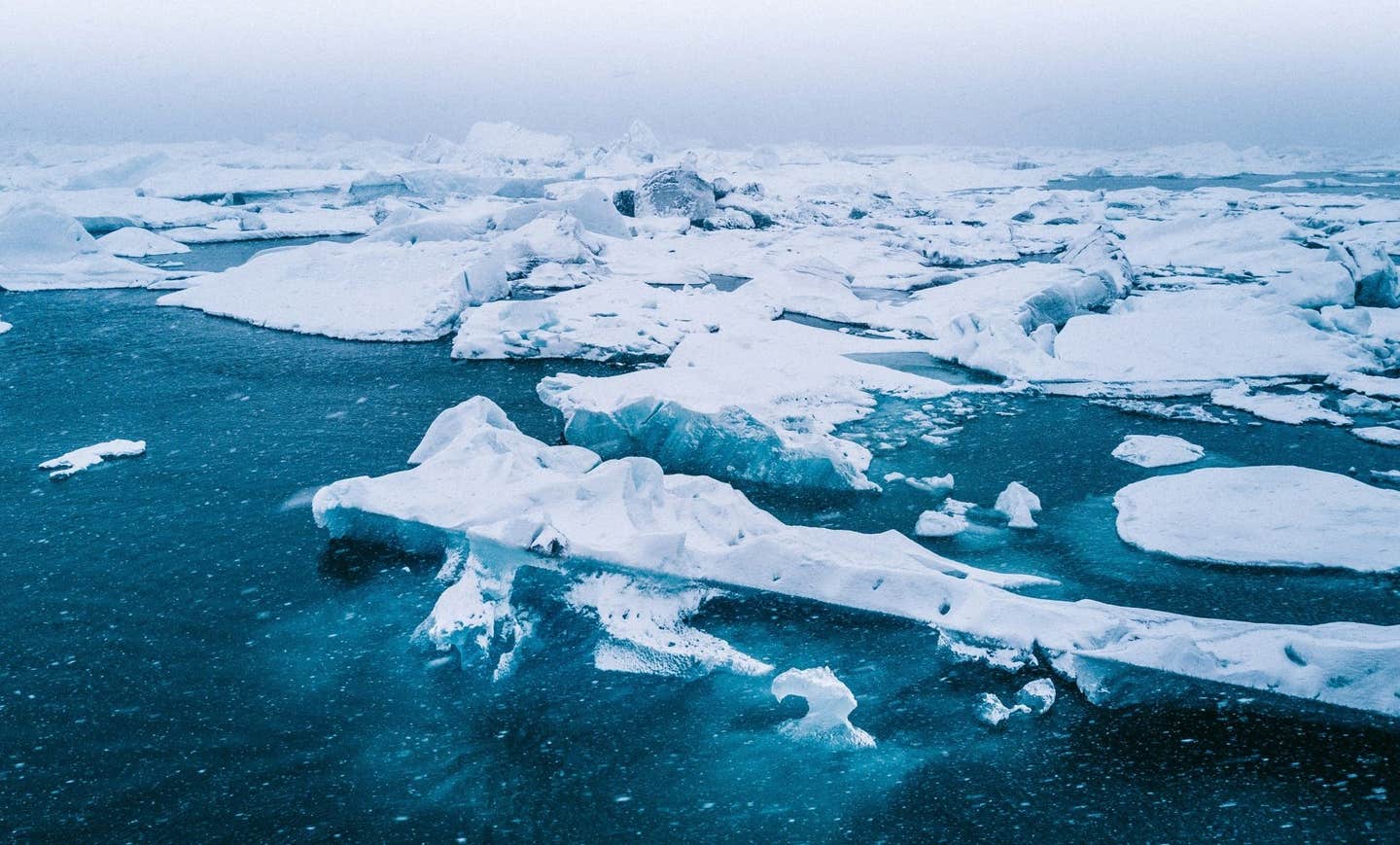
Arctic Ocean bacteria may use acetone, carbon dioxide and sunlight to grow, genetic evidence suggests. (CREDIT: Wikimedia / CC BY-SA 4.0)
A bacterial population in the Arctic Ocean may supplement its food supply by combining acetone with carbon dioxide. Its genes also suggest it can harvest sunlight for energy, a combination that could help it survive in waters with scarce usable resources. The research focuses on the Canada Basin, including the Beaufort Sea north of the Yukon.
Researchers at Concordia University describe the population, Porticoccus arcticus, in Nature Communications. David Walsh, a biology professor and the paper’s corresponding author, says the work reveals an unexpected combination of metabolic abilities. The evidence comes from reconstructed genomes, gene-activity surveys and experiments with a related bacterium.
The discovery adds another layer to an increasingly complex picture of Arctic microbes. Some supply nutrients to surrounding organisms, while others process carbon compounds dissolved in seawater. Understanding those different jobs helps explain how microscopic communities function.
Genetic surveys have also revealed unexpected capabilities in ocean viruses. Here, the surprise concerns a bacterial pathway that incorporates inorganic carbon while consuming an organic molecule. That distinction matters because carbon assimilation does not necessarily mean an organism lives like a plant.
How Arctic Ocean bacteria could use acetone
Acetone occurs naturally in seawater, where microscopic algae and sunlight-driven chemical reactions can produce it. Atmospheric deposition provides another source. For Arctic Ocean bacteria equipped to consume it, this small molecule can supply carbon for growth.
The proposed pathway begins with acetone carboxylation, a reaction that adds carbon dioxide to acetone to form acetoacetate. Further reactions convert that product into acetyl-CoA, a central ingredient in cellular metabolism. The process requires energy, rather than providing a cost-free carbon supply. Other marine bacteria consume acetone through a different pathway that does not begin by adding carbon dioxide.
This differs from the familiar photosynthesis performed by marine algae. P. arcticus appears to depend on organic carbon while supplementing it with inorganic carbon. Scientists call its combination of organic feeding and light-derived energy photoheterotrophy.
Experiments that turn carbon dioxide into bacterial biomass illustrate how differently microbes can obtain carbon and energy. The Arctic study concerns a naturally occurring population, rather than an engineered production system. Its importance lies in identifying a potentially overlooked ecological strategy.
Reading the genes and testing a relative
The team reconstructed the Arctic population’s genome from DNA collected in environmental samples. This approach sorts fragments from mixed microbial communities into approximate genomes. The resulting sequence contained the complete set of genes associated with the acetone pathway. At about 1.29 million DNA base pairs, the reconstructed genome was smaller than those of some relatives, suggesting metabolic specialization.
Such work extends the reach of genetic surveys, which can reveal organisms that researchers have not isolated. A genome describes biological potential, however, rather than directly measuring each chemical reaction. The team therefore examined RNA, the working messages cells produce from their genes.
Acetone-carboxylase genes ranked among the population’s most abundant RNA messages. That strengthens the case that the pathway matters under the sampled conditions. As with other efforts to reconstruct microbial metabolism, researchers must still distinguish predicted reactions from measured chemical flows.
The laboratory evidence came from Porticoccus hydrocarbonoclasticus, a related marine bacterium carrying the pathway. It grew with acetone as its sole supplied organic carbon source in tests at 21°C. Those experiments support acetone use by a relative, but do not directly establish P. arcticus’s growth or carbon uptake in Arctic seawater.
Sunlight offers another possible advantage
The Arctic population’s genome also contained two adjacent proteorhodopsin genes. These encode light-sensitive proteins predicted to pump protons across cell membranes, helping cells conserve energy. One appeared suited to blue light and the other to green light, based on their sequences.
The blue-light-associated gene showed particularly high activity in the environmental RNA data. Together, these findings suggest a route for using light alongside acetone metabolism. They do not yet quantify how much energy sunlight supplies to the cells. “This was a surprise, as we were not actively looking for acetone-degrading bacteria that can use light,” Walsh says.
That strategy differs from the light-independent chemistry sustaining deep microbes. Surface-dwelling bacteria encounter a different set of opportunities, including sunlight and compounds formed by photochemical reactions. The researchers suggest that this combination helps explain the population’s habitat.
The work also broadens the context for research into the origins of photosynthesis. Harvesting light and building biomass from carbon dioxide are distinct biological tasks. P. arcticus may combine light capture with a carbon supply that remains substantially organic.
A population linked to changing surface waters
To map its distribution, the team examined samples collected from 2017 through 2023 during late summer and early autumn. The survey extended from 72°N to 83°N. Researchers detected the population’s genetic marker in all samples from depths of five and 20 meters.
At some stations, it represented up to nine percent of bacterial 16S rRNA gene sequences, a marker used to identify populations. That percentage describes sequencing results, rather than a direct count of every bacterial cell. The population was much less common in deeper samples. Because the observations cover a particular part of the year, they cannot establish how abundant it remains through the Arctic winter.
Its abundance was also lower at consistently ice-covered northern stations and at a consistently ice-free site. The pattern suggests a preference for intermediate sea-ice conditions, rather than a simple increase wherever ice disappears. Other research on Arctic ice changes likewise shows that ecological responses depend on location.
Changes to ice-bound waters can alter light, mixing and chemical supplies together. Walsh says the consequences of warming for this population remain uncertain. The authors propose that changing sunlight and acetone availability could affect its future distribution, but they have not measured that future response.
Practical implications
The findings give marine microbiologists a specific pathway to investigate in Arctic Ocean bacteria and other aquatic communities. Comparisons with methane-consuming microbes underscore how genetic discoveries can reveal previously overlooked carbon-processing capabilities. Different pathways still require separate measurements of their environmental importance.
The next questions concern rates and conditions. Researchers need to establish how much acetone and inorganic carbon the Arctic population actually incorporates, and how light changes those rates. Direct experiments could also test whether the proposed combination improves survival when other resources run short. Sampling across seasons would help determine when the pathway contributes most to growth.
Studies of warming-associated microbes highlight why a metabolic discovery alone cannot establish a climate benefit. Carbon entering bacterial biomass may later return to the environment through respiration or decomposition. The study does not establish permanent carbon storage or a measurable reduction in atmospheric carbon dioxide.
Walsh’s team also plans to look for related behavior in other oceans and freshwater populations. Finding the same pathway elsewhere would help establish its broader distribution. For now, the result expands the known possibilities for microbial life in Arctic surface waters and identifies clear questions for direct testing.
Dig deeper into Arctic microbial carbon metabolism
These studies explore Arctic bacterial adaptations, acetone cycling and inorganic carbon assimilation.
Genomic diversity and adaptation in Arctic marine bacteria: Cultured bacteria and complete genomes reveal how Arctic populations differ and adapt to local conditions. (mBio, 2025)
Degradation pathways for organic matter of terrestrial origin are widespread and expressed in Arctic Ocean microbiomes: Genetic and RNA surveys investigate how Arctic microbes process carbon compounds arriving from land. (Microbiome, 2022)
Sea ice concentration impacts dissolved organic gases in the Canadian Arctic: Field measurements examine how sea-ice conditions relate to acetone and other dissolved gases. (Biogeosciences, 2022)
Metabolism of key atmospheric volatile organic compounds by the marine heterotrophic bacterium Pelagibacter HTCC1062 (SAR11): Experiments demonstrate acetone consumption by another marine bacterium, providing context for alternative metabolic pathways. (Environmental Microbiology, 2022)
High bicarbonate assimilation in the dark by Arctic bacteria: Experiments with Arctic seawater cultures investigate inorganic carbon uptake by bacteria without light. (The ISME Journal, 2010)
Research findings are available online in the journal Nature Communications.
The original story "Arctic Ocean bacteria use acetone and sunlight to support growth and survival in harsh conditions" is published in The Brighter Side of News.
Related Stories
- Hidden bacteria beneath the Arctic ice could boost ocean life
- Microplastics are filling the deep ocean faster than scientists feared
- Electricity-eating bacteria could help oceans absorb more carbon
Like these kind of feel good stories? Get The Brighter Side of News' newsletter.
Rebecca Shavit
Writer
Based in Los Angeles, Rebecca Shavit is a dedicated science and technology journalist who writes for The Brighter Side of News, an online publication committed to highlighting positive and transformative stories from around the world. Having published articles on MSN, AOL News, and Yahoo News, Rebecca's reporting spans a wide range of topics, from cutting-edge medical breakthroughs to historical discoveries and innovations. With a keen ability to translate complex concepts into engaging and accessible stories, she makes science and innovation relatable to a broad audience.