DNA’s vulnerability to sunlight may explain the complex origins of intelligent life
Thymine suffers more UV damage than uracil in lab tests, but its damage pathways could help explain its place in DNA.
 Texas A&M Writer: Alyson Chapman


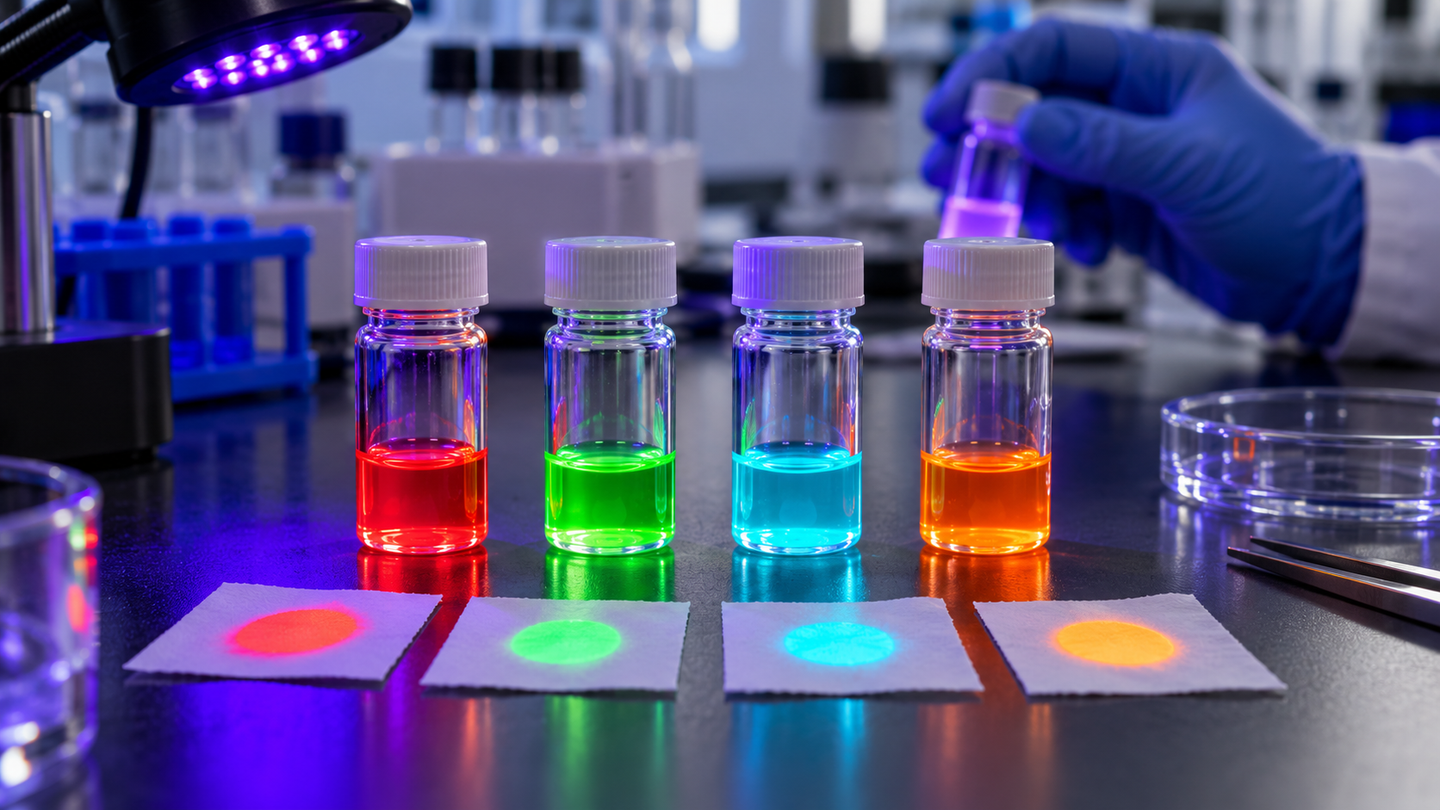
Frozen molecular samples illustrate experiments comparing how thymine and uracil respond to ultraviolet light, offering clues to the chemistry behind DNA’s evolution. (CREDIT: The Brighter Side of News)
- Thymine, a DNA building block, accumulated UV damage faster than uracil in controlled laboratory experiments.
- Spectroscopic measurements suggest thymine favored a more reversible damage pathway, supporting a proposed “molecular sunscreen” role.
- The experiments tested isolated bases frozen in water, leaving their evolutionary significance and practical applications to further research.
Sunlight threatened the molecules that would eventually carry life’s instructions long before Earth developed its protective ozone layer. Yet one of DNA’s defining building blocks appears especially susceptible to ultraviolet damage. That apparent disadvantage raises a question: Could suffering the right kind of damage have helped early genetic material persist?
A Texas A&M University team has investigated that possibility by comparing thymine, a base used in DNA, with uracil, its counterpart in RNA. Their measurements suggest that thymine’s vulnerability comes with a potentially useful distinction. Although it undergoes more damage overall under the experimental conditions, its chemistry appears to favor damage that is more readily reversible.
The study, published in Proceedings of the National Academy of Sciences, offers a possible contribution to explaining DNA’s evolution. It does not establish how DNA originated or demonstrate that early organisms survived because of thymine.
A small chemical difference with large consequences
DNA and RNA both use sequences of chemical bases to encode information. DNA normally uses thymine, while RNA normally uses uracil. The two bases are close chemical relatives: Thymine has an additional methyl group, consisting of one carbon atom and three hydrogen atoms.
That modest addition changes how the molecule interacts with light and nearby molecules. Understanding those effects could help explain why genetic systems came to use different bases. The question concerns early molecular evolution, billions of years before intelligent life appeared.
The measurements placed thymine’s main lower-energy absorption peak at 265 nanometers and uracil’s at 259 nanometers. Thymine’s corresponding absorption band was also about 9% broader. These differences affect how much of a particular light source’s energy each base can absorb, making the illumination spectrum important when interpreting their responses.
The RNA world hypothesis proposes that RNA once performed roles now divided among DNA, RNA and proteins. The subsequent development of DNA-based information storage remains an active research problem. Comparing individual bases can illuminate part of that history, but cannot reconstruct the entire transition.
Freezing the samples to examine UV damage
Professor Peter Rentzepis and research assistants Keyvan Khosh Abady and Negar Karpourazar compared purified thymine and uracil using absorption, fluorescence and Raman spectroscopy. These techniques reveal how molecules absorb light, emit light and vibrate, providing complementary clues about chemical changes.
For irradiation, the researchers froze samples prepared in water at −15°C. As ice forms, it concentrates dissolved molecules into smaller regions, bringing neighboring bases closer together. That arrangement encourages reactions that would be harder to observe in dilute liquid samples.
The team illuminated the frozen samples with a narrowband ultraviolet LED centered near 265 nanometers. This wavelength falls within the UVC range and close to both bases’ absorption peaks. After exposure, the samples were thawed for optical measurements; Raman measurements used dried portions of the samples.
The setup was a controlled model, rather than a recreation of primordial Earth. It lacked the full chemical environment and architecture of RNA or DNA, and its narrowband illumination did not reproduce the complete spectrum of ancient sunlight.
That distinction matters because freezing changes molecular spacing and movement, both of which influence reactions. An outcome in this concentrated ice environment may differ from one in an intact genetic strand or an unfrozen pond. Extending the comparison to those settings would test how broadly the proposed advantage applies.
More damage, but a different balance
Both bases changed progressively during irradiation. Their original absorption signals weakened as chemical reactions altered their structures, while new signals appeared from the resulting products. Raman measurements also tracked changes in bonds involved in those reactions.
Thymine’s absorption signal declined faster than uracil’s. The fitted rate constants were 0.174 and 0.064 per minute, respectively, a difference of about 2.7 times under these conditions. Those values describe this particular experiment, including its light source and frozen environment; they are not universal damage rates for DNA and RNA.
The distinction became more interesting when the researchers considered different damage pathways. One produces cyclobutane pyrimidine dimers, or CPDs, which link neighboring bases. Another produces lesions known as 6-4 photoproducts, which are comparatively resistant to direct photoreversal under the conditions considered.
The team interpreted the combined spectral and kinetic evidence as indicating that thymine preferentially directed damage toward the reversible CPD pathway. Its overall susceptibility therefore tells only part of the story. The chemical consequences of absorbing sunlight may matter as much as the amount of damage initially formed.
A proposed molecular sunscreen
“We found that thymine tends to direct UV damage into a more reversible form, suggesting that early genetic molecules may have survived intense sunlight not by avoiding damage, but by controlling it and making it easier to self-repair,” said Khosh Abady.
The researchers describe this possibility as a “molecular sunscreen” hypothesis. Bases could absorb incoming UV energy and concentrate damage within themselves, potentially reducing harm to other parts of a genetic molecule. In favorable circumstances, light could also help reverse some of the damage it creates.
This interpretation extends beyond what the experiments directly tested. The team did not measure protection of an intact sugar-phosphate backbone, follow an early genetic system through repeated copying, or demonstrate an evolutionary advantage. The results support a possible chemical mechanism that those more complex experiments could investigate.
There are also other explanations for DNA’s use of thymine. Cytosine can spontaneously change into uracil, creating a potentially harmful copying error. Using thymine as a normal DNA base allows modern repair systems to recognize uracil as an abnormal component, although that explanation involves biological machinery absent from the earliest chemistry.
From ancient chemistry to future measurements
The optical signatures could also provide reference information for technologies that examine microorganisms or assess UV treatment. Knowing how individual bases and their damage products interact with light may help researchers interpret the much more complicated signals obtained from whole cells.
That application remains prospective. A spectral change alone does not establish that a pathogen has been permanently inactivated, and this study did not validate a new water-treatment monitoring system. Translating the measurements into such a tool would require testing complex biological samples and linking the signals to microbial survival.
The team also plans to investigate how early genetic components formed and assembled, including possible contributions from meteorites. For now, its work highlights a narrower question with broad implications: Whether persistence under harsh sunlight depended partly on directing unavoidable damage into chemical forms that could be undone.
Dig deeper into DNA’s origins and UV chemistry
These five publications explore early genetic systems, light-driven chemistry and the molecular ingredients of life.
- The Origins of the RNA World: Reviews the evidence and challenges surrounding an early stage of evolution centered on RNA. (Cold Spring Harbor Perspectives in Biology, 2012)
- UV-Induced Charge Transfer States in DNA Promote Sequence Selective Self-Repair: Investigates how neighboring bases can enable light-driven repair without an enzyme. (Journal of the American Chemical Society, 2016)
- Sequence dependent UV damage of complete pools of oligonucleotides: Examines how DNA sequence influences damage formation across thousands of short sequences. (Scientific Reports, 2023)
- Common origins of RNA, protein and lipid precursors in a cyanosulfidic protometabolism: Demonstrates laboratory chemistry that produces precursors associated with several cellular subsystems. (Nature Chemistry, 2015)
- Identifying the wide diversity of extraterrestrial purine and pyrimidine nucleobases in carbonaceous meteorites: Reports genetic building blocks in meteorites, informing questions about their delivery to early Earth. (Nature Communications, 2022)
Research findings are available online in the journal PNAS.
The original story "DNA’s vulnerability to sunlight may explain the complex origins of intelligent life" is published in The Brighter Side of News.
Related Stories
- New DNA findings may explain how octopuses evolved complex brains
- Ancient DNA identifies 146,000 year-old 'Dragon Man' as a Denisovan
- Why big dogs die younger: DNA study points to changes around jumping genes
Like these kind of feel good stories? Get The Brighter Side of News' newsletter.
Rebecca Shavit
Writer
Based in Los Angeles, Rebecca Shavit is a dedicated science and technology journalist who writes for The Brighter Side of News, an online publication committed to highlighting positive and transformative stories from around the world. Having published articles on MSN, AOL News, and Yahoo News, Rebecca's reporting spans a wide range of topics, from cutting-edge medical breakthroughs to historical discoveries and innovations. With a keen ability to translate complex concepts into engaging and accessible stories, she makes science and innovation relatable to a broad audience.