Future Mars astronauts may need eye surgery millions of miles from Earth
Scientists exposed 135 cataract lenses to space as they prepare for a future when astronauts may need eye surgery far from Earth.
 ESCRS Writer: Emma Mason

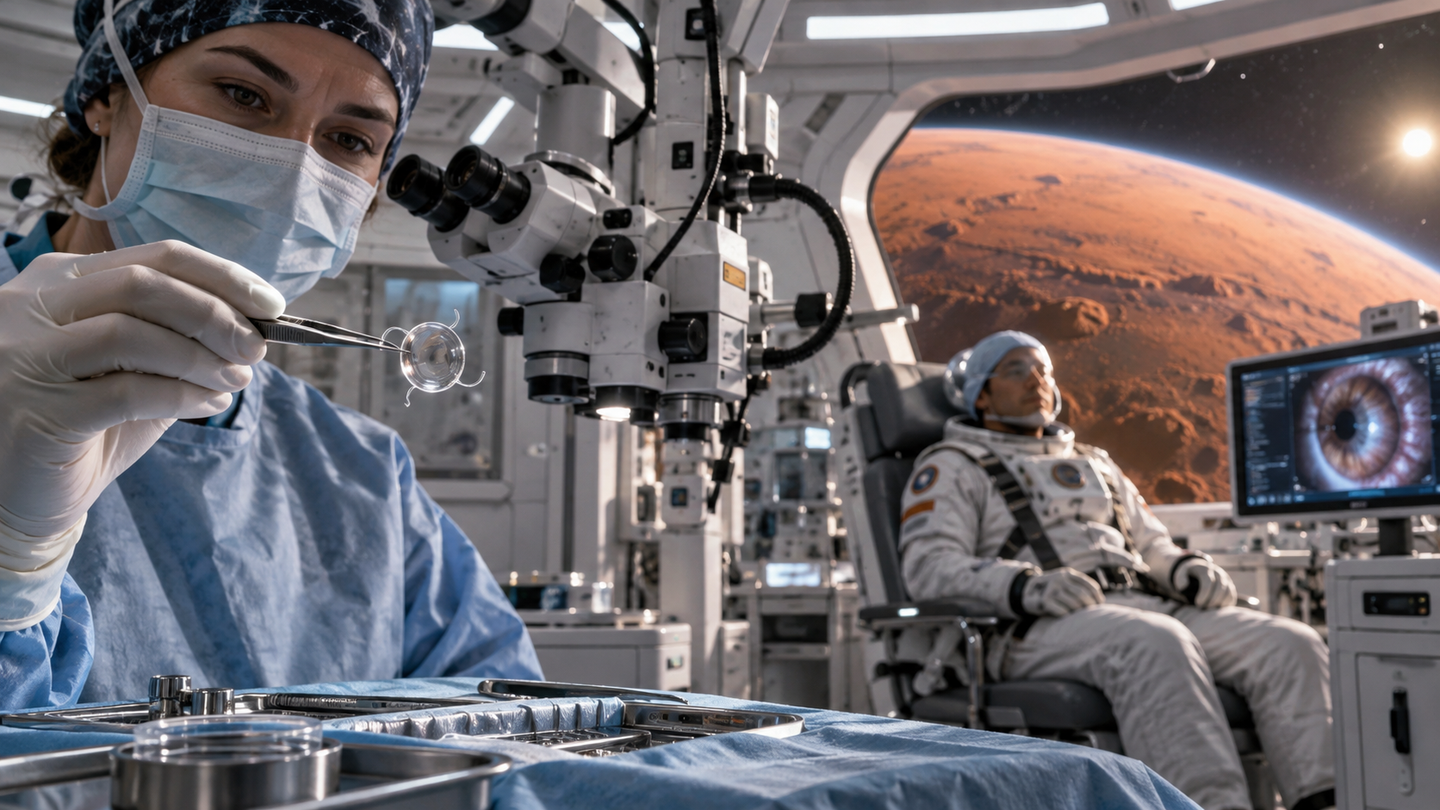
Artificial eye lenses exposed outside the ISS reveal how cataract surgery supplies might survive future missions to Mars. (CREDIT: Shutterstock)
- An exploratory space-medicine experiment sent 135 unpackaged intraocular lenses outside the International Space Station to learn how materials used in cataract surgery respond to vacuum, radiation, ultraviolet light, atomic oxygen and temperature cycling.
- Among 61 returned lenses examined so far, most showed no notable exposure-associated findings, but some developed cracking, surface roughening, yellow discoloration or an unexplained cobblestone-like surface appearance.
- The work does not show that cataract surgery can yet be performed in space. Instead, it addresses an earlier problem: how surgical lenses, equipment and sterile supplies might survive transport and storage during future missions to the Moon and Mars.
A future astronaut who develops a serious cataract while traveling to Mars may face a problem no spacecraft can solve by simply turning around. The journey could take many months, evacuation may be impractical, and the patient could eventually need treatment millions of kilometers from the nearest hospital.
That possibility has prompted Texas eye surgeon Dr. Morgan Micheletti to begin testing whether one of cataract surgery’s most important components can survive the space environment. Micheletti, from Berkeley Eye Center in Houston, presented results from the Joint Assessment Of Material Exposure In Space, or JAMES, project at the 44th Congress of the European Society of Cataract and Refractive Surgeons.
The experiment exposed modern intraocular lenses directly to conditions outside the International Space Station. These artificial lenses are normally implanted after surgeons remove a patient’s cloudy natural lens during cataract surgery, making their long-term stability essential if such procedures are ever attempted beyond Earth.
“I believe someone will need cataract surgery on Mars in my lifetime,” Micheletti said. “A Mars transit can require almost a year, and returning to Earth for a vision-limiting cataract, injury, or other surgical eye problem may not be realistic. Eventually, treatment will need to happen where the patient is.”
Preparing for a patient who cannot simply return to Earth
Cataracts gradually cloud the natural lens of the eye and can severely reduce vision. On Earth, surgeons routinely remove the affected lens and replace it with a transparent intraocular lens, or IOL, during one of the most frequently performed surgical procedures in medicine.
Deep-space missions create a very different medical problem because good vision at launch does not guarantee that astronauts will remain free from disease or injury. Aging, radiation exposure and accidents could all create ophthalmic problems during long missions, while future crews may include a broader range of ages and health histories than today’s highly selected career astronauts.
“Astronaut candidates do not need perfect uncorrected vision, and refractive correction or certain prior refractive surgeries can be compatible with selection,” Micheletti said. “More importantly, good vision at launch does not prevent aging, radiation exposure, injury or disease later.”
That makes logistics almost as important as surgical skill. Artificial lenses and sterile instruments may have to survive months or years of transportation, storage, vibration, radiation and extreme environmental conditions before anyone needs to use them.
“This work matters now because these systems must be designed and validated long before the first patient needs them,” Micheletti said. “We cannot wait until someone is on Mars to ask whether the lens, equipment and sterile supplies survived the trip.”
Researchers exposed 135 artificial lenses outside the ISS
The JAMES project sent 135 unpackaged IOLs to the International Space Station and placed them in specialized external carriers called CLAIRE, short for Carrier for Lens Analysis in Interstellar Research Expeditions. Researchers mounted the carriers at three locations chosen to expose the lenses to different parts of the low-Earth-orbit environment.
The Ram position received particularly high atomic-oxygen exposure, while the Zenith location experienced substantial ultraviolet radiation from the Sun. A third Underdeck location provided partial shielding from direct atomic oxygen and solar ultraviolet light by placing the lenses beneath the exposure platform.
The investigators intentionally subjected the lenses to harsher conditions than would normally be expected during medical transport. Their purpose was not to simulate the exact way cataract lenses would be packaged for a Mars mission, but to identify potential weaknesses that engineers would need to protect against.
“This was not intended to recreate how a packaged IOL would normally be shipped to Mars,” Micheletti said. “The purpose was to identify potential failure modes under harsh exposure so we can begin designing better packaging, shielding, storage and material selection strategies.”
Testing inside the ISS would not have addressed the same question because the station’s interior is pressurized and environmentally controlled. Future missions may also face strict mass and volume limits, creating pressure to minimize packaging and avoid relying on climate-controlled crew-cabin storage for every medical supply.
Most lenses showed no notable exposure-related findings
Researchers kept another 45 unpackaged lenses on Earth inside a control carrier called WILLIAM, or Worldly Interface for Lens Logistics and Integrated Astronomical Monitoring. Those lenses remained at normal atmospheric pressure and room temperature rather than undergoing launch and orbital exposure.
After approximately six months outside the ISS, all 135 flight lenses returned to Earth. The analysis presented so far covered 61 of those space-exposed lenses and 20 Earth controls, giving researchers a group of 81 lenses for detailed examination.
Dr. Liliana Werner and colleagues at the Intermountain Ocular Research Center at the University of Utah inspected them for clarity, surface deposits and evidence that the lens materials had deteriorated. Of the 61 flight lenses examined, 42 showed no notable findings associated with their exposure conditions.
Changes were observed in the remaining 19 lenses, although the researchers emphasized that the exploratory experiment was not designed to compare manufacturers or establish the clinical superiority of one material over another. The lenses had also been deliberately removed from their protective packaging before flight.
Atomic oxygen was linked to cracks and surface damage
The strongest surface changes appeared among lenses mounted in the Ram tray, where exposure to atomic oxygen was greatest. Eight of nine examined lenses from that location developed cracks and localized roughening consistent with the beginning stages of atomic-oxygen erosion.
All eight affected lenses were acrylic. Five were made from hydrophobic acrylic and three from hydrophilic acrylic, while the ninth lens in that subset was silicone and developed yellow discoloration rather than the same cracking pattern.
The experiment does not establish that those lenses would fail during an actual mission to Mars. A real medical payload would almost certainly use protective packaging or shielding, whereas the JAMES lenses were placed directly outside the station specifically to reveal how unprotected materials respond.
“The findings suggest that lens material and exposure location may influence the changes observed,” Micheletti said. “Packaging, shielding and storage were not compared in this experiment and are the next protective strategies we need to test.”
Some lenses became yellow after orbital exposure
Researchers observed yellow discoloration in five space-exposed IOLs, including two hydrophobic acrylic lenses and three silicone lenses. Four came from the Zenith position, where solar ultraviolet exposure was substantial, while one came from the Ram position.
Spectrophotometry showed that these lenses transmitted less light, particularly between wavelengths of 400 and 500 nanometers. Those measurements provide a physical indication that the optical properties had changed, although additional image-quality and clinical-performance testing has not yet been completed.
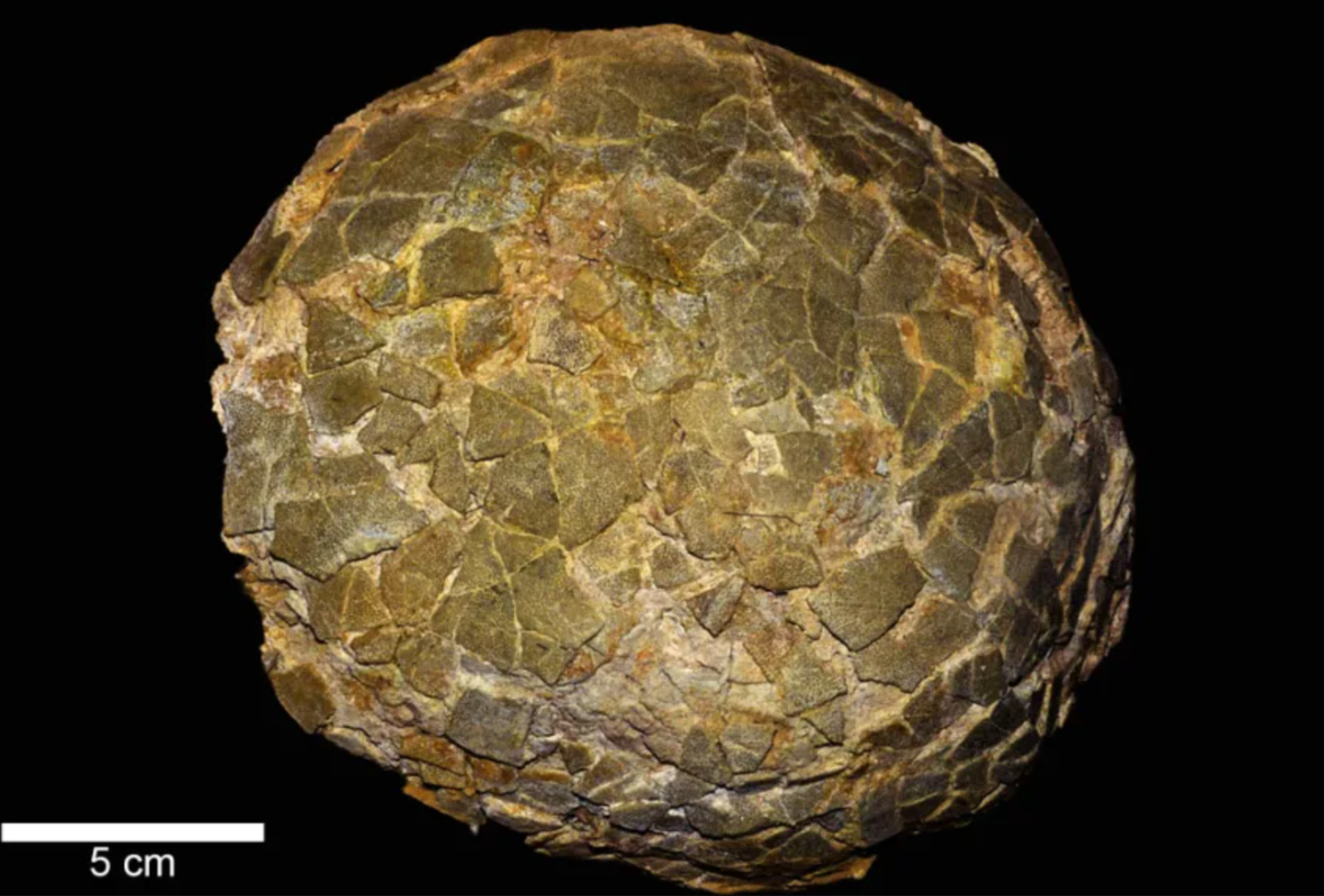
Another unexpected pattern appeared in all six space-exposed light-adjustable lenses included in the analysis. Their two surfaces and optic edges developed what the researchers described as a cobblestone or bubble-wrap appearance, while neither of the two corresponding terrestrial controls developed the same pattern.
The mechanism behind that change remains unknown, and researchers cannot yet exclude an explanation unrelated to direct exposure to the external space environment. Establishing the cause will require additional controlled testing with larger sample sizes and better-matched handling conditions.
The experiment has substantial limitations
Micheletti stressed that the work is exploratory and descriptive rather than a formal trial comparing different lens types. Sample sizes were both small and uneven, and some carrier positions contained only one lens representing a particular model.
The Earth controls also did not experience launch, orbital transport or atmospheric reentry. That difference makes it impossible to attribute every change specifically to ultraviolet radiation, atomic oxygen or another environmental factor outside the ISS.
Handling and contamination also remain possible influences because the lenses were deliberately unpackaged. Beyond transmission spectrophotometry, researchers have not yet completed full testing of mechanical integrity, optical image quality or clinical performance.
For those reasons, the findings should not be used to rank lens manufacturers or models, and they do not imply a safety issue for cataract surgery performed on Earth. Instead, the experiment identifies engineering questions that will matter only when medical supplies must spend extended periods beyond the protection of Earth’s atmosphere.
The next challenge is making the surgery itself work
Protecting an artificial lens is only one part of cataract surgery. Surgeons also rely on a phacoemulsification system that uses ultrasound energy and carefully controlled fluid movement to break apart and remove the cloudy natural lens.
Microgravity could alter how those fluids, surgical instruments and tissues behave during an operation. Micheletti therefore hopes to test a phacoemulsification system during parabolic flights that generate brief periods of microgravity.
If those experiments succeed, the next steps could include sustained microgravity testing and eventually an in-orbit surgical experiment. That progression would allow researchers to separate the challenges of materials, equipment and surgical technique rather than attempting everything at once.
“The progression has to be deliberate: first the materials, then the equipment, then the procedure and, ultimately, the surgery,” Micheletti said. “My long-term hope is to help make the first eye surgery beyond Earth possible.”
As missions move farther from Earth, the medical problem becomes increasingly practical rather than theoretical. Astronauts aboard the ISS still have the possibility of returning home during an emergency, but a crew traveling between Earth and Mars may have no realistic evacuation option.
The first cataract operation on another world remains years away, and JAMES does not demonstrate that such surgery is ready. It does show that researchers are beginning to work through the mundane but essential questions that must be answered first, including whether the lenses, machines and sterile supplies needed for an operation can survive the journey.
Dig deeper into eye health and surgery during long-duration spaceflight
These resources explore the ocular effects of spaceflight, radiation-related cataract risk and the wider medical challenges involved in performing surgery when returning a patient to Earth is impossible.
Ophthalmic and Visual System Changes in Human Spaceflight: A Review of Mechanisms, Measurement, and Countermeasures: Reviews ocular changes associated with long-duration spaceflight, including neuro-ocular effects, corneal changes and radiation-related risks to the lens. (Journal of Clinical Medicine, 2026)
AstroOphthalmology: ocular anterior segment: Examines spaceflight-related problems affecting the cornea, lens and other anterior structures of the eye, including cataracts and ophthalmic emergencies. (npj Microgravity, 2026)
Space Radiation Effects on the Glutathione Redox Cycle and Cataract Formation: Reviews mechanisms through which deep-space ionizing radiation could contribute to cataract development and discusses potential countermeasures. (Aerospace Medicine and Human Performance, 2026)
Surgery for interplanetary space missions: Examines the practical requirements for surgery during missions where evacuation is impossible, including fluid control, crew training and equipment constraints. (2026)
Clinical and material degradations of intraocular lenses: A review: Surveys known changes that can affect intraocular lens materials, including discoloration, surface alterations, calcification and reduced optical quality. (Eye, 2019)
The original story "Future Mars astronauts may need eye surgery millions of miles from Earth" is published in The Brighter Side of News.
Related Stories
- Lifechanging cataracts treatment eliminates the need for surgery
- Spiral-shaped lenses revolutionize cataracts and vision treatment
- Why do many patients develop scarring after cataract surgery?
Like these kind of feel good stories? Get The Brighter Side of News' newsletter.
Joseph Shavit
Writer, Editor-At-Large and Publisher
Joseph Shavit, based in Los Angeles, is a seasoned science journalist, editor and co-founder of The Brighter Side of News, where he transforms complex discoveries into clear, engaging stories for general readers. With vast experience at major media companies like The Los Angeles Times, Times Mirror and Tribune Publishing, he writes with both authority and curiosity. His writing focuses on space science, planetary science, quantum mechanics, geology. Known for linking breakthroughs to real-world markets, he highlights how research transitions into products and industries that shape daily life.