Giant dinosaurs found a clever way to keep their eggs warm near the Antarctic
Porous eggshells from Patagonia reveal that enormous titanosaurs could reproduce surprisingly close to the ancient Antarctic region.

 Edited By: Joseph Shavit

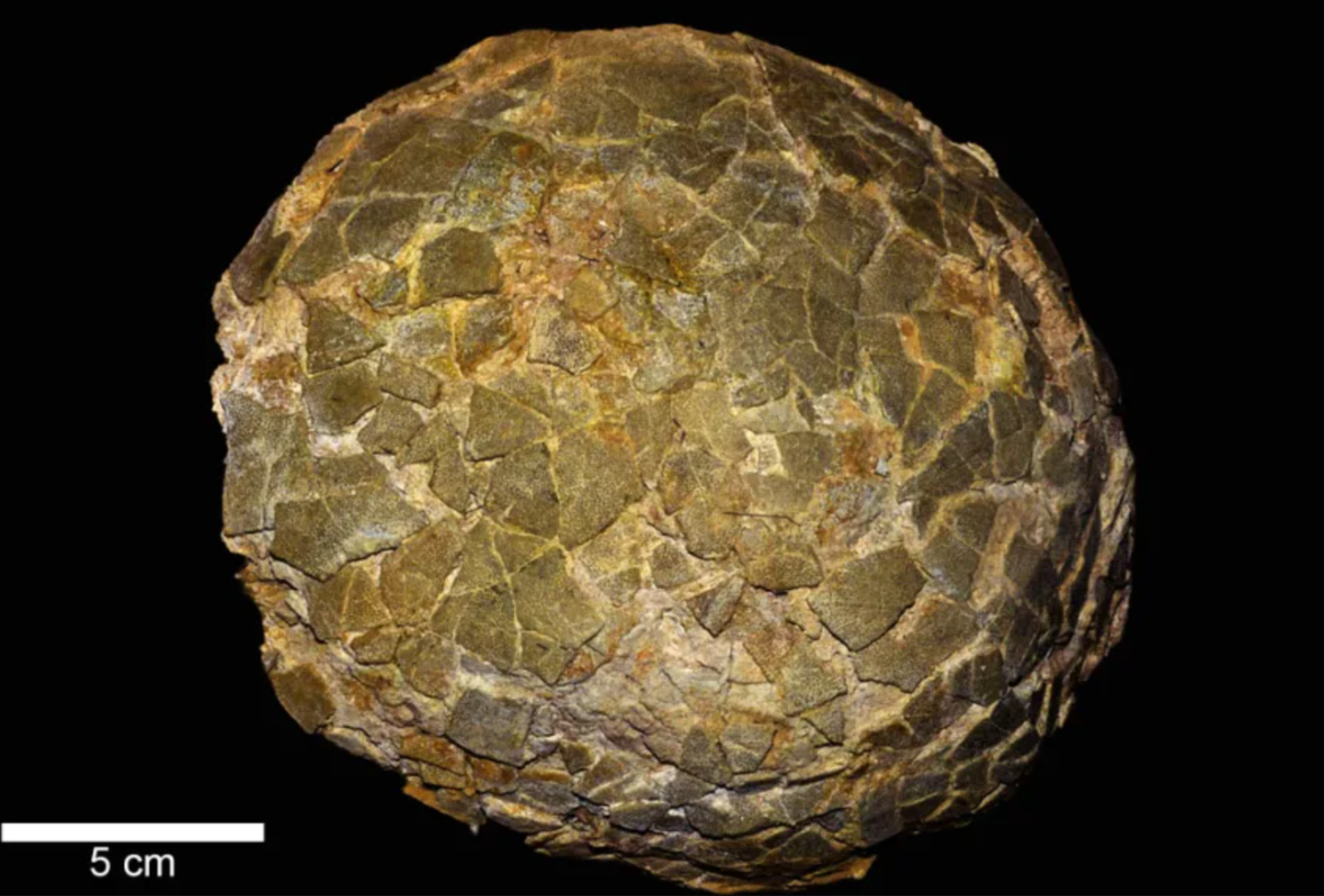
Dinosaur eggs are rarely fossilized because their thin, fragile shells are easily destroyed. (CREDIT: Darla Zelenitsky)
- Fossil eggshells from southern Patagonia show that titanosaurs were nesting at about 55° to 60° south latitude roughly 68 million years ago, farther from the equator than any previously documented sauropod nesting site.
- Microscopic analysis of 255 eggshell fragments revealed unusually high porosity, indicating that the eggs were probably buried in covered nests rather than exposed at the surface.
- The researchers propose that decaying vegetation could have supplied incubation heat in the cool, high-latitude environment, showing that giant sauropods had reproductive strategies flexible enough to extend into regions once thought challenging for nesting.
Some of the largest animals ever to walk the planet were apparently raising their young surprisingly close to the ancient Antarctic region.
Fossil eggshells from southernmost Patagonia show that titanosaurs nested at roughly 55° to 60° south latitude during the Late Cretaceous. The discovery pushes confirmed sauropod nesting farther from the equator than previously known and reveals how the giant dinosaurs may have incubated their eggs in a relatively cool environment.
Researchers examined 255 eggshell fragments recovered from Argentina's Chorrillo Formation, dating to about 68 million years ago. The work, published in Royal Society Open Science, identifies the shells as Fusioolithus, an egg type strongly associated with titanosaurs.
The microscopic structure of the shells provides another important clue. Their exceptional porosity indicates that the eggs were probably buried beneath soil or vegetation, where heat from decomposing plant material may have helped incubate them.
“Some of the very largest animals in Earth's history were laying eggs and hatching their babies at high latitudes in the Cretaceous,” said University of Edinburgh paleontologist Steve Brusatte, who was not involved in the research.
Dinosaur eggs appear far south of their usual range
Titanosaur fossils have been found across an extraordinary geographic range, including high-latitude regions. Fossilized eggs have told a different story.
Most known titanosaur nesting sites occur at low or middle paleolatitudes, with the average previously falling around 31 degrees from the equator. Until now, direct evidence that these enormous sauropods actually reproduced much farther south had remained scarce.
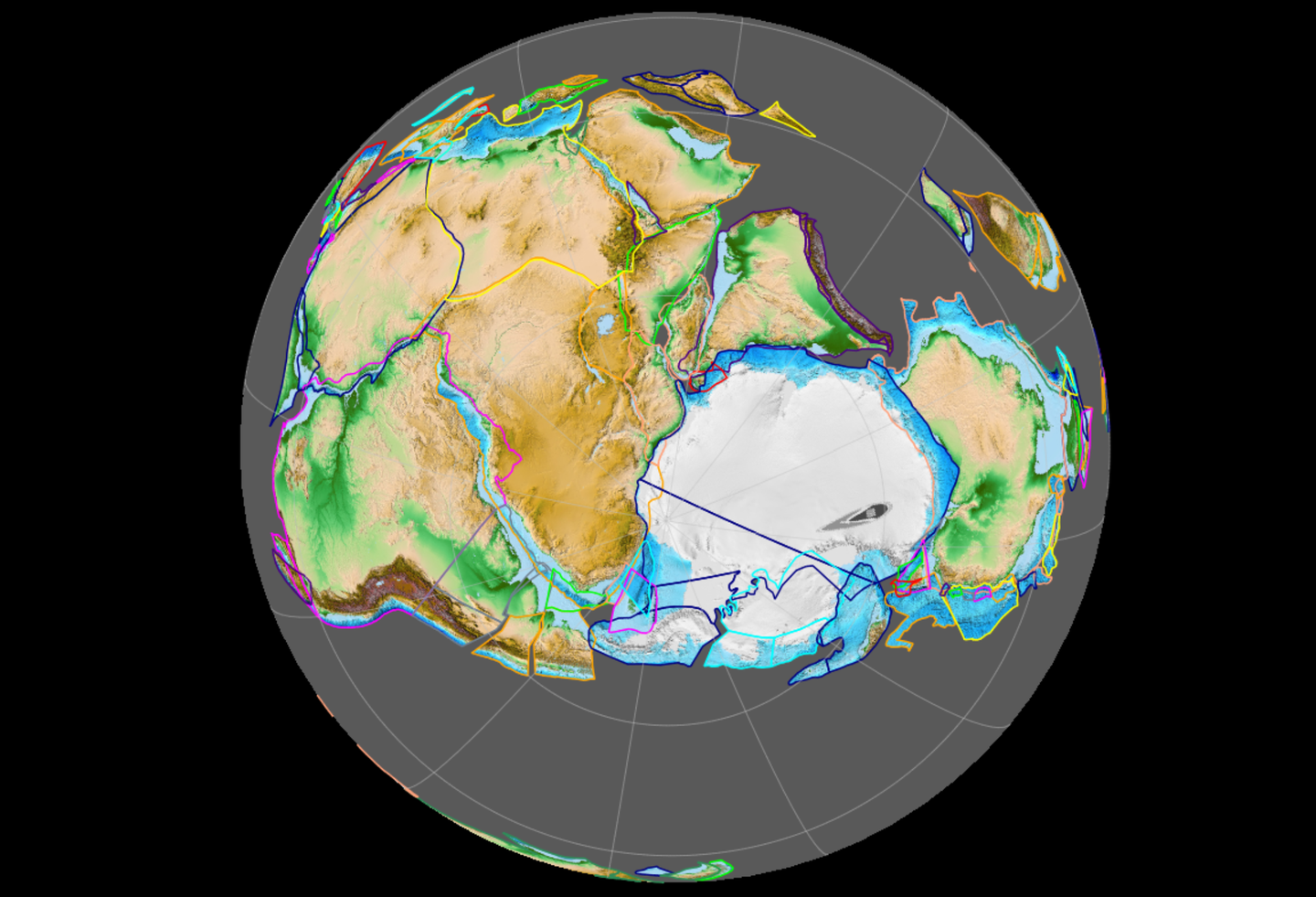
The Chorrillo Formation changes that picture. During the Maastrichtian stage near the end of the Cretaceous, this part of Patagonia sat at an estimated 55° to 60° south paleolatitude.
Researchers recovered the eggshells from mudstone and siltstone at the Magallanodon site, about 29 kilometers southeast of present-day El Calafate. Fossils from the formation reveal a diverse ecosystem containing titanosaurs, other plant-eating dinosaurs, predatory theropods, birds, mammals, reptiles, amphibians and fish.
Climate reconstructions indicate that the region was much warmer than modern Patagonia. Mean annual temperatures are estimated at roughly 12.1°C to 14.5°C, with seasonally humid conditions and substantial annual rainfall.
Even so, reduced sunlight and cooler seasonal temperatures would have created challenges for incubating eggs.
Tiny shells belonged to enormous animals
The eggshell fragments ranged from 0.63 to 1.78 millimeters thick, with an average thickness of 1.17 millimeters. Their microscopic structure, surface ornamentation and pore systems allowed researchers to classify them within the egg genus Fusioolithus.
The exact titanosaur species remains unknown. Titanosaur bones occur elsewhere in the formation, while titanosaur teeth were found at the same site as the eggshells. One possible group represented in the area includes colossal colossosaurian titanosaurs.
Despite the size adults could eventually reach, their eggs were remarkably modest.
Using known Fusioolithus eggs for comparison, researchers considered diameters ranging from approximately 110 to 230 millimeters. Their calculations produced estimated egg masses from about 729 grams to 6.7 kilograms.
The largest titanosaurs could weigh tens of thousands of kilograms as adults. Hatchlings therefore began life extraordinarily small compared with their eventual body size.
Such a size difference also makes traditional brooding unlikely. An adult titanosaur sitting directly on a nest would have risked crushing the eggs beneath its enormous mass.
Porous shells point toward buried nests
Instead, the shells themselves reveal another incubation strategy.
Researchers found an average pore density of about 3.17 pores per square millimeter. Statistical comparisons with eggs from living birds and crocodilians gave the Chorrillo eggs greater than 99.8% probability of belonging to a covered-nesting strategy.
Eggshell pores regulate the movement of gases and water vapor between a developing embryo and its surroundings. Highly porous shells make sense when eggs are buried in humid material because gas exchange must occur through the surrounding substrate.
The same porosity would create problems if the eggs remained exposed. They could lose excessive moisture and dry out.
“Their eggshells were very porous, which means if the eggs were left out in the open, they would lose water, dry out, and the embryos would die,” said University of Calgary paleontologist Darla Zelenitsky, a senior author of the research.
The evidence therefore points toward nests covered by sediment, vegetation or some combination of both.
Researchers envision large mounds capable of containing entire clutches. Zelenitsky compared them with structures roughly the size of picnic tables, potentially creating conspicuous features across communal nesting grounds.
Rotting plants may have worked like natural heaters
Burial solves the moisture problem but raises another question: What kept the embryos warm?
Modern crocodilians and megapode birds offer possible analogs. Some bury eggs and allow environmental heat to perform much of the incubation, using sunlight, geothermal warmth or heat produced as organic material decomposes.
Geothermal incubation has previously been proposed for some titanosaur nesting sites. The Chorrillo Formation, however, contains no evidence that geothermal activity provided the necessary heat.
Solar heating also becomes less effective at higher latitudes.
That leaves microbial decomposition as a plausible explanation. Vegetation piled around or above eggs can release heat while rotting, effectively turning a nest mound into a biological incubator.
Experiments with living animals show that decomposing vegetation can produce useful incubation temperatures even when surrounding air temperatures are around 15°C. That falls close to the reconstructed annual temperatures of the Chorrillo environment.
The researchers cannot prove that titanosaurs used rotting vegetation at this particular site, and the small number of known Fusioolithus nesting localities limits firm conclusions about their preferred substrates. Still, the combination of high shell porosity, climate and lack of known geothermal activity makes vegetation-generated heat a strong possibility.
Titanosaurs may have been less tied to warm climates than expected
The discovery changes what high-latitude titanosaur fossils can tell researchers.
Sauropod bones found far from the equator once left open the possibility that the enormous animals migrated seasonally, entering higher latitudes only when conditions were favorable. Eggs provide stronger evidence that at least some titanosaurs remained long enough to complete part of their reproductive cycle there.
“Now that we have eggs from a high latitude, this suggests that they might have stayed there all year, or at least were able to go through their reproductive cycle during the warm part of the year,” said University College London paleobiologist Paul Upchurch, who was not involved in the research.
The fossils do not establish year-round residency, and they do not identify precisely when during the year the nests were made. What they do show is that reproduction did not confine these giants to tropical or subtropical environments.
Titanosaurs had already conquered much of the terrestrial world by the Late Cretaceous. Their success may have depended not only on enormous bodies, herd behavior and long-distance movement, but also on surprisingly adaptable reproductive strategies.
In southern Patagonia, burying eggs beneath damp vegetation may have allowed some of Earth's largest dinosaurs to turn a challenging high-latitude landscape into a nursery.
Dig deeper into dinosaur nesting and egg incubation
These studies provide broader context for how paleontologists reconstruct dinosaur nesting behavior, incubation strategies and reproduction in environments ranging from tropical nesting grounds to the ancient Arctic.
Eggshell Porosity Provides Insight on Evolution of Nesting in Dinosaurs: Establishes eggshell porosity as a quantitative tool for distinguishing covered from open dinosaur nests and concludes that covered nesting was probably ancestral among dinosaurs. (PLOS ONE, 2015)
A new Argentinean nesting site showing neosauropod dinosaur reproduction in a Cretaceous hydrothermal environment: Documents an Argentine sauropod nesting ground where dinosaurs repeatedly used a hydrothermal environment to provide favorable conditions for egg incubation. (Nature Communications, 2010)
First titanosaur dinosaur nesting site from the Late Cretaceous of Brazil: Describes a Brazilian titanosaur nesting site and examines eggshell pores as adaptations affecting gas exchange under particular nesting and climatic conditions. (Scientific Reports, 2022)
Nesting at extreme polar latitudes by non-avian dinosaurs: Uses perinatal fossils from northern Alaska to demonstrate that multiple dinosaur groups reproduced above 75° north, providing a Northern Hemisphere comparison for high-latitude dinosaur reproduction. (Current Biology, 2021)
Sauropod dinosaur embryos from the Late Cretaceous of Patagonia: Reports unequivocal sauropod embryos and thousands of eggs from Argentina's Auca Mahuevo nesting ground, providing foundational evidence about titanosaur reproduction. (Nature, 1998)
Research findings are available online in the journal Royal Society Open Science.
The original story "Giant dinosaurs found a clever way to keep their eggs warm near the Antarctic" is published in The Brighter Side of News.
Related Stories
- Dinosaur eggshells are accurate timekeepers of fossil age, study finds
- Global first: Baby dinosaur found inside 70-million-year-old fossilized egg
- 250-million-year-old fossil proves that mammal ancestors laid eggs
Like these kind of feel good stories? Get The Brighter Side of News' newsletter.
Joshua Shavit
Writer and Editor
Joshua Shavit is a NorCal-based science and technology writer with a passion for exploring the breakthroughs shaping the future. As a co-founder of The Brighter Side of News, he focuses on positive and transformative advancements in technology, physics, engineering, robotics, and astronomy. Having published articles on AOL.com, MSN, Yahoo News, and Ground News, Joshua's work highlights the innovators behind the ideas, bringing readers closer to the people driving progress.