MIT study finds brain circuits may work like reusable building blocks for thought
Reusable brain modules in mice let the same prefrontal neurons hold either a sound or an action plan in working memory.
 MIT Writer: Sarah McDonnell

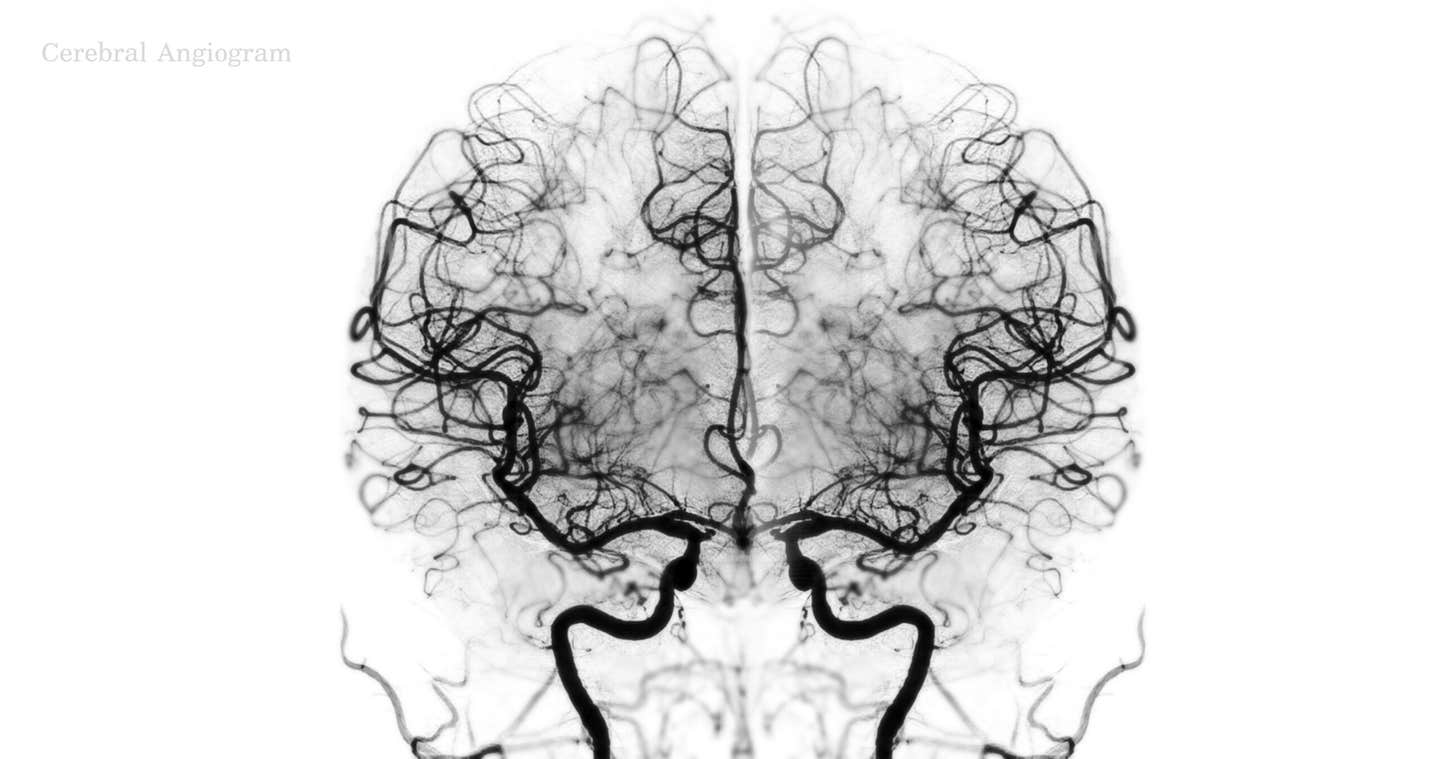
MIT neuroscientists found flexible neuron clusters that can store different kinds of information during a task. (CREDIT: Shutterstock)
- MIT researchers found mouse brain cells that can reuse the same working-memory system for different kinds of information.
- In the prefrontal cortex, one cluster of neurons could hold either a remembered sound or a planned action.
- The findings support the idea that flexible behavior comes from reusable brain “building blocks,” not separate circuits for every task.
A grocery list, a store clerk’s directions and the decision to count out cash may feel like separate mental chores. The brain may handle them by reusing the same neural tools.
MIT neuroscientists have found evidence in mice for flexible brain modules that can perform the same computation across different kinds of tasks. The work focused on neurons in the prefrontal cortex, a brain region involved in planning and decision-making.
Yuma Osako, an MIT postdoc, is the lead author. Senior authors are Mriganka Sur, the Newton Professor of Neuroscience at MIT’s Picower Institute for Learning and Memory, and Timothy Buschman, a professor at the Princeton Neuroscience Institute.
The team found that some neurons could store either sensory information or an action plan in working memory. Working memory is the temporary holding space the brain uses to keep information available for immediate use.
“We found that the brain doesn’t dedicate a separate group of neurons for every type of information. Instead, it uses the same populations of neurons to perform the same computation on different kinds of information, which means the same subset of neurons can hold both an action and a sensory stimulus in working memory,” Osako says.
Cognitive parts that can be reused
Scientists have long suspected that the brain may rely on reusable modules, or clusters of neurons, that perform similar operations in many settings.
That idea is called compositionality. It suggests that the brain can combine pieces of cognition, much like building blocks, to create many different behaviors.
“One of the solutions that’s always been proposed has been this idea of compositionality — that you can take pieces of cognition that perform part of a task and reuse them in another task,” Buschman says.
Buschman’s lab previously showed that animals can assemble neural circuits for different parts of a task, such as sorting objects by shape or color. These circuits acted like “cognitive Legos,” flexible pieces that could support new behaviors.
Osako and Sur wanted to test a related question. Could individual neural circuits be repurposed to perform different functions?
“Our everyday life requires us to temporarily hold many different kinds of information. One big question is how the brain can represent an unlimited variability of information using only a finite number of neurons,” Osako says.
A mouse task with two memories
To study that question, the researchers trained mice on a task involving two tones. The animals had to decide whether the tones were the same.
One tone could be high pitched or low pitched. After hearing the first tone, the mouse had to hold that sound in memory. Then it heard a second tone.
After the second tone, the mouse had to decide what to do. During that period, it held a decision and action plan in working memory.
The researchers recorded electrical impulses from thousands of neurons as the mice performed the task. They focused on the prefrontal cortex and the parietal cortex.
The prefrontal cortex helps with executive functions, including planning and decision-making. The parietal cortex processes sensory information and helps plan movement.
After recording the neurons, the team used computational analyses to identify groups of cells that encoded specific pieces of information.
One region, two different jobs
The parietal cortex showed a more specialized pattern. Its neurons appeared to store the memory of the tone.
The prefrontal cortex showed something more flexible. There, the researchers identified a cluster of neurons that could switch between two kinds of memory.
During the first delay, this cluster stored a memory of the first tone. During the second delay, the same cluster helped remember the plan of action.
That means the same population of neurons could hold different content at different moments. First, it held a sensory stimulus. Later, it held a planned response.
Reusing these clusters may let animals store different kinds of information without needing separate neuron groups for every possible mental item.
“When mice do tasks that test whether memory computations can be reused, the answer is they are. There are subspaces of functional activity in the prefrontal cortex that can be the substrate of mixing and matching toward flexible cognition,” Sur says.
Why flexible circuits matter
The finding supports the idea that the brain saves effort by reusing computations. It does not need to build a new circuit every time an animal learns a new task.
“The main result from this study is that there’s a circuit in the brain that maintains items in working memory, and you can put either sensory or motor information into it, and flexibly reuse it depending on what your current task is,” Buschman says. “This means you do not have to build an entire new circuit for holding information in mind every time you want to learn a new task.”
That reuse could help explain why the brain handles so many different demands with limited biological hardware. The same operation, such as holding something in working memory, can apply to different kinds of information.
A person may briefly remember a sound, a location, an instruction or a plan. The content changes. The underlying computation may partly stay the same.
The study does not suggest the entire brain works as a set of simple blocks. But it gives evidence that some neural populations can act as reusable parts in flexible cognition.
From mouse behavior to broader principles
The task in the study was simple compared with daily human thought. The mouse only had to compare two tones and respond accordingly.
But the mental steps still matter. The animal had to sense, remember, compare, decide and prepare an action. Those pieces resemble basic operations that appear in many behaviors.
That is why the finding matters beyond one mouse task. It gives researchers a way to study how the brain combines smaller computations into complex behavior.
The study also draws a sharper distinction between brain regions. The parietal cortex appeared more tied to sensory memory. The prefrontal cortex appeared able to reuse a working-memory cluster for different content.
This fits the prefrontal cortex’s role in flexible behavior. Planning and decision-making often require the brain to keep many kinds of information available, then use them when the moment arrives.
Dig deeper into working memory and compositional brain circuits
These resources explore neural subspaces, working memory and how reusable representations may support flexible cognition.
Building compositional tasks with shared neural subspaces: This study showed that monkeys reuse neural subspaces representing sensory information and motor actions across different tasks, providing complementary evidence for compositional cognition. (Nature, 2026)
Task representations in neural networks trained to perform many cognitive tasks: Artificial recurrent networks trained across many tasks developed compositional representations and specialized functional clusters resembling patterns observed in prefrontal cortex. (Nature Neuroscience, 2019)
Prefrontal cortex and basal ganglia control access to working memory: Human imaging experiments showed how frontal and basal-ganglia activity helps determine which information gains access to working memory. (Nature Neuroscience, 2008)
Integration of diverse information in working memory within the frontal lobe: This human imaging study found increased prefrontal activity when people maintained integrated combinations of verbal and spatial information. (Nature Neuroscience, 2000)
Layer-dependent activity in human prefrontal cortex during working memory: High-resolution brain imaging revealed distinct patterns across cortical layers during different stages of working-memory processing. (Nature Neuroscience, 2019)
Research findings are available online in the journal Nature Neuroscience.
The original story "MIT study finds brain circuits may work like reusable building blocks for thought" is published in The Brighter Side of News.
Related Stories
- Surprise helps people learn and think better, brain study finds
- Stanford researchers discover a language-specific network hidden in the human brain
- Brain-inspired AI model adapts and plans without massive data centers
Like these kind of feel good stories? Get The Brighter Side of News' newsletter.
Joshua Shavit
Writer and Editor
Joshua Shavit is a NorCal-based science and technology writer with a passion for exploring the breakthroughs shaping the future. As a co-founder of The Brighter Side of News, he focuses on positive and transformative advancements in technology, physics, engineering, robotics, and astronomy. Having published articles on AOL.com, MSN, Yahoo News, and Ground News, Joshua's work highlights the innovators behind the ideas, bringing readers closer to the people driving progress.