New Triassic fossil reveals bird-like reptile related to crocodiles
Scientists discover Labrujasuchus, a bird-like reptile from the crocodile lineage in the Triassic period.

 Edited By: Joseph Shavit

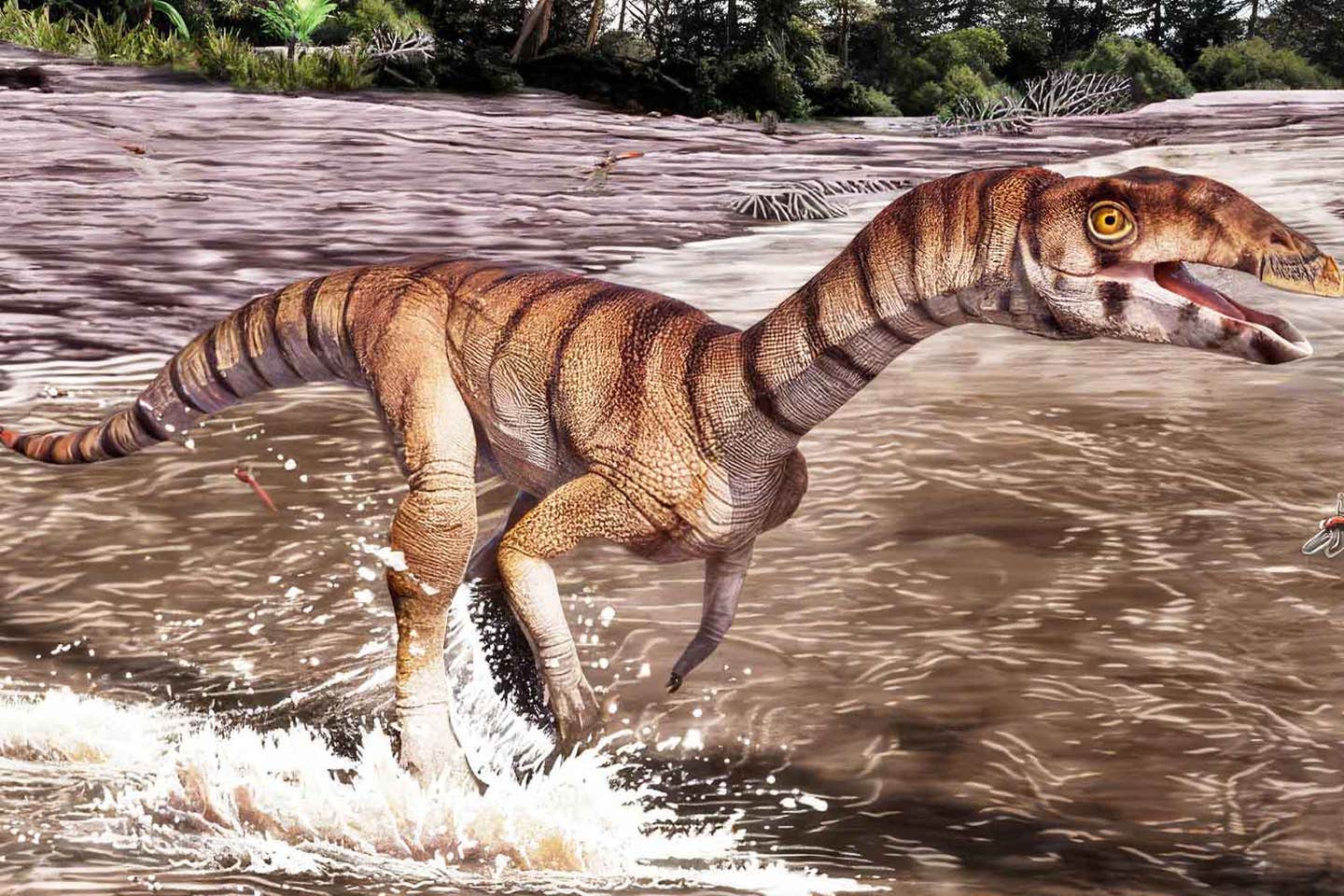
A new Triassic fossil reveals a two-legged, beaked reptile that evolved along the crocodile lineage. (CREDIT: Jorge Gonzalez, NHMLAC Dinosaur Institute)
More than 200 million years ago, life on Earth was experimenting with new forms. The Triassic period gave rise to animals that look oddly familiar today, yet belonged to very different lineages. A newly described species by the Natural History Museum of Los Angeles County, Labrujasuchus expectatus, captures that moment of evolutionary trial and error.
The fossil reveals a creature that walked on two legs, had short arms, and a toothless beak. At first glance, it resembled later bird-like dinosaurs. Yet it belonged to a branch of archosaurs that would eventually lead to crocodiles.
This unexpected mix of traits highlights how unusual the Triassic world truly was. It also shows how evolution often follows surprising paths.
A Discovery From A Legendary Site
The fossil emerged from Ghost Ranch, a region known for preserving ancient life in remarkable detail. The site has produced thousands of fossils over decades of research.
The new species name reflects both its location and its long-awaited discovery. “Labrujasuchus” references the historic name “Ranchos de los Brujos,” or Ranch of the Witches. The species name “expectatus” acknowledges that scientists suspected such a creature existed.
Dr. Alan Turner, lead author of the study, explains the broader significance. “We see a lot of the successful strategies for modern animals and non-avian dinosaurs first arise in the Triassic, and shuvosaurs are a great example of that convergent evolution.”
The find fills a gap between earlier and later relatives. It provides a clearer timeline for how these animals evolved.
Not Quite A Dinosaur, Not Quite A Crocodile
Labrujasuchus belonged to a group called shuvosaurids. These reptiles were part of the archosaur family, which includes both dinosaurs and crocodiles.
Despite their crocodile ancestry, shuvosaurids looked nothing like modern crocodiles. They walked upright on two legs and had light, bird-like bodies. Their mouths lacked teeth and likely ended in a beak.
This resemblance to dinosaurs is an example of convergent evolution. Different groups developed similar body shapes because they adapted to similar lifestyles.
Dr. Turner notes that walking on two legs was unusual for crocodile relatives. However, it proved effective for many animals, including dinosaurs and later birds.
A World Of Evolutionary Experiments
The Triassic period hosted a wide range of strange creatures. It was a time when many body plans first appeared.
Among them were lagerpetids, early relatives of pterosaurs that would later take to the skies. Tree-dwelling reptiles like Drepanosaurus used clawed limbs and grasping tails. Aquatic species such as Vancleavea resembled armored tanks in the water.
Labrujasuchus fit into this diverse landscape. Its body plan shows how different groups explored similar solutions to survival.
These experiments shaped the future of life on Earth. Some lineages thrived, while others disappeared.
Filling A Missing Link In Time
Before this discovery, scientists had identified only a handful of shuvosaurid species. Fossils from earlier and later periods suggested a gap in the middle.
Labrujasuchus fills that gap. Its age places it between previously known species, helping researchers trace how the group changed over time.
Dr. Nate Smith, co-author and curator at the NHMLAC Dinosaur Institute, explains the importance of this pattern. Finding species from different periods allows scientists to predict where new fossils might appear.
He notes that the discovery reflects how the fossil record works. Gaps often point to species that have yet to be found.
A Body Built For Movement
The anatomy of Labrujasuchus suggests it was well adapted for life on land. Strong hind legs supported its upright posture. Its smaller front limbs played a limited role.
The absence of teeth indicates a specialized diet. It may have eaten plants, insects, or small animals. The beak-like mouth suggests flexibility in feeding behavior.
This combination of traits shows how evolution can produce similar solutions in unrelated groups. The body plan resembles later dinosaur species, even though the lineage differs.
A Stable Design Over Time
One surprising finding is how little shuvosaurids changed over millions of years. Once they developed this body structure, they maintained it.
This stability contrasts with other reptile groups that evolved rapidly during the same period. It suggests that the shuvosaurid design worked well in its environment.
Researchers believe this success reduced the need for major changes. The animals had already found an effective way to survive.
Ghost Ranch And Two Decades Of Discovery
The discovery also marks a milestone in ongoing research at Ghost Ranch. Excavations there have continued for more than 20 years.
The site’s layered rocks preserve a detailed record of Triassic life. Fossils from the Hayden Quarry alone number in the tens of thousands.
Joanne Lefrak, director at the Ghost Ranch Education and Retreat Center, highlights the importance of this work. The site supports both scientific research and public engagement with ancient history.
Its landscapes, once painted by Georgia O’Keeffe, now reveal stories from deep time.
Why The Triassic Still Matters
The Triassic period may feel distant, but its impact remains. Many modern animal traits first appeared during this time.
Understanding these early developments helps scientists trace how life evolved. It also offers clues about how species respond to environmental change.
The strange forms of the Triassic echo in modern ecosystems. Studying them provides insight into both the past and the present.
A Reminder Of Life’s Complexity
Labrujasuchus expectatus stands as a reminder that evolution rarely follows a straight path. Different groups can arrive at similar solutions in unexpected ways.
The fossil record continues to reveal these hidden stories. Each new discovery adds depth to our understanding of life’s history.
This species, once buried in stone, now helps explain how diverse and unpredictable evolution can be.
Practical Implications Of The Research
This research expands scientific understanding of evolution during a critical period in Earth’s history. By identifying how different groups developed similar body plans, it helps explain how modern animals came to exist.
The findings also improve knowledge of biodiversity and extinction. Understanding which traits led to survival can guide conservation efforts today. Studying past ecosystems may help predict how current species will respond to climate change.
For paleontology, the discovery highlights the importance of filling gaps in the fossil record. It shows that even well-studied regions can still reveal new species. Continued excavation and analysis may uncover more missing links.
More broadly, the research reminds scientists and the public that evolution is complex and often unpredictable. This perspective can shape future studies in biology, ecology, and environmental science.
Research findings are available online in the Journal of Vertebrate Paleontology.
The original story "New Triassic fossil reveals bird-like reptile related to crocodiles" is published in The Brighter Side of News.
Related Stories
- 574 million-year-old fossils reveal a lack of sex delayed evolution for millions of years
- Fossil discovery solves 500-million-year-old mystery about the dawn of animal life
- 500-million-year-old fossil rewrites a missing chapter of Earth’s history
Like these kind of feel good stories? Get The Brighter Side of News' newsletter.
Hannah Shavit-Weiner
Medical & Health Writer
Hannah Shavit-Weiner is a Los Angeles–based medical and health journalist for The Brighter Side of News, an online publication focused on uplifting, transformative stories from around the globe. Having published articles on AOL.com, MSN and Yahoo News, Hannah covers a broad spectrum of topics—from medical breakthroughs and health information to animal science. With a talent for making complex science clear and compelling, she connects readers to the advancements shaping a brighter, more hopeful future.