Old World War wrecks are still leaking TNT into the North Sea
North Sea war wreck pollution is leaking TNT from old munitions into water, seabed sediment and marine life.
 Aarhus University Writer: Jeppe Knudsen

The UC-30 submarine sank in 1917, but its explosives are still affecting the surrounding marine environment. (CREDIT: Shutterstock)
- Old war wrecks in the North Sea are leaking explosive chemicals into nearby water, sediment and marine life.
- Mussels and other samples collected from the UC-30 submarine wreck showed traces of TNT and related compounds.
- Researchers say the pollution appears localized for now, but it may worsen as wrecks corrode and expose more munitions.
A German submarine sank off Rømø in 1917 with mines, torpedoes and 27 crew members aboard. More than a century later, its wreck is still changing the sea around it.
The submarine, UC-30, had been heading back toward Germany after engine trouble forced it to abandon a mission in Ireland. It carried 18 mines and six torpedoes, making it heavily loaded with explosives. On April 19, 1917, it struck a British mine and sank.
The wreck disappeared until Danish diver Gert Normann Andersen found it in 2016, nearly 100 years later.
UC-30 is now part of a larger environmental question facing the North Sea. Many wartime wrecks still contain munitions. As saltwater corrodes metal hulls and casings, explosive chemicals can leak into the marine environment.
A submarine turned pollution source
Katrine Juul Andresen, a professor at the Department of Geoscience at Aarhus University, helped investigate UC-30 through the NorthSeaWrecks research project.
Together with navy divers, she collected samples of surrounding water, seabed sediment, starfish and mussels living on the wreck. Civilian divers cannot visit the site, so the military role mattered.
“Civilian diving is not permitted on the wreck, so we received great assistance from navy divers. After receiving instructions, they dove down and collected sediment samples, water samples, and wildlife samples from various locations on the wreck and from the surrounding seabed.”
The divers also documented the site.
“The divers also recorded video and took photos, which we subsequently used to assess the exposure of the mines and the condition of the wreck.”
After analyzing the samples, Andresen concluded that explosives inside the wreck are polluting the surrounding ecosystem.
“We found traces of TNT in the wildlife, the seabed, and the water column. Pollution is definitely occurring. The question is how significant the effect is and how far from the wreck the pollution impacts the marine environment. It is likely a relatively localized source of pollution, but it will worsen as the wreck continues to deteriorate and expose more of the explosive material inside the mines,” she says.
The North Sea’s buried war history
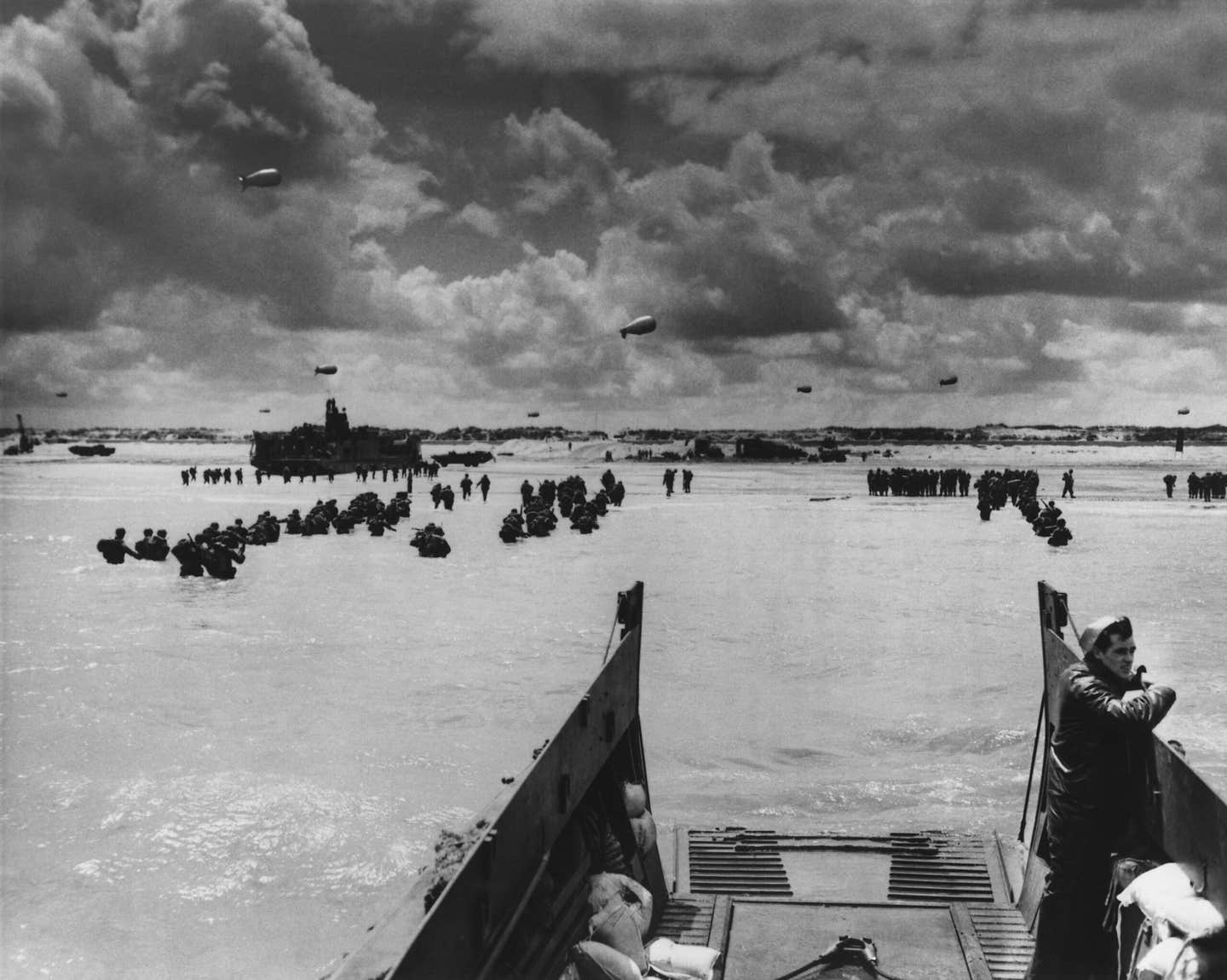
The North Sea played a major role during World War I. Germany and Britain both needed control of the waters because shipping lanes could decide which goods entered and left each country.
Germany had a smaller fleet than Britain, so it relied heavily on submarines. These vessels could approach British ships underwater and sink them.
Both nations also laid mines across the region. An estimated 190,000 mines were deployed in the North Sea during World War I.
The area also saw the Battle of Jutland, the largest naval clash in history. The German and British navies fought off Hanstholm in Northern Jutland. More than 25 ships sank, and nearly 10,000 sailors died.
That wartime activity left many wrecks on the seabed. Some are historical artifacts. Some are graves. Some are now pollution sources.
Thousands of wrecks in Danish waters
UC-30 is only one example. In 2024, Andresen prepared a report for the Danish Environmental Protection Agency on environmental risks from historical wrecks in Danish waters.
“In the report, I found that there are 10,127 wrecks in Danish waters. Around 15 percent of them date back to the years around and during the two world wars [1910–1920 and 1940–1945, ed.]. That is quite a high number,” she says.
The agency commissioned the report to assess how Denmark can comply with the EU Water Framework Directive. Andresen said research already shows that wrecks can pollute the local marine environment.
“I am not aware of whether the agency has taken the work further since the report was published in 2024. However, research shows that the wrecks represent a source of pollution for the local marine environment,” she says.
The problem extends beyond Denmark. Old wrecks and munitions remain across European seas. Their condition depends on location, currents, seabed shape and corrosion.
Why cleanup is not simple
Germany has moved further on the issue than Denmark, Andresen said. German lawmakers have allocated substantial funds to recover some wreck material and World War II munitions from the Baltic Sea.
After World War II, the Allies dumped large amounts of ammunition into the sea to keep it from falling into the wrong hands. Like wrecks, that dumped ammunition can pollute marine ecosystems.
“The Germans are further ahead with this than we are in Denmark. They sometimes retrieve explosives from the wrecks and neutralize them, but doing so is very costly,” Andresen notes.
The obvious answer might seem to be detonation. But underwater explosions can spread contamination and worsen the problem in some settings.
“It depends on the area where the wreck and munitions lie. Currents and seabed morphology play a major role. In some cases, detonating them can do more harm than good,” she explains.
Retrieval can also be difficult and expensive. Many wrecks sit in deep or rough waters. Some munitions remain unstable. Others lie partly buried in sediment.
Robots may help map the danger
Andresen is also involved in the EU-funded REMARCO project, which studies ways to remove munitions and historical wrecks.
“We are trying to identify the most gentle solutions to the problem, as there is unfortunately no easy way to clean it up,” she says.
Some researchers in the project are developing crawling seabed robots. These machines could map the exact locations of dangerous munitions and help monitor wrecks over time.
“In some cases, the robots can also pick up items, retrieve them from the sea and neutralize them. That could be one viable solution for the future.”
Not every wreck needs immediate action. Some are buried fully or partly under the seabed. Sand can lower the risk by reducing contact between seawater and explosive material.
“Some wrecks are fully or partially buried in the seabed. When covered by sand, the risk of polluting the surrounding sea is significantly lower. It is a matter of identifying where the environmental threat is greatest – and then deciding whether the munitions on the wrecks should be removed,” she concludes.
Practical implications of the research
The findings give coastal managers a clearer reason to monitor wartime wrecks as active environmental risks, not only as historical sites. Sampling water, sediment and wildlife can show where explosives are leaking and where pollution remains limited.
That information could help agencies decide which wrecks require closer watching, which need intervention and which are safer left buried. It could also guide decisions about whether munitions should be retrieved, neutralized or left in place.
As corrosion continues, the risk may change. Long-term monitoring and careful mapping can help prevent small, localized pollution sources from becoming larger problems for marine ecosystems.
Dig deeper into wartime wrecks, underwater munitions and marine pollution
These resources examine how corroding wartime munitions release explosives into European seas, how marine organisms respond, and how authorities can monitor and manage the growing environmental risk.
Toxicity and bioaccumulation of trinitrotoluene (TNT) in fish: a review on fish health, with an emphasis on leakage from marine-dumped legacy conventional munitions
This review brings together evidence on TNT uptake and toxicity in fish, including recent monitoring near North Sea and Baltic Sea munitions sites, and assesses what chronic exposure could mean for fish health. (Environmental Sciences Europe, 2026)
Widespread environmental contamination from relic munitions in the southwestern Baltic Sea
Researchers detected explosive compounds across much of the southwestern Baltic Sea and modeled how TNT dissolves, degrades and spreads from old munitions. Their results indicate that existing seabed munitions could sustain contamination for centuries. (Chemosphere, 2025)
Towards a good environmental status: a 4-year monitoring study on the contamination of the Bay of Luebeck with energetic compounds prior to munitions remediation
This four-year monitoring program measured TNT and related explosive compounds around major Baltic Sea dumping areas and evaluated whether munitions contamination could be incorporated into routine coastal-water monitoring. (Archives of Toxicology, 2025)
Risk assessment of war wrecks – a comprehensive approach investigating four wrecks containing munitions in the German Bight/North Sea
The study combines historical records, wreck inspections and environmental sampling to assess pollution risks from four munition-bearing wrecks in the North Sea, showing how individual wrecks can be evaluated and prioritized. (Propellants, Explosives, Pyrotechnics, 2024)
HELCOM Thematic Assessment on Hazardous Submerged Objects in the Baltic Sea
This regional assessment examines conventional munitions, naval mines, torpedoes, chemical weapons and other wartime materials across the Baltic Sea, providing a broad expert overview of their locations, environmental risks and management challenges. (Helsinki Commission, 2024)
Research findings are available online in the journal Marine Pollution Bulletin.
The original story "Old World War wrecks are still leaking TNT into the North Sea" is published in The Brighter Side of News.
Related Stories
- Shipwreck of Captain James Cook’s HMS Endeavour finally discovered after 250 years
- Mysterious shipwreck off Rhode Island could be Captain Cook's missing ship
- Shipwrecks have become covert sanctuaries for marine life, study finds
Like these kind of feel good stories? Get The Brighter Side of News' newsletter.
Joshua Shavit
Writer and Editor
Joshua Shavit is a NorCal-based science and technology writer with a passion for exploring the breakthroughs shaping the future. As a co-founder of The Brighter Side of News, he focuses on positive and transformative advancements in technology, physics, engineering, robotics, and astronomy. Having published articles on AOL.com, MSN, Yahoo News, and Ground News, Joshua's work highlights the innovators behind the ideas, bringing readers closer to the people driving progress.