Powerful new magnetic system could help spacecraft survive the brutal heat of reentry
Researchers produced 1.58-tesla magnetic fields and changed the shock layer around models traveling through simulated reentry conditions.
 Tokyo Metropolitan University Writer: Go Totsukawa

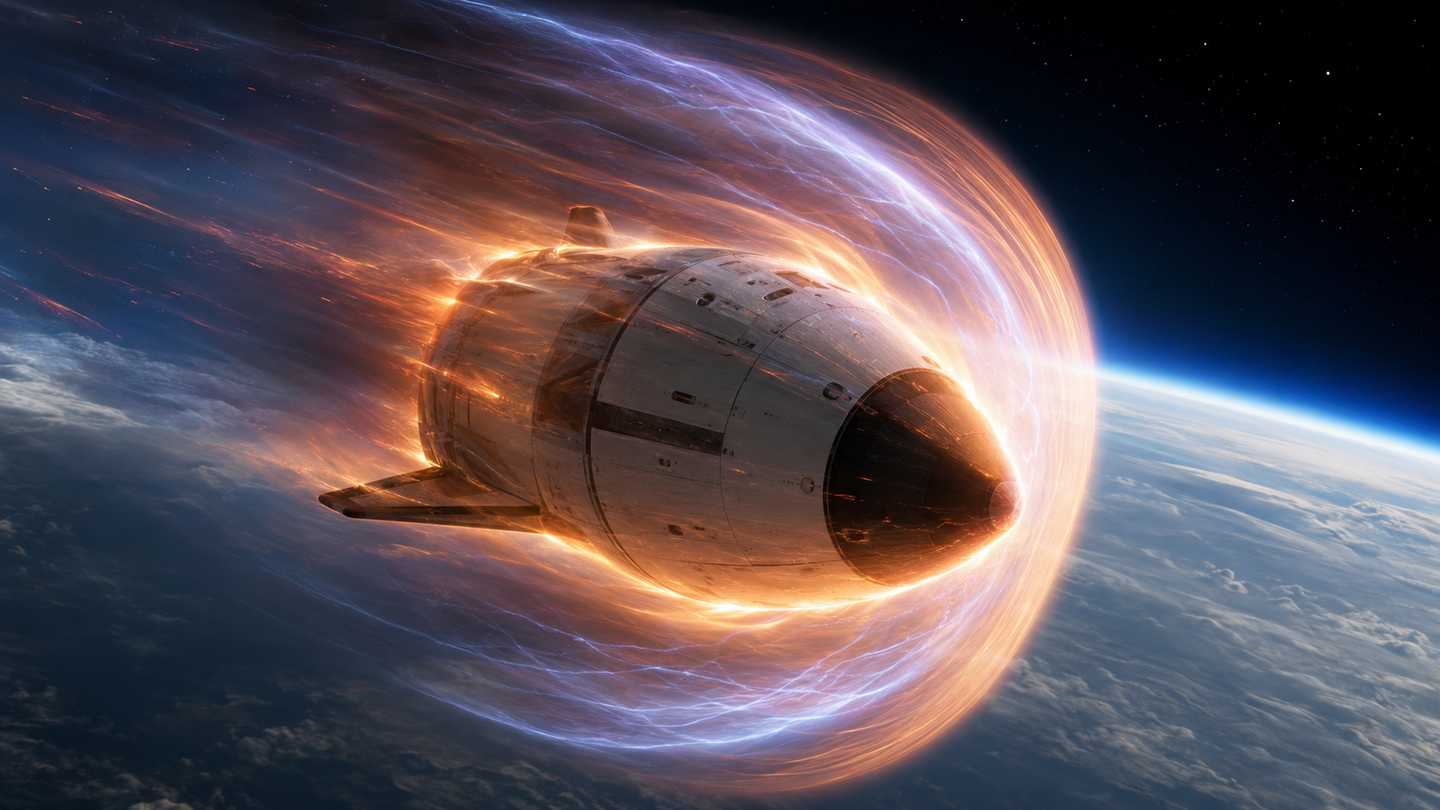
A powerful pulsed magnet expands the shock layer around spacecraft models, advancing a possible new approach to surviving reentry heat. (CREDIT: Shutterstock)
- Tokyo Metropolitan University researchers built a pulsed electromagnet system that can test magnetic aerobraking under shockwaves traveling about 7.7 kilometers per second.
- The system produced magnetic fields of 1.24 and 1.58 tesla, reaching roughly 1.7 and 2.1 times the strength of the permanent magnet used for comparison.
- Applying the magnetic field expanded the glowing shock layer by about 16%, supporting the idea that magnetic forces could someday help protect and slow spacecraft during atmospheric reentry.
A spacecraft plunging into an atmosphere faces an environment violent enough to heat the gas around its surface to thousands of degrees. Engineers have traditionally dealt with that punishment by putting something tough, expendable or both between the vehicle and the heat.
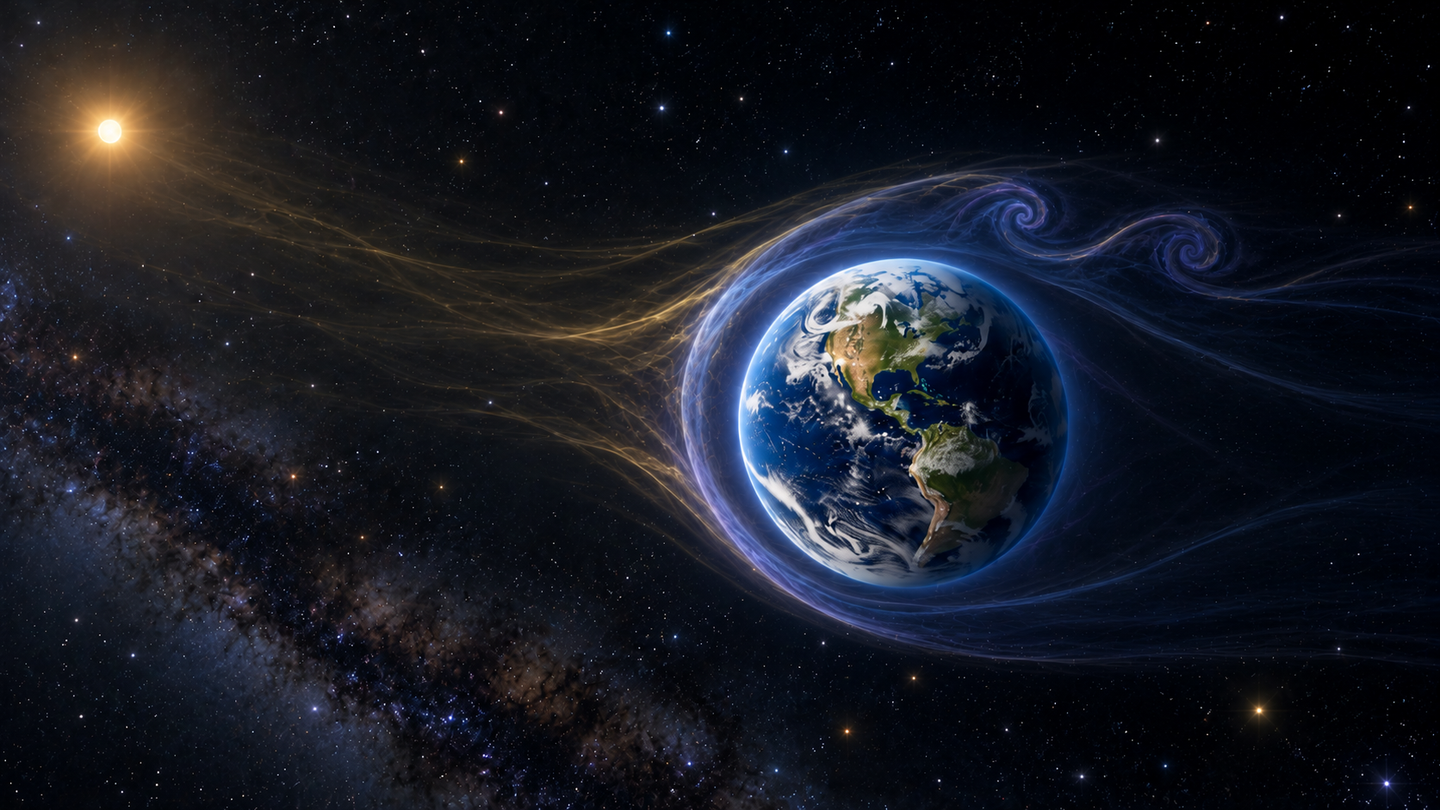
A different approach could eventually use magnetic fields to push some of that superheated gas away.
Researchers at Tokyo Metropolitan University have developed an experimental system that produces unusually strong magnetic fields inside miniature spacecraft models while exposing them to shockwaves traveling at roughly 7.7 kilometers per second. The setup allows engineers to study magnetohydrodynamic aerobraking, or MHD aerobraking, under short bursts of conditions intended to resemble atmospheric reentry.
Led by Associate Professor Kohei Shimamura, the team generated magnetic fields as high as 1.58 tesla and observed changes in the glowing shock layer surrounding its models. The work does not demonstrate a flight-ready magnetic heat shield. Instead, it provides a laboratory platform for testing magnetic field strengths and shapes that have been difficult to examine with conventional permanent magnets.
Why reentry puts spacecraft under extreme stress
When a spacecraft enters an atmosphere at several kilometers per second, a powerful shock forms ahead of it. The gas in this shock layer becomes extremely hot and partially ionized, producing a mixture in which charged particles can interact with magnetic fields.
Current thermal protection systems largely rely on passive materials. Heat-resistant tiles can protect a spacecraft surface, while ablative shields deliberately sacrifice material as they absorb and carry away heat. These systems are reliable, but they also come with costs. Surface erosion, possible delamination and repairs between missions can make repeated flights more difficult, while the protective hardware adds weight that could otherwise go toward payload.
MHD aerobraking takes advantage of the electrical properties of the hot gas itself. An applied magnetic field interacts with currents in the weakly ionized plasma and generates a Lorentz force. That force acts against the flow, expanding the shock layer farther from the spacecraft.
The expanded layer can reduce the flow of heat toward the surface. At the same time, the opposing force can increase aerodynamic drag, helping slow the vehicle.
Permanent magnets create an experimental bottleneck
The basic idea has received support from numerical calculations and earlier wind-tunnel experiments. In one numerical study described by the researchers, a magnetic field of 0.5 tesla around a reentry capsule reduced calculated wall heat flux to about 53% of the value without a magnetic field. The same simulation produced roughly four times as much aerodynamic drag.
Experiments have also shown changes in shock position, heat transfer and drag. Yet studying the effect systematically has been difficult because many expansion-tube tests rely on permanent neodymium magnets placed inside small models.
Those magnets typically provide fields of around 0.8 tesla, and their fixed geometry limits how researchers can change the field distribution. That makes it harder to test how different spacecraft shapes might respond to stronger or differently configured magnetic fields.
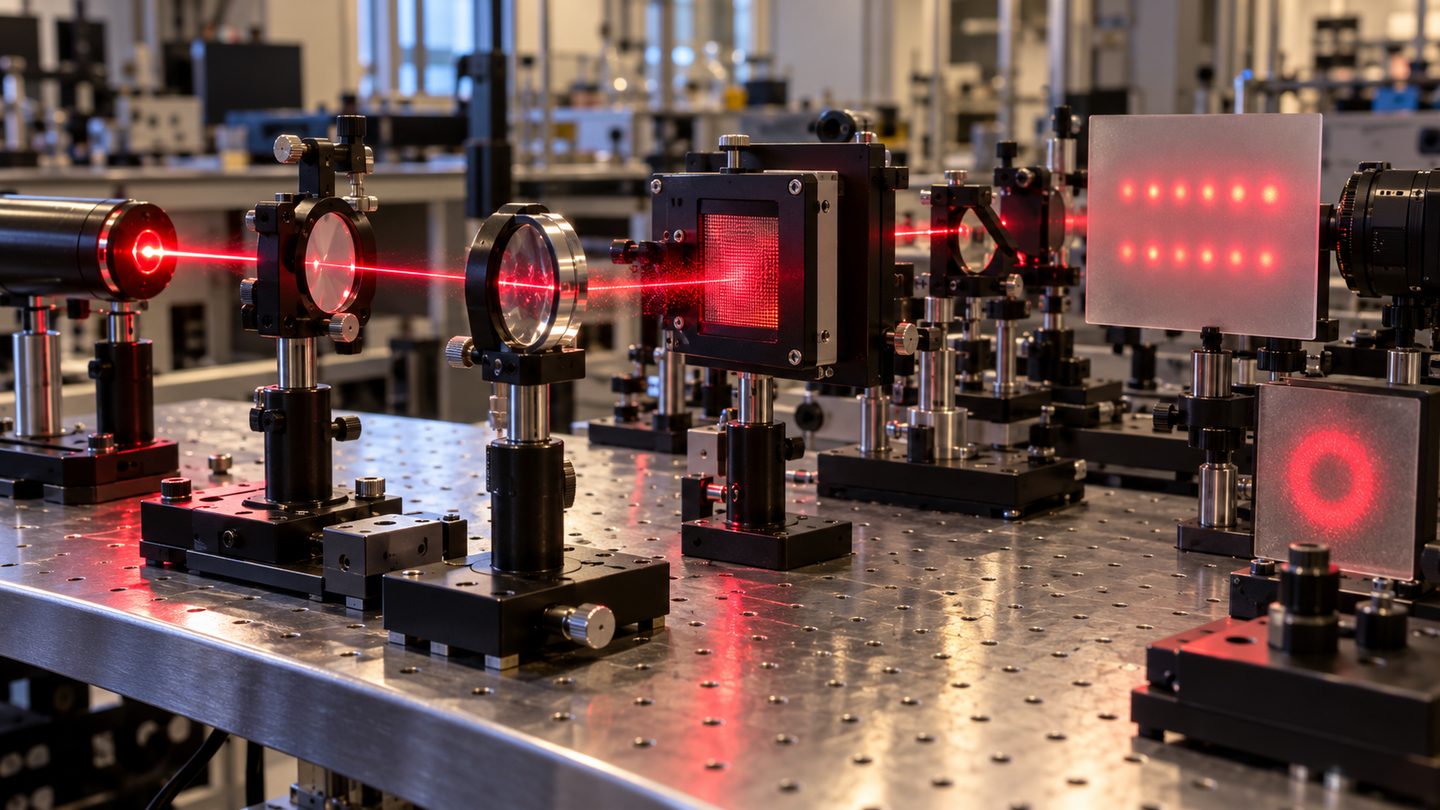
The Tokyo team replaced the permanent magnet with an air-core electromagnet powered by a pulse-forming network. Instead of keeping the magnet energized continuously, the system sends an intense electrical current through coils for only a short period.
That brief pulse is well suited to an expansion tube, where useful test conditions last only tens of microseconds.
A one-kiloamp pulse produces a stronger field
The researchers used a free-piston-driven expansion tube capable of producing shockwaves approaching 8 kilometers per second. Pressure measurements allowed the system to detect the approaching shock and time the electrical pulse so the magnetic field reached its strongest, relatively stable state during the experiment.
The pulse-forming network contained seven stages of capacitors and inductors and produced a current of about 1 kiloamp. Its pulse lasted roughly one millisecond, considerably longer than the useful test window.
Two 20-millimeter-wide spacecraft models were built with different nose shapes. Each contained a coil designed for its particular geometry. One used a 49-turn coil with a diameter of 12 millimeters, while the second used a narrower 54-turn coil measuring 4.5 millimeters across.
Measurements showed that the first model generated a peak magnetic field of about 1.24 tesla. The second reached 1.58 tesla. Those values were approximately 1.7 and 2.1 times the strength of the spherical neodymium magnet used as the reference.
Just as importantly, changing the coil design changed how the magnetic field was distributed around each model. That flexibility gives researchers a way to tailor experiments to different vehicle shapes instead of working around a fixed permanent magnet.
Magnetic fields changed the shock layer
A high-speed camera recorded light emitted by the heated gas around the models at 200,000 frames per second. The team then compared the thickness of this self-emitting region with the magnetic system switched on and off.
The difference was measurable in both designs. Magnetic field application increased the emission-region thickness by about 15.7% in the first model and 16.2% in the second. Those increases were generally consistent with theoretical predictions and previous expansion-tube experiments.
Spectroscopic measurements provided another indication that the magnetic field was changing conditions within the shock layer. In the second model, the researchers detected a pronounced increase in emission from a nitrogen band between about 420 and 460 nanometers. That feature is sensitive to electron temperature, so the change could indicate increased electron temperature or an expansion of the region containing hotter electrons.
The experiment did not directly establish how much a full spacecraft heat shield would benefit. Under these short-duration conditions, the researchers could make only qualitative comparisons concerning thermal protection. The pulsed system was also designed specifically for impulse wind-tunnel experiments, not for continuously generating magnetic fields during a real atmospheric descent.
A test bed for future magnetic heat shields
Those limitations are central to what the system represents. It is a laboratory tool for exploring MHD aerobraking rather than a prototype that could simply be placed aboard a spacecraft.
Its advantage lies in giving engineers greater control over an important experimental variable. Stronger magnetic fields can be generated without magnetic saturation, and different coil designs can reshape the field to match different test vehicles. Because each experiment lasts only a fraction of a millisecond, the coils can operate without the cooling systems required by long-running electromagnets.
The researchers ultimately want such experiments to help bridge the gap between laboratory MHD studies and tests involving actual reentry vehicles. Their results show that a synchronized pulsed electromagnet can alter the shock layer under hypersonic conditions while reaching field strengths well beyond those produced by conventional permanent magnets.
For spacecraft expected to fly more than once, the attraction is straightforward. Instead of asking a surface material to endure all the punishment of reentry by itself, a future vehicle might use magnetic forces to change the hostile flow before much of that heat ever reaches the hull.
Dig deeper into magnetic aerobraking and spacecraft heat protection
These resources explore the experimental and theoretical foundations of MHD flow control, including shock-layer expansion, heat-flux reduction and stronger magnetic systems for future atmospheric-entry vehicles.
Research Progress on Magnetohydrodynamic Flow Control Technology for Hypervelocity Reentry Vehicles: This recent review examines MHD applications for thermal protection, communications and power generation during hypervelocity reentry. It also surveys experimental progress and identifies the modeling and validation work still needed before broader engineering use. (Journal of Astronautics, 2025)
Numerical rebuilding of plasma wind tunnel MHD flow experiments for advanced thermal protection systems: Researchers reconstructed high-enthalpy plasma wind-tunnel conditions numerically and found strong agreement between simulations and measurements. The validated approach is intended to support experiments using magnet-equipped probes to investigate MHD effects during atmospheric entry. (CEAS Space Journal, 2026)
A Magnetohydrodynamic enhanced entry system for space transportation: MEESST: This work examines an MHD entry concept using high-temperature superconducting magnets to manipulate ionized gas around a spacecraft. The project targets both thermal-load reduction and mitigation of the communications blackout associated with reentry plasma. (Journal of Space Safety Engineering, 2023)
Magnetohydrodynamic Experiments of Total Heat Flux Mitigation for Superorbital Earth Reentry: Expansion-tube experiments tested whether magnetic flow control could reduce total heat transfer around a model under conditions representative of a high-speed Earth return. The work provides direct experimental evidence relevant to the thermal-protection potential of MHD aerobraking. (AIAA Journal, 2022)
Expansion Tube Experiments of Magnetohydrodynamic Aerobraking for Superorbital Earth Reentry: These experiments reproduced ionizing flow conditions associated with a Mars-return trajectory and found a significant increase in shock standoff distance when magnetic models were used. The results helped establish expansion tubes as an important platform for testing MHD aerobraking under flight-like ionization conditions. (AIAA Journal, 2021)
Research findings are available online in the Journal of Spacecraft and Rockets.
The original story "Powerful new magnetic system could help spacecraft survive the brutal heat of reentry" is published in The Brighter Side of News.
Related Stories
- Scientists develop a greener, catalyst-free, rocket thruster to power the next generation of spacecraft
- Pulsar Fusion’s Sunbird fusion rocket could get us to Mars in half the time
- Can rockets ride on a microwave beam? A radical launch idea is moving beyond the lab
Like these kind of feel good stories? Get The Brighter Side of News' newsletter.
Joseph Shavit
Writer, Editor-At-Large and Publisher
Joseph Shavit, based in Los Angeles, is a seasoned science journalist, editor and co-founder of The Brighter Side of News, where he transforms complex discoveries into clear, engaging stories for general readers. With vast experience at major media companies like The Los Angeles Times, Times Mirror and Tribune Publishing, he writes with both authority and curiosity. His writing focuses on space science, planetary science, quantum mechanics, geology. Known for linking breakthroughs to real-world markets, he highlights how research transitions into products and industries that shape daily life.