Superheated magma could explain explosive volcanic eruptions
New study reveals how superheated magma delays crystal formation and influences whether volcanoes erupt explosively or gently.

 Edited By: Joseph Shavit

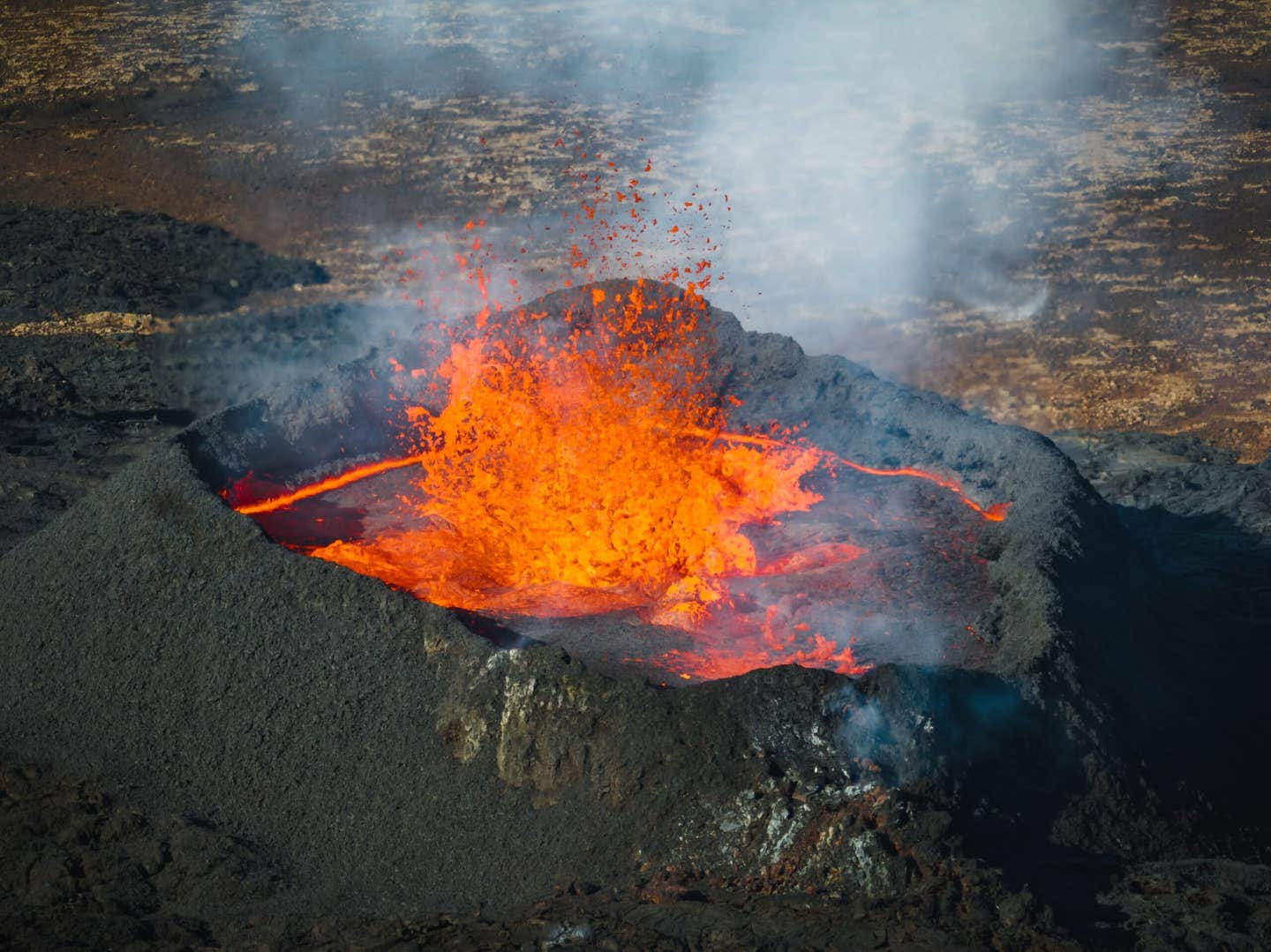
Scientists discover how superheated magma changes eruption behavior by delaying crystal formation deep underground. (CREDIT: Shutterstock)
Volcanoes can behave in strikingly different ways, even when they appear nearly identical. Some release slow, steady lava flows. Others erupt violently, sending ash and molten rock high into the sky. New research suggests that a hidden thermal process inside magma may help explain these differences.
An international team led by scientists at The University of Manchester has identified how “superheating” affects the way magma evolves before an eruption. Their findings show that temperature history plays a critical role in shaping eruption behavior.
The study focused on magma from the 2021 Tajogaite eruption on La Palma in Spain. By recreating volcanic conditions in the lab, researchers were able to observe how magma changes as it rises toward the surface.
Why Crystals Matter Beneath The Surface
Deep underground, magma is not a simple liquid. It contains crystals, gas bubbles, and molten rock all mixed together. These components control how magma flows and how it erupts.
Crystals are especially important. As they form, they make magma thicker and more resistant to movement. This thickness, known as viscosity, determines whether gases escape easily or become trapped.
When gas is trapped, pressure builds. This can lead to explosive eruptions. When gas escapes more easily, eruptions tend to be gentler and produce flowing lava.
Scientists have long studied how crystals form, but one key question remained unresolved. How does the thermal history of magma affect this process?
A Hidden Effect Called Superheating
Superheating occurs when magma is heated above the temperature at which crystals normally form. This can happen when fresh magma rises from deep within the Earth or when pressure changes during ascent.
For years, researchers debated whether superheating had a lasting effect. Some believed magma quickly adjusted to new conditions. Others suspected it left a deeper imprint on the material.
The new study supports the second view. It shows that superheating can dramatically delay the formation of crystals.
“Until now, we did not fully understand the dynamics of crystal growth for magmas that received an injection of superheat just before ascent,” said Dr Barbara Bonechi, lead author of the study.
Watching Magma Change In Real Time
To investigate, the research team recreated volcanic conditions using magma samples. They used advanced imaging tools at Diamond Light Source, allowing them to observe crystal formation as it happened.
They compared two types of magma. One sample followed a normal cooling path. The other was heated well above its crystallization temperature before cooling.
The difference was striking.
In the normal sample, crystals began forming within about 20 minutes. In the superheated sample, crystal formation was delayed for more than eight hours.
This delay, known as nucleation delay, has major consequences for how magma behaves.
How Heat Changes Magma Structure
The reason for this delay lies in the structure of magma itself. Normally, tiny crystal “seeds” exist within the molten rock. These seeds help new crystals form quickly.
Superheating dissolves these seeds. It also makes the magma more uniform, reducing the chances of new crystals forming.
As a result, the magma remains fluid for longer. It must reorganize its internal structure before crystals can grow again.
This process requires time, which explains the long delay observed in the experiments.
Fewer Crystals, Larger Growth
The study also found differences in how crystals grow after this delay.
In normal magma, many small crystals form quickly. In superheated magma, fewer crystals form, but they grow larger over time.
This happens because fewer nucleation sites exist. With less competition, the crystals that do form have more space and material to grow.
These differences affect how magma flows and how it releases gas.
Fast Ascent Versus Slow Movement
To understand the real-world impact, researchers used computer models to simulate how magma rises through the Earth’s crust.
They tested two scenarios. One involved magma with strong superheating and long delays in crystal formation. The other involved magma with little or no superheating.
In the superheated case, magma rose rapidly from deep underground to the surface. The journey took about 30 minutes. Because crystals had not formed yet, the magma remained fluid.
This led to high eruption rates, around 40,000 kilograms per second. These conditions match explosive events such as lava fountaining.
In the second scenario, magma began forming crystals much earlier. This increased its thickness and slowed its ascent. The journey took more than 11 hours.
With more crystals present, gases had more time to escape. The eruption became calmer, producing steady lava flows instead of explosive bursts.
Connecting Lab Results To Real Eruptions
The model results closely match observations from the Tajogaite eruption. During that event, eruption rates varied widely, ranging from about 1,400 to 30,000 kilograms per second.
These variations suggest that different batches of magma may have experienced different thermal histories. Some may have been strongly superheated, while others were not.
This helps explain why a single volcano can shift between explosive and gentle behavior over time.
A New Factor In Volcanic Forecasting
Most current models focus on magma chemistry, gas content, and pressure changes. This study highlights the importance of thermal history as an additional factor.
“Current volcanic hazard models typically focus on magma chemistry, gas content and pressure changes,” said Dr Margherita Polacci, co-author of the study. “This work suggests that pre-eruptive thermal history and crystallisation kinetics may also play an important role.”
By understanding how superheating affects magma, scientists may improve their ability to interpret volcanic signals. This could lead to better forecasts of eruption style and intensity.
Looking Deeper Into Earth’s Processes
The findings also add to a broader understanding of how volcanoes work. Eruptions do not depend on a single variable. They result from a complex interaction of temperature, pressure, gas, and time.
Superheating introduces a new layer to this complexity. It shows that events occurring deep underground, long before an eruption, can shape what happens at the surface.
By combining laboratory experiments with advanced imaging and modeling, the study provides a clearer picture of these hidden processes.
Practical Implications Of The Research
This research could improve how scientists assess volcanic hazards and protect communities living near active volcanoes. By recognizing the role of superheating, researchers can better interpret monitoring data such as temperature changes and seismic activity.
In practical terms, identifying superheated magma could signal a higher risk of rapid ascent and explosive eruptions. This would allow authorities to issue more timely warnings and prepare evacuation plans.
The findings may also refine computer models used to predict volcanic behavior. Adding thermal history as a factor can make these models more accurate and reliable.
Beyond hazard prediction, the study deepens scientific understanding of Earth’s internal processes. It highlights how subtle changes in temperature can influence large-scale natural events.
In the long term, this knowledge could improve global volcanic monitoring systems and help reduce the risks associated with eruptions.
Research findings are available online in the journal Nature Communications.
The original story "Superheated magma could explain explosive volcanic eruptions" is published in The Brighter Side of News.
Related Stories
- A violent volcanic eruption triggered a rare atmospheric cleanup
- The hidden mantle flow shaping Yellowstone’s supervolcano
- Volcanic eruptions in the distant past may have led to ocean current collapse
Like these kind of feel good stories? Get The Brighter Side of News' newsletter.
Rebecca Shavit
Writer
Based in Los Angeles, Rebecca Shavit is a dedicated science and technology journalist who writes for The Brighter Side of News, an online publication committed to highlighting positive and transformative stories from around the world. Having published articles on MSN, AOL News, and Yahoo News, Rebecca's reporting spans a wide range of topics, from cutting-edge medical breakthroughs to historical discoveries and innovations. With a keen ability to translate complex concepts into engaging and accessible stories, she makes science and innovation relatable to a broad audience.