Two-year trial finds diet drinks perform like water for weight management
Adults drinking diet beverages maintained weight loss for two years, performing similarly to participants assigned water.
 University of Liverpool Writer: Alison Cornmell

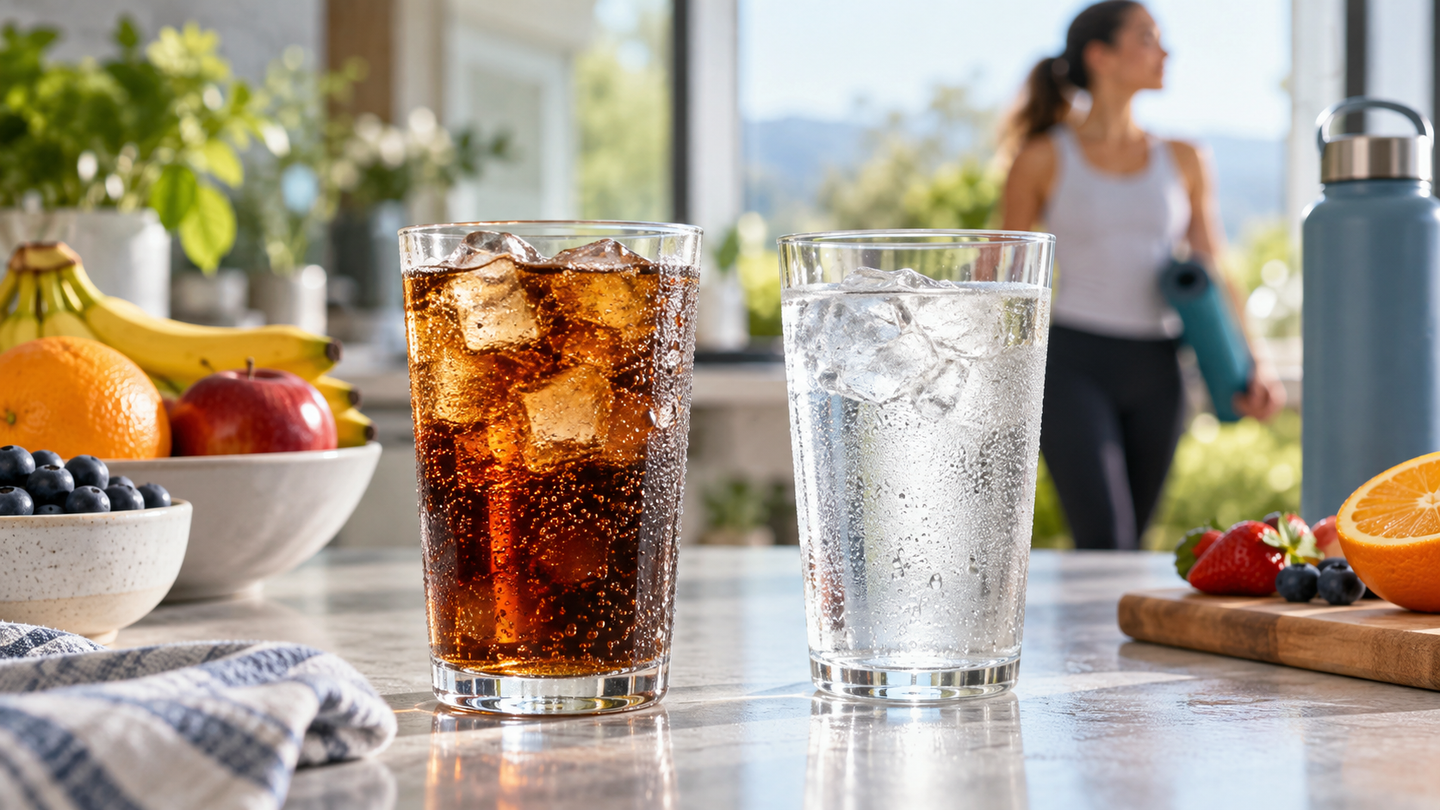
A two-year trial found diet drinks and water supported similar weight loss, with no meaningful difference in most metabolic markers. (CREDIT: Shutterstock)
- A 104-week randomized trial found that adults drinking non-nutritive sweetened beverages maintained similar weight loss to those assigned water during a behavioral weight-management program.
- Participants who completed the study lost an average of 4.8 kilograms with diet beverages and 3.7 kilograms with water, a difference that was not statistically significant.
- The trial provides unusually long randomized evidence, but its interpretation is tempered by substantial dropout, a single study site and funding from the American Beverage Association.
Replacing sugary drinks with diet beverages does not appear to undermine long-term weight management, according to one of the longest randomized trials to directly compare artificially sweetened drinks with water.
Researchers from the University of Liverpool and University of Leeds followed adults with overweight or obesity for 104 weeks. Participants drank either water or commercially available beverages containing non-nutritive sweeteners while taking part in a structured behavioral weight-management program.
Among people who completed the two-year study, those assigned diet beverages lost an average of 4.8 kilograms from their starting weight. Participants assigned water lost 3.7 kilograms. The difference was not statistically significant, which the investigators interpreted as equivalent weight outcomes under their prespecified analysis.
The findings, published in the British Journal of Nutrition, add long-term randomized evidence to an ongoing debate over whether low- and no-calorie sweeteners help, hinder or have little effect on weight control.
Nearly 500 adults entered the trial
The SWITCH trial initially randomized 493 adults ages 18 to 65 with body mass index values between 27 and 35. Participants were assigned either water or non-nutritive sweetened beverages.
Those in the diet-drink group consumed at least two 330-milliliter servings each day. Available products included diet colas, carbonated drinks, fruit drinks and flavored waters containing sweeteners such as aspartame, acesulfame potassium and sucralose.
The water group was instructed to avoid non-nutritive sweetened beverages and sweeteners added to hot drinks. Both groups also received advice about healthier eating and reducing sugar.
The first 12 weeks focused on active weight loss through weekly behavioral sessions. Participants then entered a 40-week assisted maintenance period with monthly meetings. A voluntary final year involved no routine weight-management sessions, allowing researchers to examine whether earlier changes persisted with less support.
By week 104, 220 participants remained, including 117 in the water group and 103 in the diet-beverage group. That substantial attrition is an important limitation when interpreting the results.
Weight remained lower after two years
Most of the weight loss occurred during the first three months.
Both groups reached their lowest average weights during the first year and then gradually regained some weight. Even so, average body weight remained significantly below baseline after two years.
The researchers also analyzed missing data using two different statistical approaches. Those analyses similarly found no significant difference in weight change between the beverage groups.
Waist and hip measurements declined significantly in both groups. A smaller subset of participants underwent body scans, which found reductions in fat mass and changes in regional body fat in both groups, without significant differences between water and diet beverages.
Sugar intake also fell in both groups, with a slightly larger reduction among people assigned non-nutritive sweetened drinks. The between-group difference was not statistically significant.
Appetite concerns were not supported
One concern surrounding non-nutritive sweeteners is that tasting sweetness without consuming substantial calories could disrupt appetite regulation.
According to that hypothesis, repeated exposure might alter learned relationships between sweetness and energy, potentially increasing hunger or encouraging compensatory eating later.
The SWITCH results did not provide clear evidence for that effect.
Self-reported hunger rose slightly over the two-year period in both groups. The increase reached statistical significance within the diet-beverage group, but the difference between the diet-drink and water groups was not significant.
“This latest finding shows that concerns about sweeteners disrupting appetite or causing weight gain are not supported when tested in a rigorous, long-term randomised trial,” said Joanne Harrold of the University of Liverpool.
The trial did not directly establish that non-nutritive sweeteners suppress appetite or cause weight loss. Instead, it indicates that consuming them within this particular weight-management program did not produce worse weight outcomes than water.
Metabolic differences were generally small
Researchers also monitored blood glucose, cholesterol, blood pressure and other cardiometabolic measures.
Several markers improved from baseline in both groups. Differences emerged for total cholesterol, glycated hemoglobin and diastolic blood pressure, but the investigators concluded that the changes were too small to be considered clinically meaningful.
Total cholesterol remained within the healthy range in both groups.
That distinction matters because the study was designed primarily to investigate weight management rather than prove the long-term safety of individual sweeteners across every possible health outcome.
Participants also consumed mixtures of commercially available products rather than a single isolated sweetener. The results therefore apply most directly to diet beverages as consumed in the study.
The findings enter a larger scientific debate
The results arrive against the backdrop of World Health Organization guidance issued in 2023 recommending against using non-sugar sweeteners specifically as a strategy for controlling body weight or reducing chronic disease risk.
That WHO recommendation was conditional. It drew heavily on a broader evidence base that included observational studies, some of which linked long-term sweetener consumption with higher risks of obesity, cardiovascular disease and Type 2 diabetes.
Observational research presents a difficult problem in this field. People who already have obesity, diabetes risk or concerns about weight may be more likely to choose diet drinks, making it difficult to determine whether sweeteners contributed to those conditions or were consumed because of them.
Randomized trials reduce that problem by assigning participants to interventions. Yet most previous trials have lasted months rather than years.
The new study therefore fills an important gap, although it does not settle every question raised by the WHO assessment.
Important limitations remain
The study took place at one center in England and did not collect race or ethnicity information, limiting how broadly its findings can be generalized.
More than half of the original 493 participants did not complete the 104-week follow-up. The COVID-19 pandemic also disrupted some measurements, requiring certain participants to record weight and body measurements at home.
The final 52-week phase was voluntary and added through a protocol amendment. The trial was funded by the American Beverage Association, an industry organization. The researchers report that they retained control over study analysis and publication.
Those caveats make the study an important piece of evidence rather than a final verdict on non-nutritive sweeteners.
For adults already using diet beverages while trying to manage their weight, however, the results offer a straightforward conclusion: over two years, replacing them with water did not produce superior weight loss.
Dig deeper into non-nutritive sweeteners and weight management
These resources provide important recent context on randomized evidence, beverage substitution and international guidance surrounding non-sugar sweeteners.
Effects of non-nutritive sweeteners on body weight: a systematic review and meta-analysis of randomized controlled trial (RCT) studies: This 2025 meta-analysis combines 19 randomized trials and examines how replacing caloric sugars with non-nutritive sweeteners affects body weight across different intervention lengths. (Journal of Endocrinological Investigation, 2025)
Substitution of sugar-sweetened beverages with non-caloric alternatives and weight change: A systematic review of randomized trials and meta-analysis: Six longer-duration trials found that replacing sugary drinks with non-caloric beverages produced a modest reduction in BMI while the intervention continued. (Obesity Reviews, 2024)
Use of non-sugar sweeteners: WHO guideline: The WHO's conditional recommendation advises against relying on non-sugar sweeteners for long-term weight control and explains the evidence and uncertainties behind that guidance. (World Health Organization, 2023)
Association of Low- and No-Calorie Sweetened Beverages as a Replacement for Sugar-Sweetened Beverages With Body Weight and Cardiometabolic Risk: A Systematic Review and Meta-analysis: Seventeen randomized trials found small improvements when low-calorie beverages replaced sugary drinks, with effects broadly similar to water. (JAMA Network Open, 2022)
Health effects of the use of non-sugar sweeteners: a systematic review and meta-analysis: This large evidence review examines randomized and observational research on body weight, glucose regulation and longer-term health outcomes. (World Health Organization, 2022)
Research findings are available online in the British Journal of Nutrition.
The original story "Two-year trial finds diet drinks perform like water for weight management" is published in The Brighter Side of News.
Related Stories
- Soft drinks, baked goods may contribute to a shorter life span, study finds
- Toxic metals found in many popular mixed-fruit juices and soft drinks, study finds
- Drinking 1 diet soft drink a day may raise type 2 diabetes risk by 38%
Like these kind of feel good stories? Get The Brighter Side of News' newsletter.
Joseph Shavit
Writer, Editor-At-Large and Publisher
Joseph Shavit, based in Los Angeles, is a seasoned science journalist, editor and co-founder of The Brighter Side of News, where he transforms complex discoveries into clear, engaging stories for general readers. With vast experience at major media companies like The Los Angeles Times, Times Mirror and Tribune Publishing, he writes with both authority and curiosity. His writing focuses on space science, planetary science, quantum mechanics, geology. Known for linking breakthroughs to real-world markets, he highlights how research transitions into products and industries that shape daily life.