AI helps predict dangerous fire conditions in modern homes
Waterloo researchers use AI and sensors to predict modern house fires and toxic gas risks.
 University of Waterloo Writer: Ryon Jones

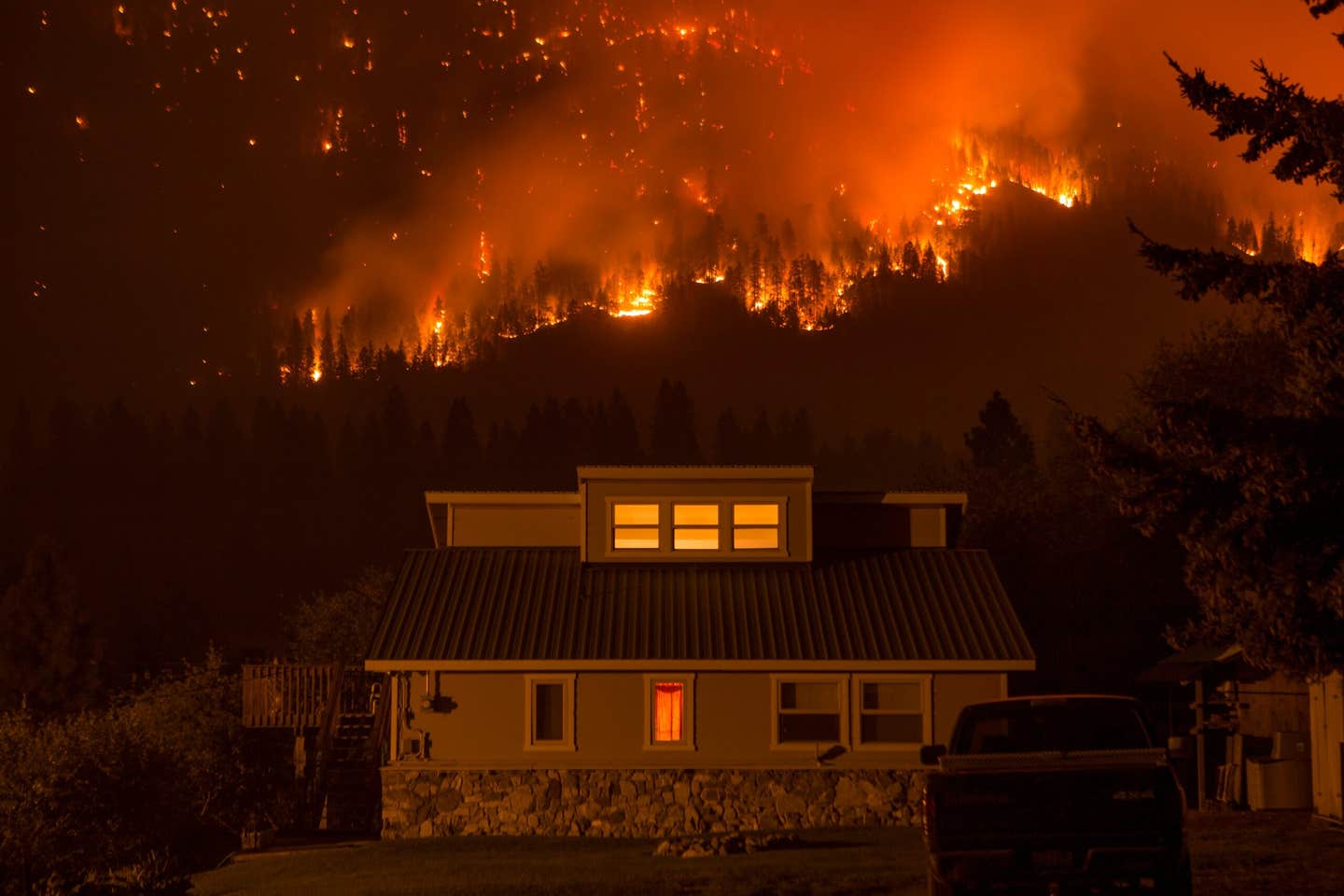
University of Waterloo researchers are using AI, sensors and data science to decode modern house fires and improve evacuation safety. (CREDIT: Shutterstock)
- Modern homes can create unusually dangerous fire conditions because tighter construction can reduce oxygen while smoke and toxic gases build.
- Waterloo researchers used up to 175 sensors, machine learning and mathematical analysis to separate experimental house fires into distinct stages and identify the gases that mattered most at each point.
- The work could eventually support smarter evacuation systems that recognize changing fire conditions, flag faulty sensors and help identify safer escape routes
A modern house fire can change faster than the people inside can understand. Heat rises, oxygen falls, smoke thickens and invisible gases shift as furniture burns. New research from the University of Waterloo uses artificial intelligence, data science and advanced math to read those changes more clearly.
The work aims to predict how fires behave in today’s homes. That challenge has grown because modern furniture materials burn differently than older ones. Energy-efficient homes can also trap fire gases in ways that make an emergency more dangerous.
“The goal is to deepen our understanding so we can predict fire behaviour and the gases it releases, enabling smart systems that support safer and more effective fire evacuations,” said Dr. Joshua Pulsipher, a chemical engineering professor at Waterloo.
Why Modern Fires Are Different
Many newer homes are built to limit air leaks. That helps save energy, but it also changes the way fires burn indoors.
When a fire cannot get enough oxygen, its chemistry shifts. It may produce more toxic smoke and gases. It can also behave less predictably.
Furniture has changed too. Modern foams, fabrics and synthetic materials can release different gases than older wood or natural fibers. Those gases can harm people before flames ever reach them.
For firefighters and safety engineers, that creates a serious problem. A fire may look contained, yet the air inside may become deadly.
Building Fires To Understand Them
To study this danger, Waterloo researchers conducted 15 experimental fires in a campus burn house. The structure allowed the team to study fire behavior under controlled but realistic conditions.
Researchers placed as many as 175 sensors throughout the burn house. These instruments tracked temperature, airflow, humidity, burn rate and many gases.
The amount of data was enormous. A single sensor group in one location, sampling four times per second, produced millions of data points.
Across all experiments, the full dataset became far too complex for simple inspection. That is where AI and data science became essential.
Reading The Data Hidden In Smoke
The team built a system that combines machine learning, statistics and mathematics. Its goal is to find patterns in fire data that humans might miss.
“The input is the data from the experiments,” said Dr. Vinny Gupta, a mechanical and mechatronics engineering professor. “The output is understanding what those experiments tell us to reveal fundamental insights about how the underlying fire evolves.”
The system can identify when a fire begins to under-ventilate, meaning it starts running out of oxygen. That moment marks a critical change in combustion chemistry.
Under-ventilation can increase the danger from smoke and toxic gases. Knowing when it begins could help future systems guide people away from unsafe routes.
Turning Chaos Into Stages
In a study, researchers used a data-driven framework to study an under-ventilated compartment fire. This kind of fire can happen in sealed or energy-efficient buildings.
The team used three main methods. Principal component analysis helped simplify large sensor datasets and find faulty readings. K-means clustering divided the fire into meaningful stages. Sparse partial least squares helped identify which gases best predicted burn rate.
Together, these tools turned complex measurements into a clearer fire timeline. The data showed stages of ignition and growth, peak burning and decay.
That matters because a fire does not behave as one steady event. The chemicals in smoke and air change as the fire grows, starves and fades.
Sensors Can Fail Too
The framework also helped researchers detect sensor problems. In one case, carbon dioxide readings stopped matching the rest of the dataset.
Further inspection showed that the carbon dioxide sensor had exceeded its operating range. Its values no longer reflected the true fire environment.
That kind of mistake can distort the larger picture. If a smart fire system relies on a bad sensor, it may make poor decisions.
By using data science to flag strange patterns, researchers can improve reliability. Better sensor checks could support safer fire monitoring in real buildings.
What The Burn House Revealed
One detailed experiment used a sealed two-story steel building designed to mimic a residence. The fuel load resembled a living room.
It included a couch, chair, coffee table and side table. The main fuel was a 75-kilogram couch without added flame retardants.
The building was sealed from outside air, and no ventilation was supplied. The fire burned until it went out on its own.
The couch’s mass loss rate rose quickly. It peaked at 0.122 kilograms per second about 375 seconds after ignition. By 750 seconds, no more mass was consumed.
Oxygen fell sharply during the fire. At one sensor location, it dropped to 2.5% by 420 seconds before later recovering.
Gases Tell The Fire’s Story
The AI-supported framework showed which gases mattered most during different stages. Early in the fire, volatile organic compounds strongly predicted burn rate.
As the fire peaked and oxygen dropped, other gases became more important. Hydrogen cyanide appeared as a key signal during the oxygen-starved phase.
That matters because hydrogen cyanide can be highly dangerous. It can appear when materials burn incompletely, especially under poor ventilation.
During the decay phase, volatile organic compounds again became important. Nitrogen-based gases also shifted as oxygen levels changed.
The lesson is simple but powerful. The same gas does not tell the full story at every moment. A smart system must understand the fire’s stage.
Toward Smarter Evacuation Systems
“We want to create smart systems that model and anticipate what a fire will do and then route people to get out of the building safely,” said Dr. Beth Weckman, professor of mechanical and mechatronics engineering.
That vision goes beyond standard smoke alarms. A future building could use sensor networks and AI to predict which routes are safest.
It might detect toxic gas buildup before people can smell or see danger. It could also warn firefighters about changing conditions inside.
The Waterloo team says the analysis could inform building codes, emergency response planning and evacuation design. Future work will test more complex fire scenarios.
Those scenarios may include sudden ventilation changes, larger sensor networks and more varied materials.
Practical Implications Of The Research
This research could help make homes, workplaces and public buildings safer during fires. By predicting how fire and toxic gases evolve, future systems may guide people toward safer exits in real time.
The findings could also help firefighters prepare for modern indoor fires. Better models may reveal when a fire becomes oxygen-starved and more toxic. That information could improve response strategies and reduce risk for emergency crews.
For building designers and policymakers, the work may support stronger safety codes. As homes become more airtight, fire behavior changes. Codes may need to reflect how ventilation, materials and toxic gases interact.
For humanity, the benefit is direct and urgent. Fires leave little time for confusion. Smarter systems that read danger faster could save lives, reduce injuries and help people escape before smoke becomes deadly.
Dig deeper into modern house fires, smart sensors and AI evacuation
These resources explore how ventilation, furniture fuels, toxic combustion gases, fire sensors and predictive evacuation models are changing the science of residential fire safety.
Development of a tenability-based path planning model for building fire evacuations using reinforcement learning
Researchers developed SafeStep, an AI evacuation model that accounts for changing fire conditions and cumulative toxic-gas exposure when selecting escape routes. In tests, it produced safer paths than a conventional shortest-path algorithm, including about a 62% reduction in toxic-gas exposure in one scenario. (Journal of Building Engineering, 2026)
Toxicant production in under-ventilated compartment fires assessed by laser absorption spectroscopy
This research examines how dangerous combustion products evolve when compartment fires become starved of oxygen, using rapid laser measurements to track toxic gases under changing ventilation conditions. (Fire Safety Journal, 2025)
Research progress on electrochemical gas sensors for fire detection
This review examines advances in gas sensors designed to recognize fire-related chemicals, including technologies that could complement conventional smoke and heat detection by identifying hazardous combustion gases. (International Journal of Electrochemical Science, 2025)
Analysis of cyanide exposure status in fire-related deaths using a physiologically based pharmacokinetic model
An analysis of 29 fire-related deaths detected cyanide in most cases and found evidence that some victims may have inhaled extremely high hydrogen cyanide concentrations for very short periods, underscoring the importance of toxic gases during fires. (Forensic Toxicology, 2025)
Towards characterizing full-scale furniture fires in a two-storey house: Gaseous species concentrations during a ventilation-limited fire
Full-scale furniture-fire experiments tracked oxygen, carbon monoxide, hydrogen cyanide and other gases through a two-story residential structure, providing detailed evidence of how modern furnishings behave when a fire becomes ventilation-limited. (Fire Safety Journal, 2023)
Research findings are available online in the journal Fire Safety Journal.
The original story "AI helps predict dangerous fire conditions in modern homes" is published in The Brighter Side of News.
Related Stories
- UC Irvine's new map predicts which California homes are most likely to burn in a wildfire
- Wildfire smoke linked to higher assault rates, study finds
- AI drone swarms revolutionize wildfire detection and air quality monitoring
Like these kind of feel good stories? Get The Brighter Side of News' newsletter.
Shy Cohen
Writer