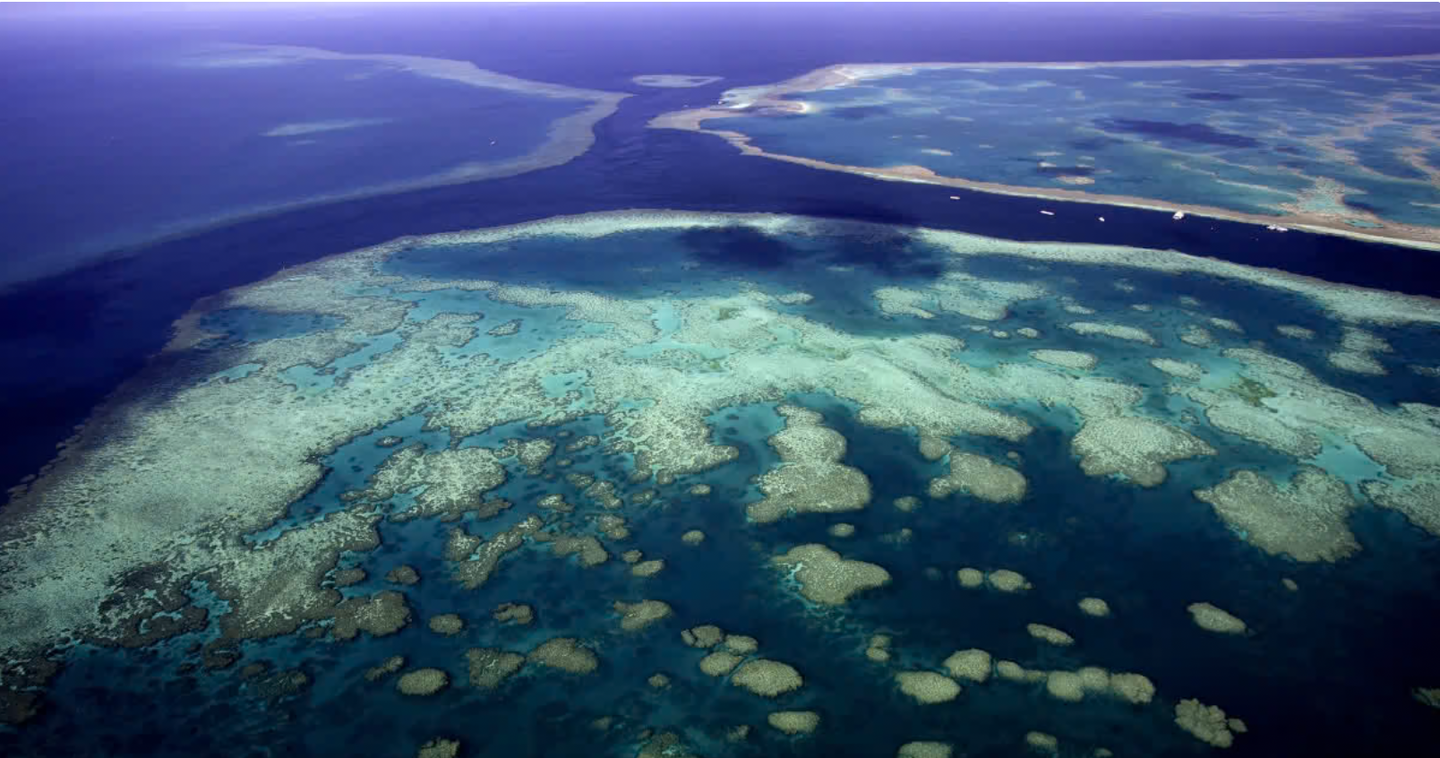
Ancient volcanic eruption brought population collapse and coastal growth to Japan
Jomon population patterns suggest a complex aftermath of volcanic disaster, with migration and maritime recovery among the explanations.
 Lund University Writer: Lotte Billing

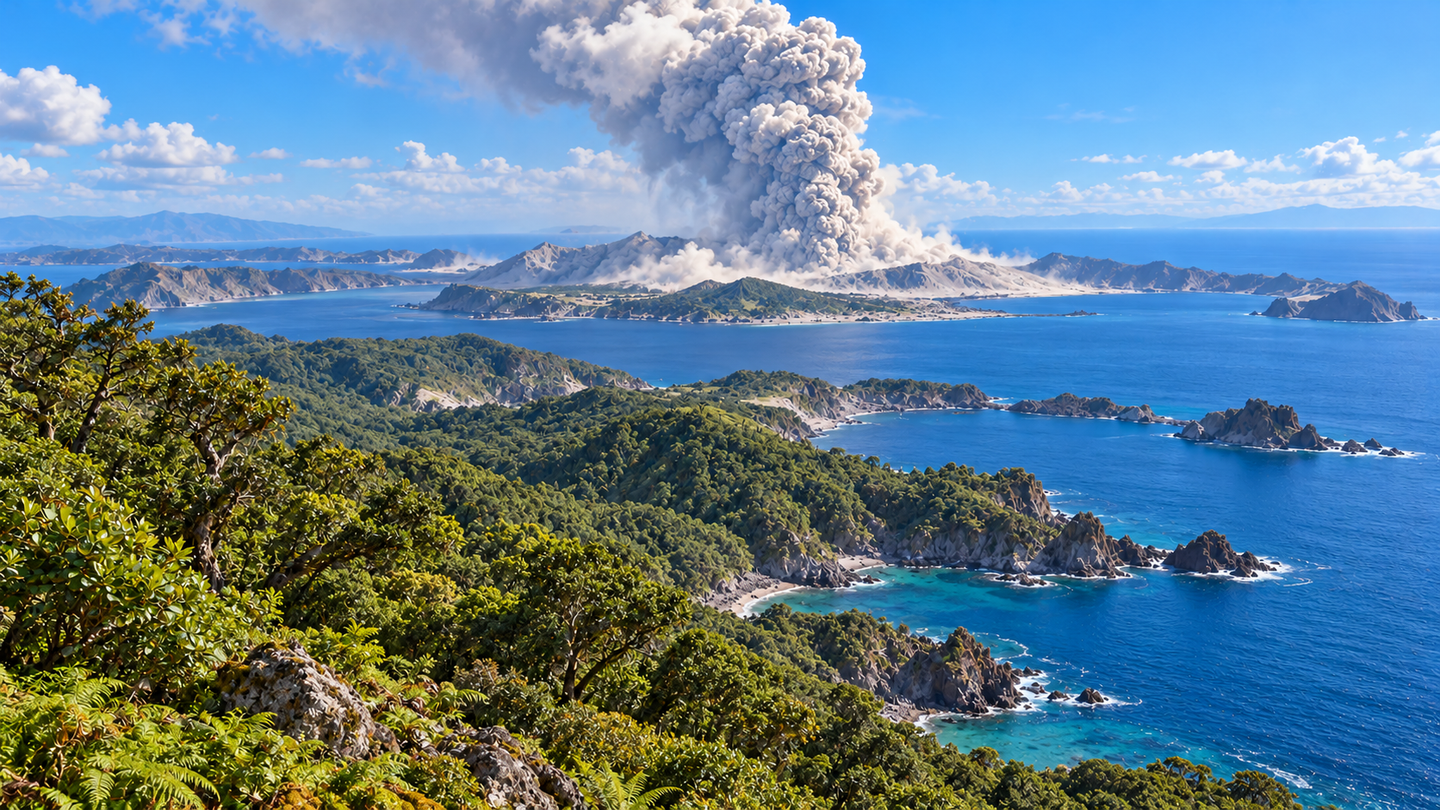
Population models reveal regional decline and coastal growth after Japan’s Kikai-Akahoya eruption about 7,300 years ago. (CREDIT: The Brighter Side of News)
- Population models suggest the Kikai-Akahoya eruption brought severe regional decline alongside continued growth on some northern coastlines.
- Southern Kyushu was already undergoing demographic and settlement changes before the eruption about 7,300 years ago.
- Migration, maritime resources and new social connections may explain recovery, but these remain interpretations requiring further archaeological tests.
Some communities declined sharply after one of the largest volcanic eruptions of the Holocene, while others continued growing surprisingly close to the devastation. A reconstruction of prehistoric Japan’s population patterns suggests that catastrophe produced no single outcome.
Conditions before the eruption, access to recovering ecosystems and possible movements of survivors all shaped what followed. The evidence complicates an archaeological debate often framed as either total collapse or straightforward survival.
The international study, reported in Science Advances, examines the Kikai-Akahoya eruption about 7,300 years ago. Enrico Crema of Cambridge University led the analysis, with Lund University archaeologist Peter Jordan as senior author. Their team modeled changes in archaeological radiocarbon dates across Japan. They then compared the reconstructed trends with pottery, tools, settlement evidence and volcanic ash deposits.
A disaster that struck a changing society
The eruption originated at the largely submerged Kikai caldera, roughly 30 kilometers south of mainland Kyushu. Its impacts included pyroclastic flows, earthquakes, tsunamis and widespread ashfall. However, geological evidence describes a sequence of escalating eruptions and pauses, culminating in caldera collapse. It was a complex volcanic episode rather than a single explosion affecting every location simultaneously.
Jomon communities depended on hunting, fishing and gathering, combining plant foods with animals and aquatic resources. Their settlement patterns varied, as did their reliance on storage and mobility. Southern Kyushu’s large villages had already disappeared well before the eruption. By the disaster’s approach, small, highly mobile groups occupied more dispersed and temporary camps.
That earlier history challenges the idea that the eruption abruptly destroyed a thriving landscape of large permanent villages. It also matters for interpreting vulnerability and recovery. Small communities depended on social connections and access to resources across wider areas. A disaster could disrupt those relationships even where some people initially survived.
Radiocarbon dates trace uneven population trajectories
The researchers divided Japan’s four major islands into 61 hexagonal study areas. They used Bayesian statistical models to estimate demographic patterns from the changing frequency of radiocarbon dates. The main analysis covered 750-year periods before and after the eruption. Additional tests used narrower 500-year windows and broader 1,000-year windows.
Radiocarbon dates provide an indirect population measure, rather than a census of prehistoric inhabitants. More people often leave more datable archaeological material, but excavation, preservation and settlement choices also affect the record. The models addressed spatial variation and differences in sampling intensity. Estimates remained less precise in areas with fewer dates.
Southern and central Kyushu showed strong indications of post-eruption decline, potentially including abandonment in some areas. The models also suggested that southern population decline had begun earlier, consistent with archaeological settlement changes. Northern coastal Kyushu followed a different trajectory, retaining positive growth after the disaster. Parts of northern coastal Honshu likewise showed demographic resistance.
Growth over these long windows does not show that those regions escaped immediate deaths or disruption. Instead, it describes their longer-term trajectory relative to other areas. A population could suffer losses and subsequently grow through migration or local recovery. The analysis cannot distinguish those processes by itself.
Northern coasts may have offered a route through the crisis
The team proposes that survivors moved from heavily damaged southern and inland areas toward northern coastlines. Marine environments may have recovered faster than forests, soils and freshwater systems. Ocean currents could flush damaged coastal waters, while thick inland ash deposits prolonged ecological disruption. This contrast could have made marine foods comparatively dependable during recovery.
Archaeological evidence offers preliminary support for growing maritime activity. Northern coastal sites contain stone harpoon tips, with their numbers and distribution expanding after the eruption. These tools suggest increasingly intensive exploitation of coastal and offshore resources. However, some of that shift began beforehand, so the disaster may have accelerated an existing trend.
Slit stone earrings also spread into northern coastal sites after previously appearing in southern Kyushu. The authors interpret their changing distribution as possible evidence of migration, exchange or new alliances. Such objects cannot independently identify the movements of individual refugees. Their significance comes from considering them alongside the demographic models and other archaeological evidence.
“The disaster caused major loss of life,” Crema said. He added that survivors “forged new social relations” and developed ways to live in altered conditions. The paper treats those responses as plausible mechanisms behind the population patterns. Establishing precisely who moved, where they settled and how they obtained food will require further investigation.
Distant regions also experienced setbacks
Several regions beyond the most devastated parts of Kyushu showed slower growth, stagnation or decline after the eruption. These included areas previously experiencing demographic expansion. The pattern suggests that consequences may have extended farther than traditional accounts assumed. Yet outcomes remained geographically mixed, with some distant northern regions continuing to grow.
Potential explanations include climatic cooling, health effects from ash and disruption of animal food supplies. Fine ash particles can threaten respiratory health, while fluoride exposure could affect people and animals. The researchers also propose investigating whether abrasive ash accelerated tooth wear in deer and wild boar. Reduced survival of those animals could, in turn, diminish food available to Jomon hunters.
These mechanisms were not directly established by the population models. Testing them would require comparing bones and teeth from before and after the eruption, alongside environmental records. Ash particle sizes and the geography of exposure would also matter. The study therefore identifies a research agenda rather than a confirmed explanation for every distant population change.
Ash depth alone could not explain the aftermath
The team compared demographic trends with estimated ash thickness, a rough indicator of environmental damage. Some results pointed toward worse outcomes under thicker deposits. Overall, however, the models did not conclusively establish ash depth as the explanation for regional differences. Continued growth near damaged coastlines illustrated why a simple relationship was insufficient.
The archaeological record introduces further uncertainty because thick ash can conceal sites. People may also have relocated to hills or other places that modern excavations sample less intensively. Both processes could reduce the number of recovered dates without matching the true scale of population loss. Some regional estimates were uncertain enough that even the direction of growth remained unclear.
Jordan emphasized that survivors still faced choices, however constrained, about movement, collaboration and social connections. The emerging picture includes severe depopulation, pockets of continuity and possible coastal opportunities. Those outcomes were embedded in changes already underway before the eruption. Understanding the disaster requires tracing how environmental damage and human responses interacted over generations.
Dig deeper into Jomon communities and volcanic disasters
These studies examine the eruption’s sequence, regional recovery and the methods used to reconstruct prehistoric population change.
Reconstruction of the plinian phase of the 7.3 ka “Akahoya” caldera-forming eruption at the Kikai caldera, Japan: Reconstructs the escalating eruptive sequence preceding caldera collapse. (Journal of Volcanology and Geothermal Research, 2026)
Disaster, survival and recovery: the resettlement of Tanegashima Island following the Kikai-Akahoya ‘super-eruption’, 7.3ka cal BP: Examines archaeological evidence for resettlement and changing subsistence after the catastrophe. (Antiquity, 2023)
Exploring the environmental and cultural consequences of the 8.2 ka cooling event in Kyushu, Southwestern Japan: Places earlier settlement and subsistence changes within a longer environmental history. (Quaternary Environments and Humans, 2025)
Statistical Inference of Prehistoric Demography from Frequency Distributions of Radiocarbon Dates: A Review and a Guide for the Perplexed: Explains the strengths and limitations of radiocarbon-based population estimates. (Journal of Archaeological Method and Theory, 2022)
Melt re-injection into large magma reservoir after giant caldera eruption at Kikai Caldera Volcano: Investigates how the volcanic system evolved after its major eruption. (Communications Earth & Environment, 2026)
Research findings are available online in the journal Science Advances.
The original story "Ancient volcanic eruption brought population collapse and coastal growth to Japan" is published in The Brighter Side of News.
Related Stories
- A violent volcanic eruption triggered a rare atmospheric cleanup
- Volcanic eruptions in the distant past may have led to ocean current collapse
- Trees can provide early warning of volcanic eruptions, NASA finds
Like these kind of feel good stories? Get The Brighter Side of News' newsletter.
Joseph Shavit
Writer, Editor-At-Large and Publisher
Joseph Shavit, based in Los Angeles, is a seasoned science journalist, editor and co-founder of The Brighter Side of News, where he transforms complex discoveries into clear, engaging stories for general readers. With vast experience at major media companies like The Los Angeles Times, Times Mirror and Tribune Publishing, he writes with both authority and curiosity. His writing focuses on space science, planetary science, quantum mechanics, geology. Known for linking breakthroughs to real-world markets, he highlights how research transitions into products and industries that shape daily life.