City trees can worsen ozone pollution when heatwaves hit, study finds
Urban tree ozone pollution may rise in heatwaves as some species release reactive gases that help form ground-level ozone.
 University of Innsbruck Writer: Anna Huber

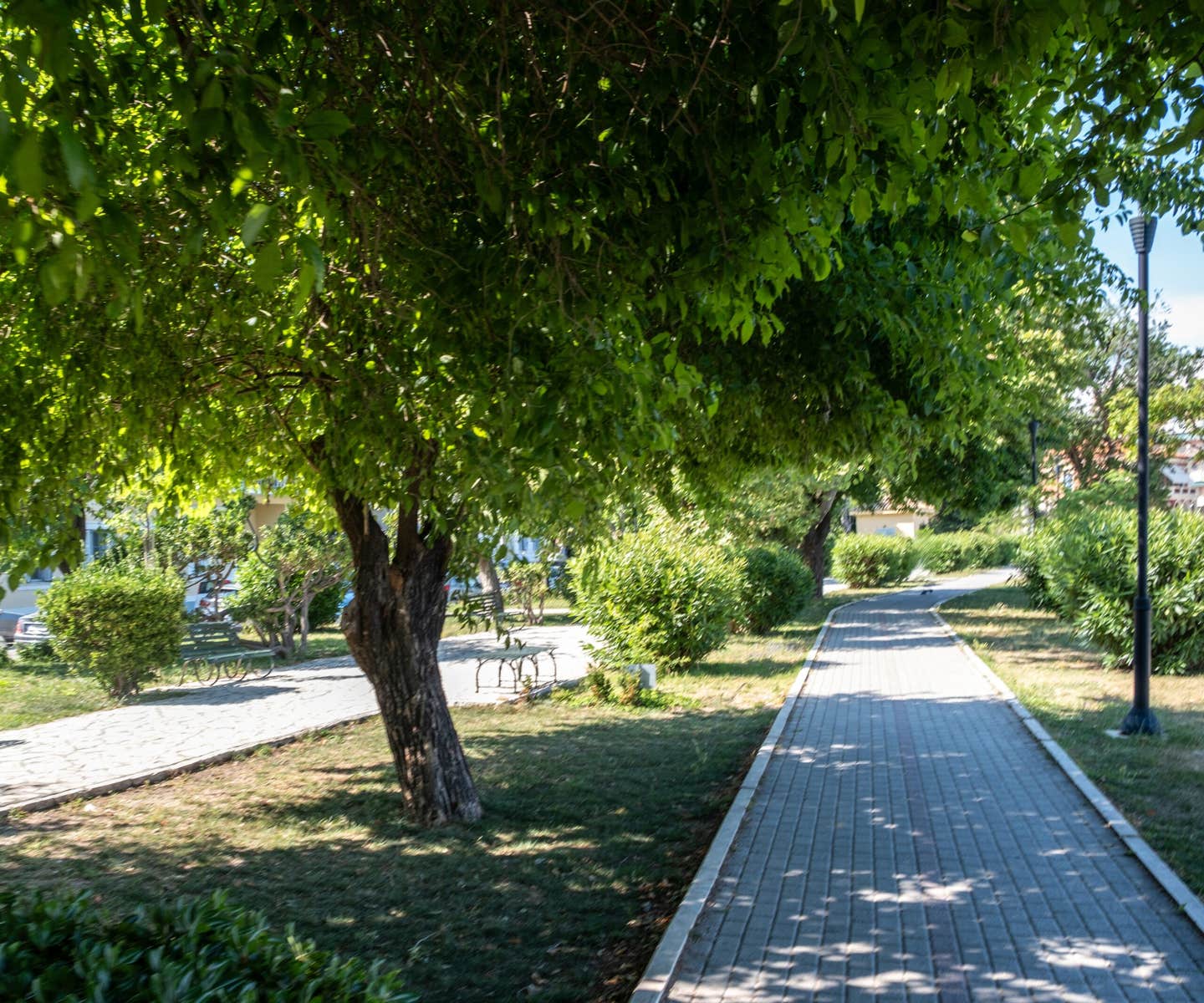
Beijing measurements show some city trees release gases that become much more reactive in hot, sunny weather. (CREDIT: Shutterstock)
- City trees can cool neighborhoods, but some species also release gases that help form ground-level ozone on hot, sunny days.
- In Beijing, tree emissions made up only about one-tenth of measured VOC emissions, but nearly half of their chemical reactivity.
- The findings point to smarter urban greening, not fewer trees, with species selection and nitrogen oxide controls both playing important roles.
City trees can cool a street and complicate its air at the same time. In Beijing, measurements taken high above the city show how summer heat can turn urban greening into a sharper ozone challenge.
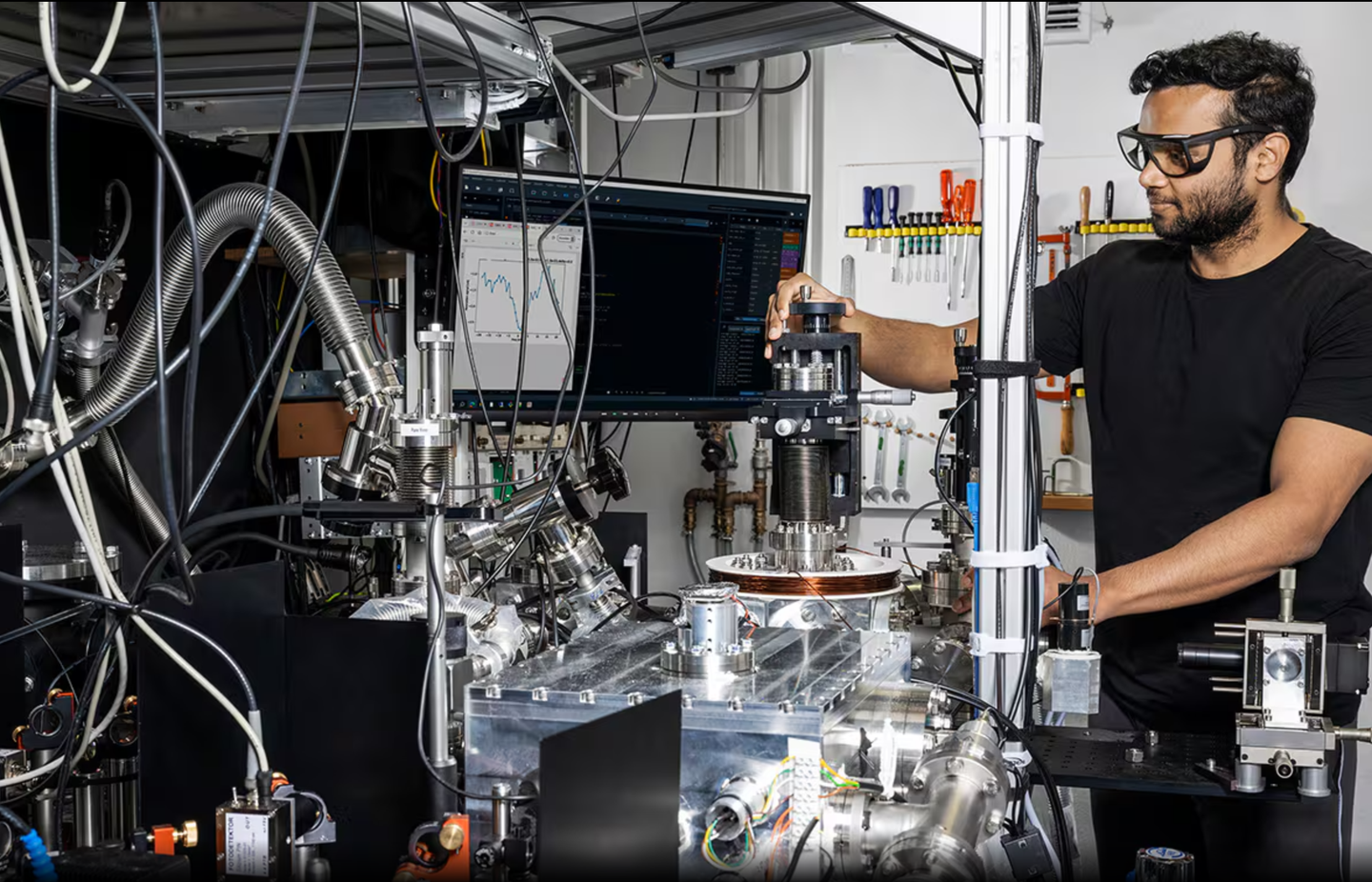
The study, led by researchers at Jinan University in China with colleagues at the University of Innsbruck, tracked the city’s volatile organic compound emissions from May to July 2021. The team used instruments on the 102-meter platform of the Beijing Meteorological Tower and in a laboratory at its base.
Volatile organic compounds, or VOCs, come from many sources. Human-made VOCs can come from solvents, paints, cleaning products and fuel vapors. Trees also release natural VOCs, known as biogenic volatile organic compounds, or BVOCs.
In sunlight, VOCs can react with nitrogen oxides, or NOx, to help form ground-level ozone. That kind of ozone is different from the protective ozone layer high in the atmosphere.
The city’s chemical breath
The Beijing measurements captured chemical signals and turbulence fluctuations 10 times per second. That let the researchers follow emissions from trees, traffic, chemical products, cooking and household activities under real urban conditions.
The results showed a striking mismatch. Biogenic sources made up only about one-tenth of measured VOC emissions. Yet they contributed nearly half of total VOC reactivity, which measures how strongly emissions can drive atmospheric chemistry.
Much of that effect came from isoprene, a reactive gas released by some trees. Isoprene alone accounted for more than 90 percent of the chemical reactivity from biogenic VOC emissions.
That means the amount of a gas was not the whole story. A smaller share of emissions could still have an outsized chemical effect if the compounds reacted quickly.
The finding matters because many cities are trying to reduce human-made emissions while also planting more trees. As human-made VOC levels fall, tree emissions can become relatively more important in ozone chemistry.
Heat made tree emissions surge
Temperature sharply amplified the effect. Between 20 degrees Celsius and 35 degrees Celsius, the chemical reactivity of VOCs from city trees rose seven- to eight-fold.
By comparison, VOC reactivity from human activities rose only about 40 percent, or 1.4-fold, across the same temperature range. As the air warmed, vegetation’s share of total VOC reactivity climbed from 21 percent to 74 percent.
That shift helps explain why tree emissions mattered most during hot periods. On days when ozone formation was especially sensitive to VOC changes, observed peak ozone rose with temperature at nearly the same rate as VOC reactivity.
The close match supported a link between stronger vegetation emissions on hot days and higher ozone levels. The study did not present trees as the only driver of ozone. Ozone formation also requires nitrogen oxides and sunlight, and the chemistry is nonlinear.
Still, the pattern showed why heatwaves can change the role of urban greenery. Trees that provide shade and cooling can also release more reactive gases when temperatures rise.
Why Beijing stood out
To understand Beijing’s high tree emissions, the researchers compared their results with direct measurements from other cities. After adjusting for temperature and sunlight, Beijing’s isoprene emissions were the highest among the cities observed.
They also approached levels found in temperate forests.
Vegetation cover alone did not explain the difference. Beijing emitted several times more isoprene than cities with similar levels of greenery. The larger explanation lay in which species had been planted.
About 35 percent of Beijing’s trees are isoprene-emitting species. These include weeping willow and Chinese white poplar. Across more than 20 cities studied through tree inventories and vegetation data, isoprene emission levels varied by more than tenfold.
Those levels closely tracked the proportion of isoprene-emitting trees.
“In European cities, we find considerably fewer tree species that release isoprene. Native tree species often emit monoterpenes, which are also ozone-forming, but are released in smaller amounts than isoprene,” explains Thomas Karl, co-author and atmospheric physicist at the University of Innsbruck.
Several cities in Asia and Oceania may face comparable or greater air-quality pressure from tree emissions.
Greening without ignoring chemistry
The message is not to cut down urban forests. Trees can cool neighborhoods and improve city life, especially during heatwaves. The study instead points to a more specific planning question: which trees should cities plant, and where?
“The findings do not call for less urban greening or the removal of mature trees. Instead, they suggest adding BVOC emission potential to tree-selection criteria,” Karl emphasizes.
For Beijing, replacing high-emitting trees in one-tenth of the total urban tree population with low-emitting species during routine renewal could reduce isoprene emissions by at least 29 percent.
That kind of change would not require removing mature trees across the city. It could happen gradually as trees are replaced through normal urban forestry work.
“As heatwaves become more frequent, tree species composition could become a useful complement to conventional emission controls,” the study authors note.
The point is especially relevant for cities expanding green space to protect residents from heat. A tree that grows quickly and provides shade may still carry an air-quality cost if it emits large amounts of isoprene.
Nitrogen oxide controls still matter
Tree emissions alone do not make ozone. Nitrogen oxides remain essential to the process. In cities, NOx often comes from traffic, industry and other combustion sources.
That means conventional pollution controls still matter, especially during hot periods. The study’s results show that warming can increase reactive VOC emissions from vegetation. But without NOx and sunlight, the ozone chemistry does not proceed in the same way.
The findings therefore point to two connected strategies. Cities can keep reducing NOx emissions while also considering BVOC emissions when choosing tree species.
This is a more complicated view of urban greening, but it is also more realistic. Cleaner air and cooler neighborhoods do not always come from one decision. They depend on chemistry, climate, infrastructure and planting choices working together.
Practical implications of the research
The study gives city planners and air-quality researchers a clearer way to evaluate urban trees in a warming climate. Tree selection can include shade, drought tolerance, local fit and the potential to release ozone-forming gases.
That could help cities expand green space without unintentionally increasing ozone risk during heatwaves. It could also improve models that estimate future air quality as human-made VOC emissions decline and urban vegetation increases.
The work reinforces the need for continued NOx controls, especially in hot, sunny periods when tree emissions become more reactive. For cities planning new neighborhoods or replacing aging trees, the findings offer a practical addition to urban forestry: plant for cooling, but also plant with atmospheric chemistry in mind.
Dig deeper into urban trees, heat and ozone pollution
These resources explore how heat, tree species and plant-emitted gases shape urban ozone pollution, while also examining the cooling benefits that make trees an important part of climate adaptation.
Impact of temperature on the biogenic volatile organic compound (BVOC) emissions in China: A review
This review examines how temperature affects isoprene, monoterpenes and other plant emissions, finding that warming around 30°C to 40°C can substantially increase BVOC emissions and influence ozone and secondary aerosol formation. (Journal of Environmental Sciences, 2026)
BVOC emissions from urban tree species in Guangzhou: The role of leaf traits regulation and implications for ozone formation potential
Direct measurements from 22 common urban tree species in Guangzhou identified major differences in BVOC emissions and ozone-forming potential, supporting the use of species-specific characteristics in urban tree selection. (Urban Forestry & Urban Greening, 2026)
Variability in BVOC emissions and air quality impacts among urban trees in Montreal and Helsinki
Measurements from mature street and park trees found large variation in emissions among individual trees and species, with isoprene dominating their potential contribution to ozone formation. (Atmospheric Chemistry and Physics, 2025)
The role of urban forest composition in modulating summertime air quality in Los Angeles
Researchers modeled Los Angeles' urban forest and found that a relatively small group of high-VOC-emitting species drove much of its negative air-quality effect, while gradual species replacement could shift the forest toward becoming a net pollutant sink. (Science of the Total Environment, 2025)
Urban trees and cooling: A review of the recent literature (2018 to 2024)
This review of 115 studies found that urban trees consistently provide important cooling benefits, particularly in hotter and drier climates, while showing that cooling performance varies with tree traits, planting patterns and local climate. (Arboriculture and Urban Forestry, 2025)
Research findings are available online in the journal Science Advances.
The original story "City trees can worsen ozone pollution when heatwaves hit, study finds" is published in The Brighter Side of News.
Related Stories
- Reducing city light pollution could improve urban tree and plant growth
- Trees don't actually grow from the ground, scientists find
- Planting a billion trees won't save the climate, however, the right ones might
Like these kind of feel good stories? Get The Brighter Side of News' newsletter.
Joshua Shavit
Writer and Editor
Joshua Shavit is a NorCal-based science and technology writer with a passion for exploring the breakthroughs shaping the future. As a co-founder of The Brighter Side of News, he focuses on positive and transformative advancements in technology, physics, engineering, robotics, and astronomy. Having published articles on AOL.com, MSN, Yahoo News, and Ground News, Joshua's work highlights the innovators behind the ideas, bringing readers closer to the people driving progress.