Atmospheric rivers can both warm and cool marine heatwaves
A 42-year study finds that rivers of moisture in the sky can warm or cool ocean heatwaves depending on season.

 Edited By: Joseph Shavit

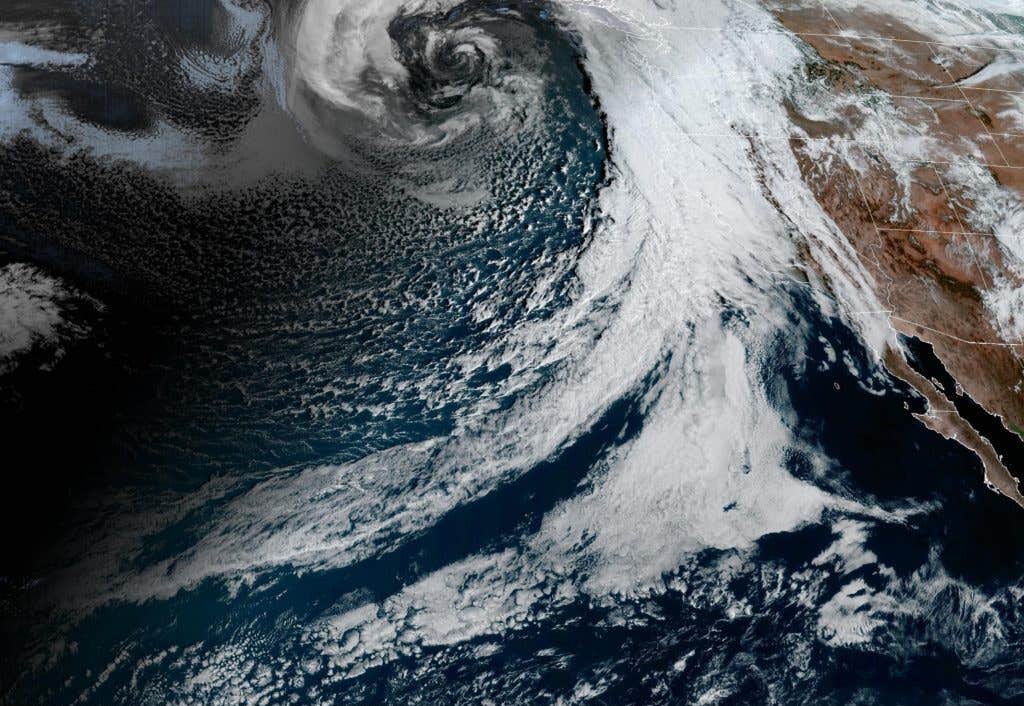
A 42-year study finds that rivers of moisture in the sky can warm or cool ocean heatwaves depending on season. (CREDIT: NOAA)
- Atmospheric rivers can shape marine heatwaves, but their effect changes by season: they often precede winter heatwave peaks, while fewer atmospheric rivers tend to occur before summer peaks.
- Clouds and air-sea heat exchange drive the contrast. Summer cloud cover blocks sunlight and cools the ocean, while winter’s warm, humid air can reduce heat loss and promote surface warming.
- Tracking atmospheric river activity could improve marine heatwave forecasts, giving coastal industries and ecosystem managers more time to prepare for unusually warm ocean conditions.
A marine heatwave can build for days before reaching its hottest point.
Above it, a long corridor of warm, moist air may be moving across the ocean. These atmospheric rivers often make headlines when they bring heavy rain and flooding ashore.
Over open water, their role looks more complicated.
A Duke University study found that atmospheric rivers can influence marine heatwaves in the North Pacific and North Atlantic. Their effect changes with the season and location.
During winter, increased atmospheric river activity often appeared before marine heatwaves reached their peak. In summer, heatwave peaks usually followed periods with fewer atmospheric rivers.
Clouds help explain the contrast. They can cool the sea by blocking sunlight. Yet the warm, humid air inside atmospheric rivers can also limit heat loss from the ocean.
“We wanted to see if these interactions between atmosphere and sea surface might play a role in marine heatwaves,” said Shineng Hu.
Hu is an assistant professor of climate dynamics at Duke’s Nicholas School of the Environment. He wrote the study with postdoctoral associate Suqiong Hu.
Ocean Heat That Lasts for Weeks
Marine heatwaves are periods of unusually high ocean temperatures.
They can last for weeks or months. Their severity depends on how far temperatures rise above the normal level for that season.
Many ocean organisms adjust to expected seasonal conditions. A sudden temperature increase can disrupt those patterns, even when the water would not seem unusually warm elsewhere.
Such events can damage marine ecosystems and affect coastal communities and economies.
Marine heatwaves have grown stronger and more frequent as the climate warms. The ocean absorbs most of the excess heat trapped by rising greenhouse gases.
Scientists have linked these events to large climate patterns and short-lived weather systems.
Atmospheric rivers received less attention. These narrow bands carry large quantities of water vapor. They spend most of their lives above oceans before reaching land.
That time over water gives them repeated chances to alter sea surface temperatures.
Four Decades Across Two Oceans
The researchers examined events from 1982 through 2023.
Their analysis covered the North Pacific and North Atlantic outside the tropics. Both atmospheric rivers and marine heatwaves become especially active in those regions.
The team used observations gathered by satellites, ships, and other instruments.
Researchers identified atmospheric rivers and marine heatwaves, then compared their timing. They separated summer from winter to see whether the relationship shifted with seasonal conditions. It did.
In winter, unusually active atmospheric rivers appeared about two days before marine heatwaves peaked.
Summer produced the opposite pattern. Fewer atmospheric rivers tended to precede marine heatwave peaks.
The connection also developed before the final temperature maximum. Atmospheric river changes appeared more than a week ahead in some analyses. Their strongest signal came near the period of fastest sea surface warming.
That timing suggests more than a simple coincidence.
It does not mean every atmospheric river creates a marine heatwave. Instead, the weather systems appear to help shape conditions surrounding some events.
The study identified a previously overlooked connection between two major ocean and atmosphere extremes.
Clouds Pull Temperatures Down
Atmospheric rivers bring extensive cloud cover.
During summer, sunlight delivers a large amount of energy to the ocean surface. Thicker clouds block part of that incoming light.
Less solar energy reaches the water, creating a cooling influence that can slow marine heatwave development.
This effect became especially important in summer across broad sections of both ocean basins.
Researchers found a horseshoe-shaped pattern over the North Pacific. Atmospheric river activity increased in some middle latitudes but fell in subtropical and subpolar areas near heatwave peaks.
The summer pattern did not produce uniform cooling everywhere.
A band near 40 to 50 degrees north behaved differently. There, warming linked to air-sea heat exchange could offset reduced sunlight.
Even so, cloud-driven cooling played the larger role across much of the summer ocean.
Winter changes the balance. Sunlight is weaker, so clouds have less solar energy to block. Their cooling influence fades.
Other parts of the atmospheric river then become more important.
Warm, Moist Air Holds Heat Near the Surface
Atmospheric rivers do not carry moisture alone. They also transport warm air. That air affects how heat moves between the ocean and atmosphere.
A warm and humid atmosphere can reduce the amount of heat escaping from the sea surface.
It limits upward longwave radiation and weakens evaporative heat loss.
Normally, stronger winds can help the ocean lose heat. Yet the moisture and warmth inside atmospheric rivers can outweigh that effect. Winter conditions strengthen this warming influence.
Background winds are often stronger. Temperature and humidity differences between the ocean and atmosphere also change how heat moves.
With less cloud-related solar cooling, atmospheric rivers can help warm the sea surface.
“Whether atmospheric rivers promote marine heatwaves depends on how heat moves between the air and the ocean,” Suqiong Hu said.
“Cloud cover tends to increase with atmospheric rivers, causing the sea surface to cool. However, warm and moist air associated with atmospheric rivers cause the sea surface to warm up.”
Those forces act at the same time. The season determines which one wins.
A Stronger Winter Connection
In winter, atmospheric rivers became more common across nearly the entire ocean basin before marine heatwave peaks.
The North Pacific produced the strongest pattern. Similar but weaker results appeared in the North Atlantic.
Researchers also examined how the ocean’s upper layer gained or lost heat.
Changes in heat passing through the sea surface dominated the temperature response. Horizontal ocean currents contributed less.
Other unresolved ocean processes generally weakened temperature changes instead of creating them.
This finding placed the main explanation at the boundary between air and sea.
The study did not identify one permanent effect for all atmospheric rivers. A system that encourages warming in winter may suppress it during summer.
Regional conditions matter too.
That complexity could help explain why some marine heatwaves grow under cloudy, stormy conditions while others develop during quieter weather.
Climate Change Adds Another Layer
Both atmospheric rivers and marine heatwaves are changing. Warmer air can hold more moisture, which may intensify atmospheric rivers.
At the same time, a warmer ocean provides a higher starting point for extreme temperatures.
“Marine heatwaves have been stronger and more frequent under global warming,” Shineng Hu said.
“Atmospheric rivers also tend to become more intense as the air gets warmer and moister, according to our previous study.”
The study did not determine how their relationship will change under future warming. That remains the next question. Stronger atmospheric rivers could increase winter warming effects. Changes in clouds, winds, storm tracks, and ocean conditions could alter summer patterns.
Marine heatwaves may also affect atmospheric rivers in return.
Previous research suggests warm ocean conditions could strengthen them or shift their paths.
The current study focused on atmospheric rivers influencing the ocean, not the reverse pathway. Future work will need climate models that fully connect changes in the atmosphere and ocean.
Practical Implications of the Research
Forecasting marine heatwaves requires more than tracking ocean temperatures. Atmospheric river activity may provide an earlier clue, especially during winter.
Its strongest signal appeared shortly before heatwaves reached maximum intensity.
Including these weather systems in forecasting tools could help researchers better estimate when ocean warming will accelerate.
The findings may also sharpen regional forecasts. An atmospheric river over one part of an ocean could support warming, while another produces cloud-driven cooling.
Season-specific analysis will matter more than a single general rule.
Better forecasts could give marine managers and coastal industries more time to prepare for unusually warm water. The work also expands how scientists view atmospheric rivers. They are not only delivery systems for rain and floods over land.
While crossing the ocean, they exchange heat with the surface below, sometimes feeding an extreme and sometimes holding it back.
Research findings are available online in the journal Nature.
The original story "Atmospheric rivers can both warm and cool marine heatwaves" is published in The Brighter Side of News.
Related Stories
- Europe’s next heat wave could kill as many people as the worst week of COVID
- Record-breaking heatwaves will persist for 1,000 years, study finds
- Large-scale waves are forming deep inside our Sun
Like these kind of feel good stories? Get The Brighter Side of News' newsletter.
Rebecca Shavit
Writer
Based in Los Angeles, Rebecca Shavit is a dedicated science and technology journalist who writes for The Brighter Side of News, an online publication committed to highlighting positive and transformative stories from around the world. Having published articles on MSN, AOL News, and Yahoo News, Rebecca's reporting spans a wide range of topics, from cutting-edge medical breakthroughs to historical discoveries and innovations. With a keen ability to translate complex concepts into engaging and accessible stories, she makes science and innovation relatable to a broad audience.