Thread-based electronics could transform wearable health devices
Scientists create flexible circuits on thread, opening the door to softer, more comfortable wearable health devices.

 Edited By: Joshua Shavit


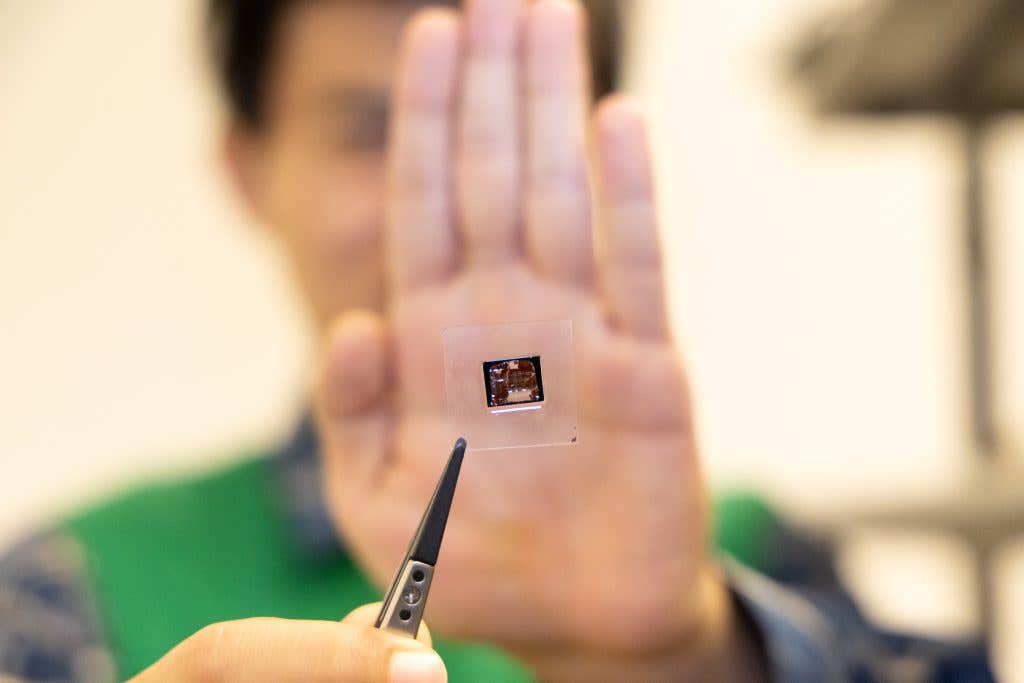
New thread-based circuits can bend and stretch like fabric, offering a future of nearly invisible wearable health technology. (CREDIT: Tufts Now)
Electronics have long shaped how people monitor health, but most devices still sit on the body like small machines. A new study from Tufts University suggests that future devices may feel less like hardware and more like fabric, blending seamlessly into everyday life.
Researchers have created fully functional electronic circuits built on thread. These flexible systems can bend, stretch, and move naturally with the body. The work opens the door to wearable devices that are lighter, softer, and far less noticeable.
A Shift Toward Invisible Wearables
Modern wearable devices are common. Smartwatches and rings track steps, heart rate, and sleep. More than a third of adults in the United States use them.
Yet even the most advanced devices remain rigid compared to the human body. They sit on the skin rather than moving with it.
The new thread-based circuits take a different approach. Instead of flat electronics, researchers built components directly into thin fibers. These fibers can twist, stretch, and conform to the body’s shape.
“By moving electronics from planar patches to free-form threads, we have opened a path toward wearable bioelectronics that are more like fibers than hardware,” said Sameer Sonkusale, professor of engineering at Tufts. “They will be soft, stretchable and able to follow the body’s shape rather than forcing the body to accommodate the device.”
This shift may allow devices to be sewn into clothing or wrapped around curved surfaces without discomfort.
Building Circuits On A Single Thread
Creating electronics on a thread required rethinking how circuits are made. Traditional circuits rely on flat surfaces and rigid materials.
In this study, researchers built every part of a circuit along a flexible fiber. This included transistors, sensors, and conductive pathways.
The thread itself is coated with a thin layer of gold, which carries electrical signals. Small transistors are attached along the fiber. These act like switches that control the flow of electricity.
Each transistor uses a conducting material that connects the thread on both sides. A second signal controls the device, allowing it to turn on or off like a valve.
By linking these components together, the team created working circuits that can amplify signals and process data.
A Soft Material That Makes It Possible
A key innovation behind the system is a material called a eutectogel. This soft gel allows the electronic components to function while remaining flexible.
The gel creates a tiny gap in the circuit where electrical signals can be controlled. It also helps maintain stability over time.
Unlike earlier materials, the eutectogel does not dry out easily. This makes it more reliable for long term use on or inside the body.
The material also has a unique property. If it breaks, it can repair itself. When the pieces are brought back together and gently heated, the gel restores its structure and electrical function.
This self-repair ability could extend the lifespan of wearable devices, which often face stress from movement and daily use.
Simple And Low-Cost Manufacturing
Another advantage of the new approach is how the devices are made. Traditional electronics require specialized cleanrooms and high temperatures.
In contrast, these thread-based circuits can be produced without complex facilities. Researchers use simpler methods that work with soft materials.
This process reduces cost and makes large scale production more feasible. It also allows circuits to be created in forms that match textiles and flexible materials.
The ability to manufacture devices without rigid processes could speed up the development of wearable technology.
Early Tests Show Real Potential
To demonstrate the system, researchers built simple wearable devices. One device was placed near the temple to detect blinking. Another was positioned near the diaphragm to track breathing patterns.
Both devices worked by sensing movement and converting it into electrical signals. The thread-based circuits amplified these signals, making them easier to measure.
These tests show that the technology can monitor real biological activity. It may support applications in health tracking, stress monitoring, and recovery from illness.
“The technology platform is still in early stages,” said Wenxin Zeng, a doctoral student and lead author of the study. “But we expect to improve the speed and precision of fabrication, and the ability of the thread-based integrated circuits to carry out more complex functions.”
Moving With The Human Body
One of the biggest advantages of thread-based electronics is how they move. The human body bends, stretches, and shifts constantly.
Rigid devices can feel uncomfortable or lose contact with the skin. Even flexible patches may not fully match the body’s shape.
Thread-based systems behave more like fabric. They can be sewn into clothing or wrapped around joints. They move naturally without restricting motion.
This flexibility may allow devices to stay in place longer and collect more consistent data.
Expanding Possibilities In Healthcare
The potential uses for this technology extend far beyond basic monitoring.
Researchers suggest that thread-based electronics could be used in sutures to track wound healing. They could also monitor movement patterns that signal cognitive decline or fall risk.
For infants, the fibers could track breathing patterns without bulky equipment. In rehabilitation, they could measure progress during recovery.
Because the devices are soft and lightweight, they may be suitable for long term use without discomfort.
Beyond The Human Body
The technology may also have applications outside healthcare. Flexible circuits could be used on curved surfaces in robotics or environmental monitoring.
Because the threads can wrap around objects, they may help track conditions in spaces where flat sensors cannot fit.
The system’s adaptability makes it useful for a wide range of fields that require flexible sensing.
Practical Implications Of The Research
This research could reshape how wearable technology is designed and used. By creating electronics that behave like fabric, it becomes possible to integrate sensors directly into everyday clothing.
For healthcare, this could mean continuous monitoring without bulky devices. Patients could track vital signs, movement, and recovery in a more natural way.
In public health, low cost and easy manufacturing may allow wider access to monitoring tools, especially in resource limited areas.
The self-repairing material could reduce waste and extend device lifespan. This would make wearable technology more sustainable over time.
For researchers, the study provides a new framework for building electronics that match the complexity of the human body. It highlights the importance of designing devices that adapt to people, rather than forcing people to adapt to devices.
Research findings are available online in the journal ACS Applied Materials & Interfaces.
The original story "Thread-based electronics could transform wearable health devices" is published in The Brighter Side of News.
Related Stories
- New hydrogel could transform wearable medical devices
- Wearable polygraph tracks hidden stress signals without wires
- New wearable uses light and AI to turn silent throat movements into audible speech
Like these kind of feel good stories? Get The Brighter Side of News' newsletter.
Rebecca Shavit
Writer
Based in Los Angeles, Rebecca Shavit is a dedicated science and technology journalist who writes for The Brighter Side of News, an online publication committed to highlighting positive and transformative stories from around the world. Having published articles on MSN, AOL News, and Yahoo News, Rebecca's reporting spans a wide range of topics, from cutting-edge medical breakthroughs to historical discoveries and innovations. With a keen ability to translate complex concepts into engaging and accessible stories, she makes science and innovation relatable to a broad audience.