Underground gases may explain Earth’s most devastating climate changes and mass extinctions
Study reveals underground rock processes released gases that drove climate swings linked to ancient mass extinctions.
 Florida State University Writer: Bill Wellock

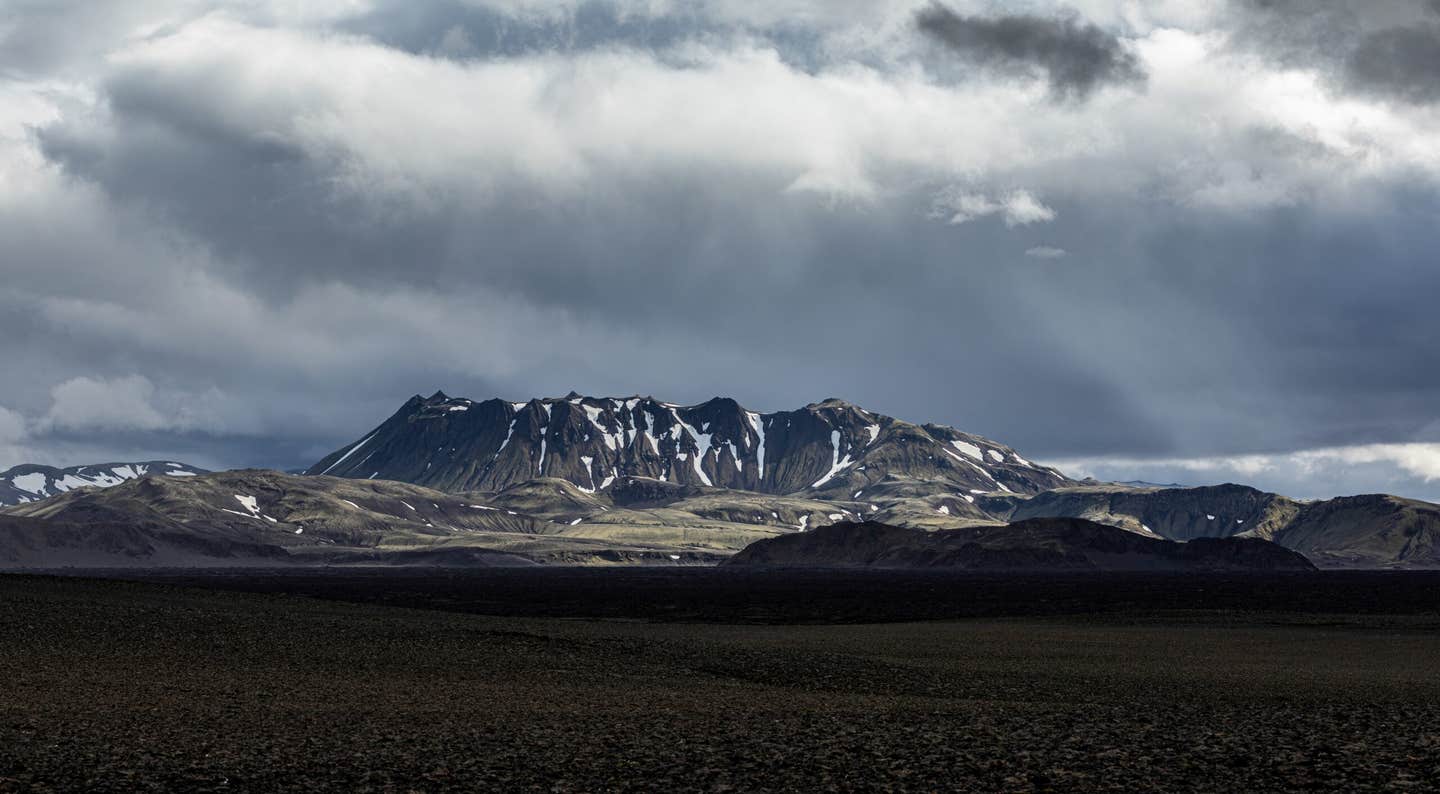
New research shows gases from heated underground rocks may have caused climate swings that led to ancient mass extinctions. (CREDIT: Shutterstock)
A hidden process deep beneath Earth’s surface may have played a powerful role in some of the most dramatic climate swings in history. New research from Florida State University suggests that gases released from heated underground rocks helped drive the environmental chaos linked to ancient mass extinctions.
For decades, scientists have pointed to volcanic eruptions as the main cause of these global crises. Massive eruptions released gases that altered the atmosphere and disrupted ecosystems. But the new study, published in Science Advances, shows that another process worked alongside volcanoes, quietly amplifying their impact.
“Evidence shows that the process that wipes out species is a climate swing, or an oscillation back and forth between hot and cold climates,” said Emily Stewart, assistant professor of geology. “We found another process that contributes to these events: metamorphism.”
A Hidden Source Of Climate-Altering Gases
The process begins far below the surface, where heat from rising magma transforms surrounding rock. This transformation, known as metamorphism, changes the structure and chemistry of the rock.
When these rocks contain sulfur and carbon, heat causes those elements to escape as gases. Unlike explosive eruptions, this release happens slowly and steadily.
Michael Diamond, assistant professor of meteorology, explained the importance of these gases. Sulfur enters the atmosphere and forms tiny particles that reflect sunlight. Carbon, in contrast, traps heat and remains in the atmosphere for much longer.
“Cooling spikes are the result of sulfur, which doesn’t stay in the atmosphere for more than a few days before dissipating,” Diamond said. “The opposite warming effect is due to carbon, which remains in the atmosphere for hundreds, thousands or even millions of years.”
Climate Whiplash That Shaped Life
This combination creates a powerful pattern. Sulfur produces short bursts of cooling, while carbon drives long-term warming. Together, they create a cycle of rapid temperature swings.
These shifts can be extreme. The study shows that cooling events may have lowered temperatures by several degrees. Over longer periods, carbon buildup pushed temperatures higher than before.
Such rapid changes can be devastating for life. Species adapted to one climate struggle to survive when conditions shift quickly.
The result is what scientists describe as climate instability. Instead of gradual change, the planet experiences repeated swings between hot and cold.
Rethinking The Role Of Volcanoes
Large igneous provinces, massive regions shaped by volcanic activity, have long been linked to extinction events. These areas, such as the Siberian Traps in Russia, produced enormous amounts of lava and gas.
Until now, most attention focused on gases released directly from eruptions. The new research shows that the surrounding rock also played a key role.
As magma spread underground, it heated vast areas of rock rich in sulfur and carbon. This created a second, sustained source of emissions.
Unlike eruptions, which release gases quickly, metamorphic processes can last for centuries. This extended release keeps the atmosphere in a constant state of change.
The study suggests that this slower process may have been just as important as volcanic activity itself.
Evidence From Earth’s Greatest Extinctions
The findings help explain several major extinction events in Earth’s history. One example is the end of the Permian Period, often called the “Great Dying.”
Around 252 million years ago, up to 96 percent of marine species disappeared. On land, about 70 percent of species vanished. This remains the most severe extinction event known.
Other events show similar patterns. At the end of the Ordovician Period, about 85 percent of shallow marine species died. Later, during the Devonian Period, many reef-building organisms and armored fish went extinct.
Each of these periods shows signs of major climate disruption. The new research suggests that combined sulfur and carbon emissions may have driven those changes.
Why Timing Matters More Than Size
One of the study’s most important insights involves timing. Earlier theories focused on how large eruptions were or how high gases reached in the atmosphere.
The new work shows that duration may matter more than intensity. Even if emissions stay in lower layers of the atmosphere, they can still affect climate if they continue long enough.
Steady sulfur release can maintain cooling for extended periods. At the same time, carbon builds up slowly, creating lasting warming.
This overlap produces repeated cycles of change. These cycles may have placed constant stress on ecosystems, making recovery difficult.
A More Complex Earth System
The research highlights how deeply connected Earth’s systems are. Changes in the solid Earth can affect the atmosphere, oceans, and living organisms.
“Earth’s systems are deeply interconnected, and major environmental changes rarely result from a single isolated process,” said Mike Stukel, chair of the Department of Earth, Ocean, and Atmospheric Science.
By combining geology and atmospheric science, the team revealed how multiple processes can work together to shape global events.
This interdisciplinary approach allowed researchers to see patterns that might have been missed within a single field.
Clues From Modern Climate Science
The study also draws parallels with today’s world. Sulfur pollution from ships and industry creates a cooling effect by reflecting sunlight. Scientists estimate it offsets a portion of global warming.
Although modern emissions are far smaller, the principle is the same. Sulfur cools the planet, while carbon warms it.
In ancient times, much larger releases of these gases could have created dramatic and long-lasting effects.
Understanding these processes helps scientists better predict how Earth’s climate responds to large changes.
Looking Ahead
The findings open new questions about Earth’s past. Researchers now plan to search for more evidence of metamorphic gas release in the geological record.
They also hope to refine models to better understand how these processes unfold over time.
“The more we study mass-extinction events, the more we see that they’re much more complex than we realized,” Stewart said.
This complexity may hold the key to understanding not only past extinctions but also future climate risks.
Practical Implications Of The Research
This research improves understanding of how Earth’s climate responds to large-scale changes. By studying past events, scientists can better predict how current systems may react to rapid shifts.
The findings highlight the importance of long-term emissions, not just sudden events. This insight may influence how scientists model climate change and assess environmental risks.
The work also shows the value of combining different scientific fields. By linking geology with atmospheric science, researchers gain a more complete picture of Earth’s systems.
For society, this knowledge can guide future research on climate stability and resilience. It may also help identify warning signs of large-scale environmental disruption.
In the long term, understanding these processes supports efforts to protect ecosystems and maintain planetary balance.
Research findings are available online in the journal Science Advances.
The original story "Underground gases may explain Earth’s most devastating climate changes and mass extinctions" is published in The Brighter Side of News.
Related Stories
- Tunas became large, warm-blooded predators long after the dinosaur extinction
- Scientists finally confirm the cause of Earth’s greatest mass extinction
- Ancient oceans started to suffocate 8 million years before the Triassic mass extinction
Like these kind of feel good stories? Get The Brighter Side of News' newsletter.
Rebecca Shavit
Writer
Based in Los Angeles, Rebecca Shavit is a dedicated science and technology journalist who writes for The Brighter Side of News, an online publication committed to highlighting positive and transformative stories from around the world. Having published articles on MSN, AOL News, and Yahoo News, Rebecca's reporting spans a wide range of topics, from cutting-edge medical breakthroughs to historical discoveries and innovations. With a keen ability to translate complex concepts into engaging and accessible stories, she makes science and innovation relatable to a broad audience.